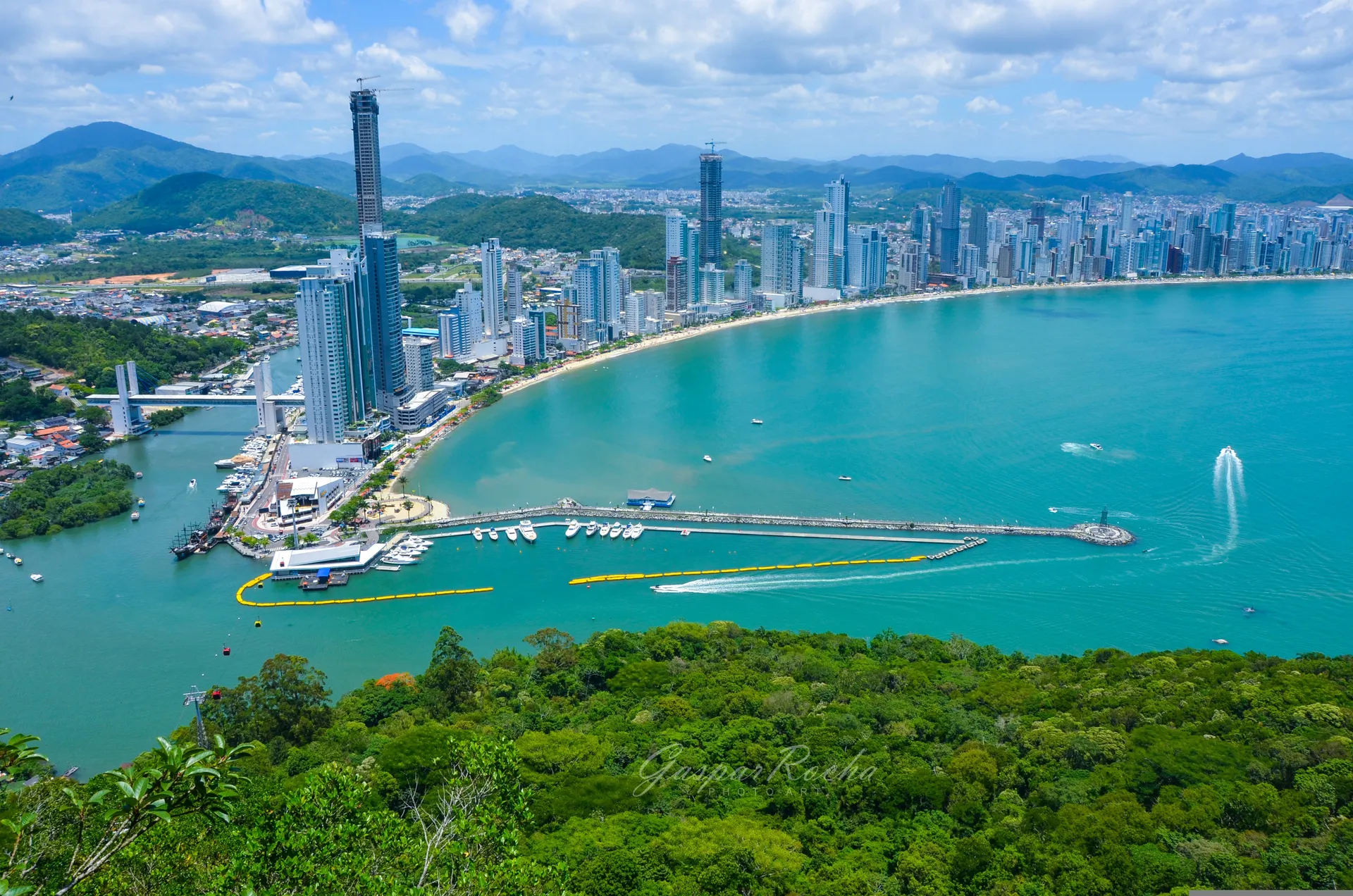
Balneário Camboriú announces itself with an audacity that few South American beach cities can match — a tight crescent of high-rise towers packed along a narrow Atlantic beach that has earned it the nickname "the Brazilian Dubai." The comparison is apt only in terms of vertical ambition; in every other respect, this resort city of 150,000 permanent residents (swelling to over a million in summer) is thoroughly, irrepressibly Brazilian. The city's transformation from a quiet fishing village into one of South America's most sought-after coastal addresses began in the 1970s and has never slowed, producing a skyline that now includes some of the tallest residential towers in the Southern Hemisphere — and the continent's most expensive per-square-metre real estate.
The Praia Central, Balneário Camboriú's signature beach, stretches for seven kilometres along a bay so perfectly curved it seems engineered rather than natural. The towers' afternoon shadows have become a subject of civic debate, but the beach's energy is undeniable — beach tennis courts, surfboard vendors, and caipirinha sellers create a scene of organised hedonism that peaks during the summer months from December through February. For those seeking more solitude, the city's real treasures lie just beyond the main strip: Praia de Laranjeiras and Praia de Taquarinhas, accessible only by boat or trail, offer Atlantic Forest-backed sands where the only company is the occasional howler monkey calling from the canopy.
The Cristo Luz monument — a 33-metre illuminated Christ figure perched on the Morro da Cruz — presides over the city with outstretched arms that project coloured laser beams at night, creating a spectacle that is pure Balneário Camboriú: devotional and theatrical in equal measure. The Parque Unipraias aerial tramway connects the city beach to Praia de Laranjeiras via an intermediate station at the hilltop, offering Atlantic Forest canopy views and, at the summit, a zip-line course that launches riders over the treetops toward the southern beaches. The Passarela da Barra, a promenade along the Camboriú River mouth, comes alive at sunset when the fishing boats return and the waterside restaurants begin their nightly ritual of grilling fresh catch.
The culinary scene reflects Balneário Camboriú's status as a destination for Brazil's elite. The city's restaurants range from beachfront barracas serving sequência de camarão — an endless parade of shrimp preparations from boiled to breaded to flambéed in cachaça — to sophisticated chef-driven establishments in the Barra Sul district where Japanese-Brazilian fusion and contemporary European cuisine compete for the attention of well-heeled diners. The German-Brazilian heritage of the Santa Catarina coast emerges in the beer culture: nearby Blumenau, just an hour inland, hosts the largest Oktoberfest outside of Munich, and craft breweries have proliferated throughout the region.
Cruise ships visiting Balneário Camboriú typically anchor offshore and tender passengers to the Barra Sul pier or the central beach area. The city is a year-round destination, but the Southern Hemisphere summer from December through March delivers the warmest water temperatures and the most vibrant beach scene, while the shoulder months of November and April offer pleasant weather with significantly fewer crowds. The city's position on the Santa Catarina coast also makes it an excellent base for visiting the nearby colonial town of Itajaí and the eco-tourism centre of Bombinhas, where some of southern Brazil's finest diving awaits.

