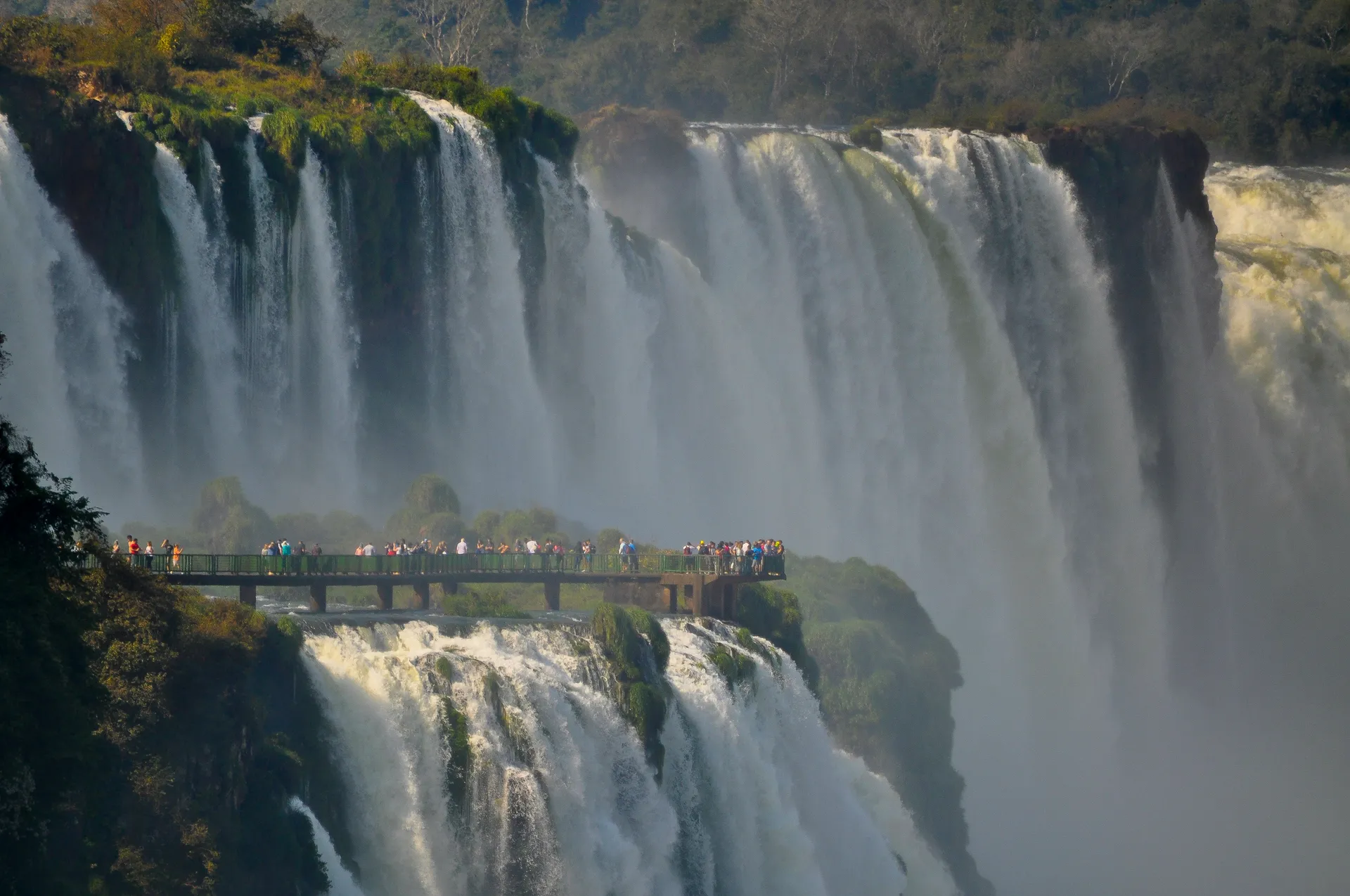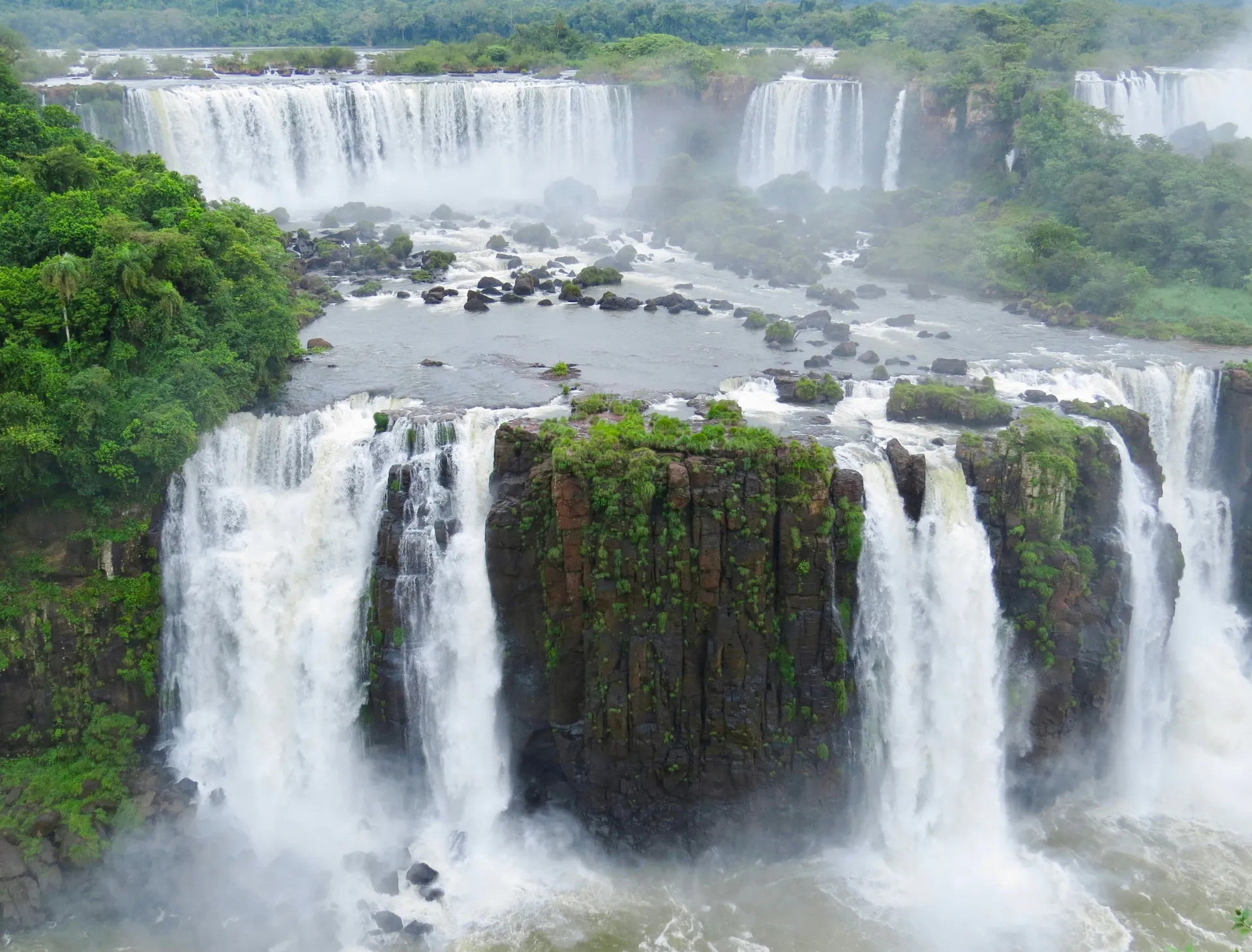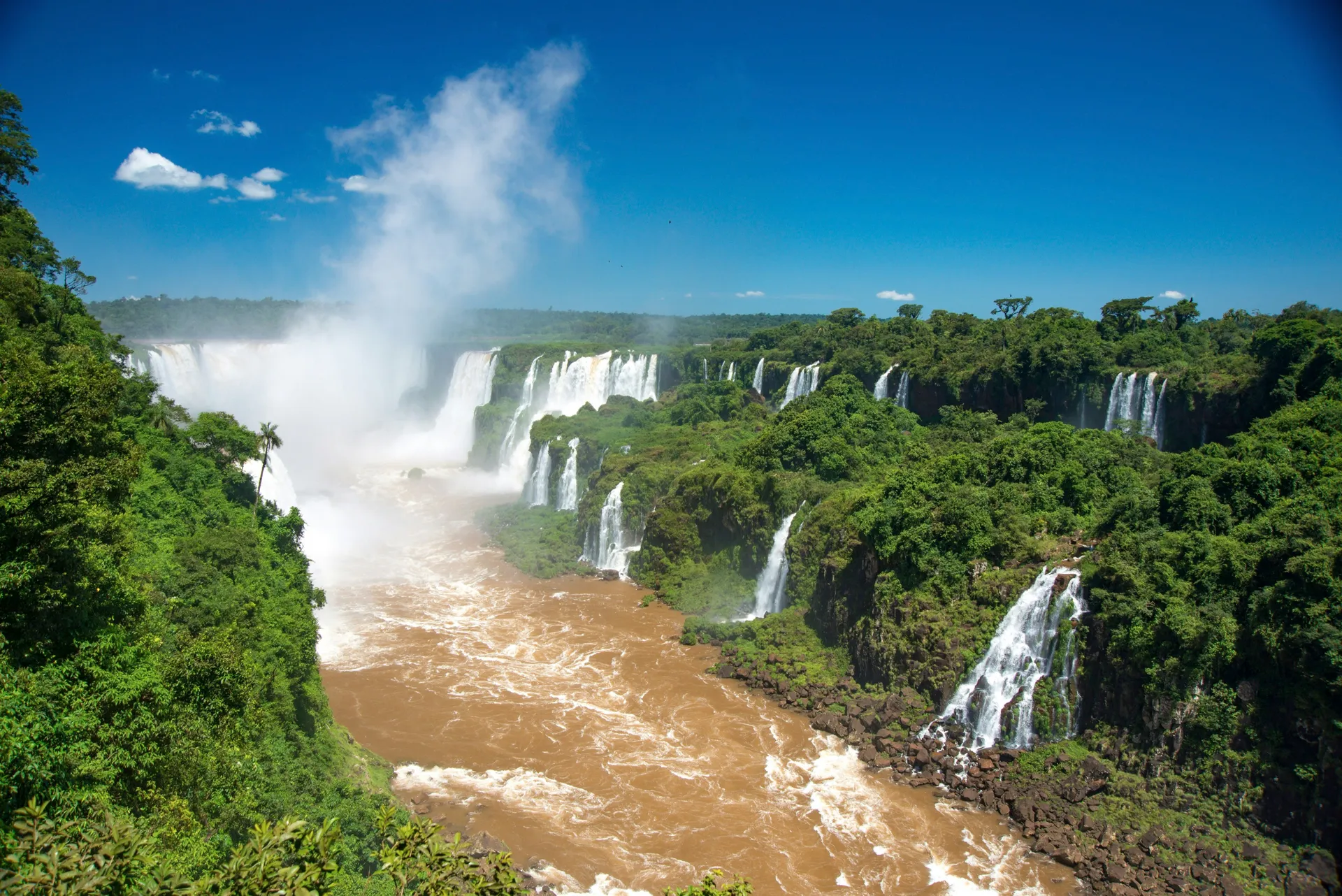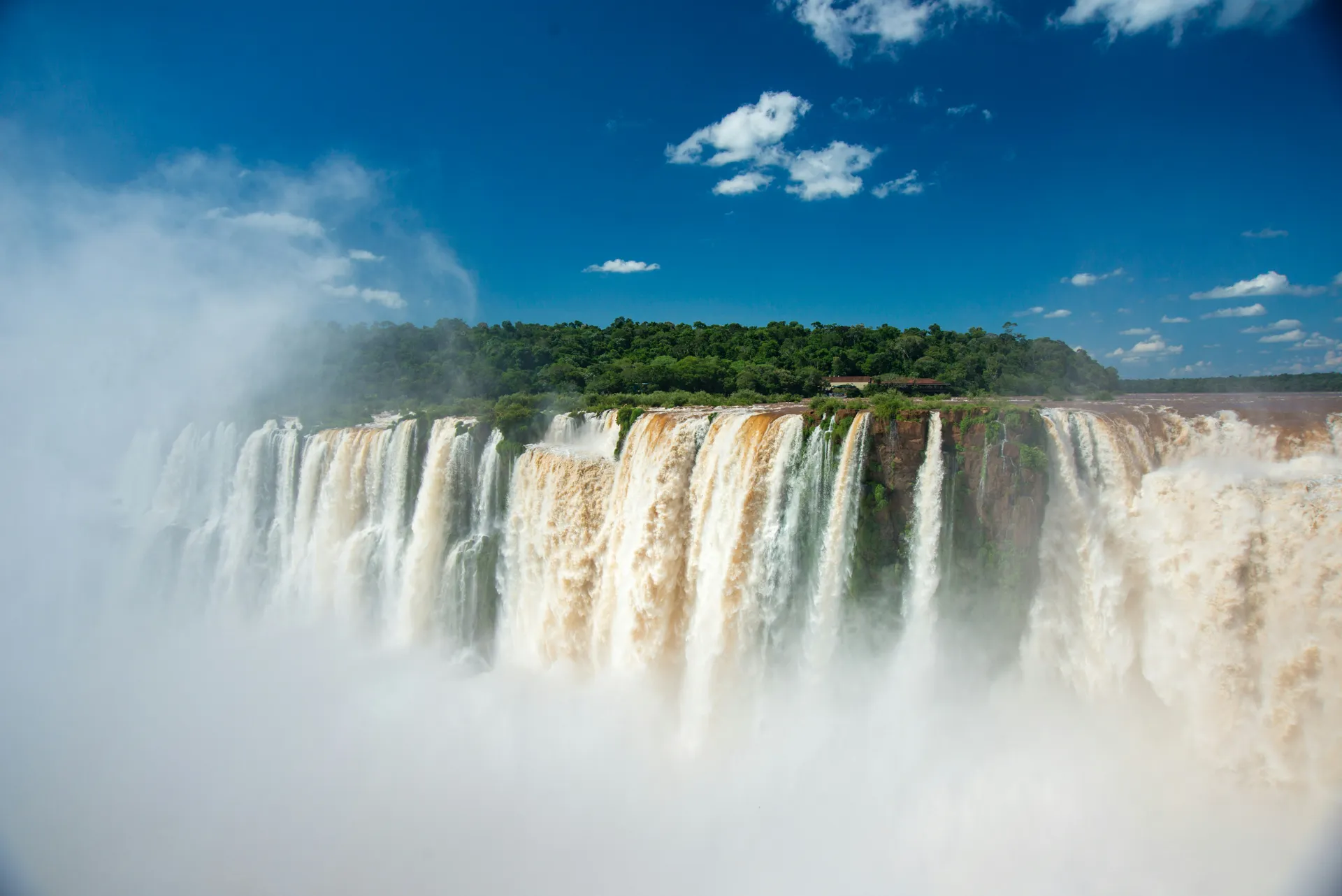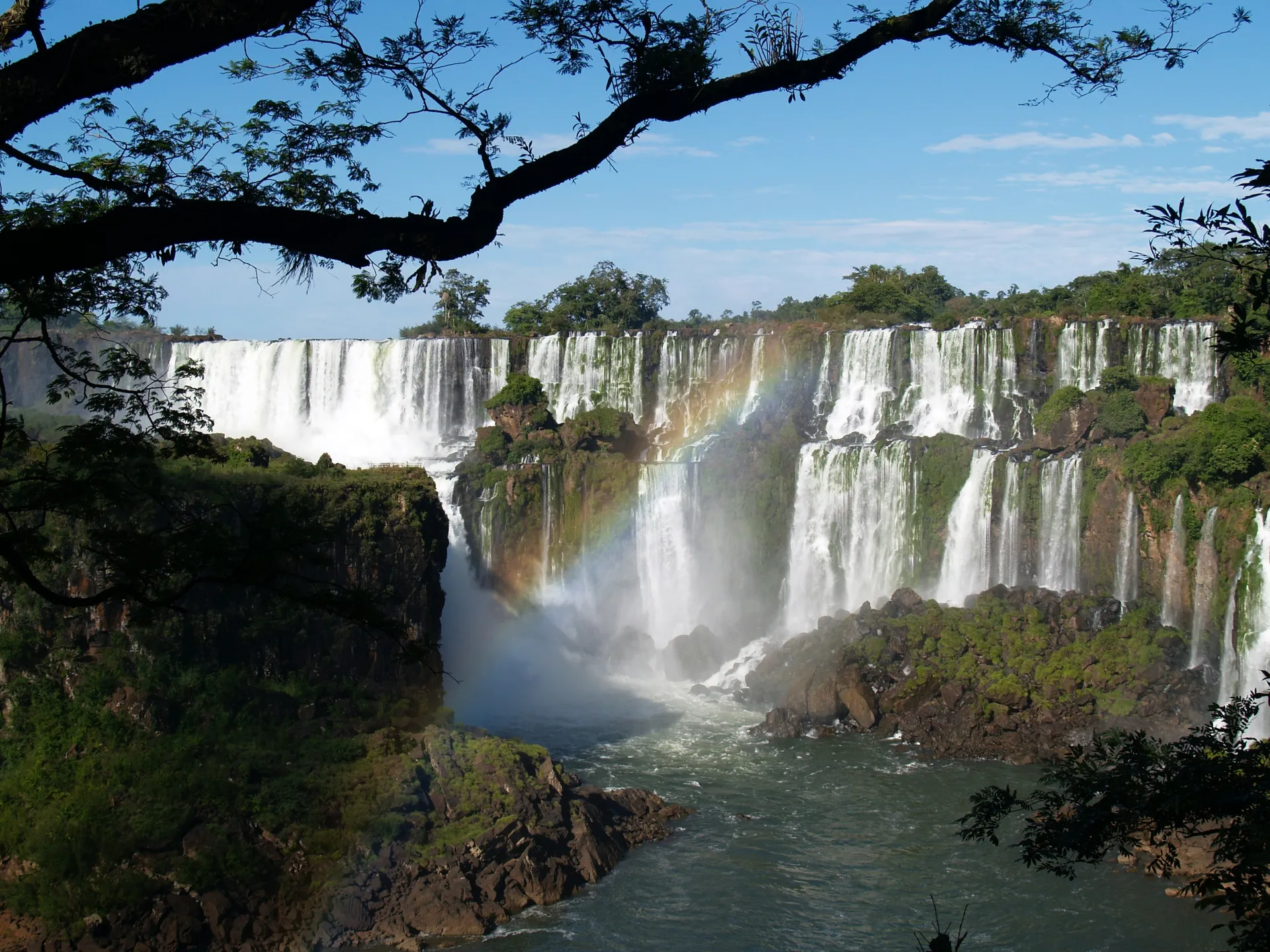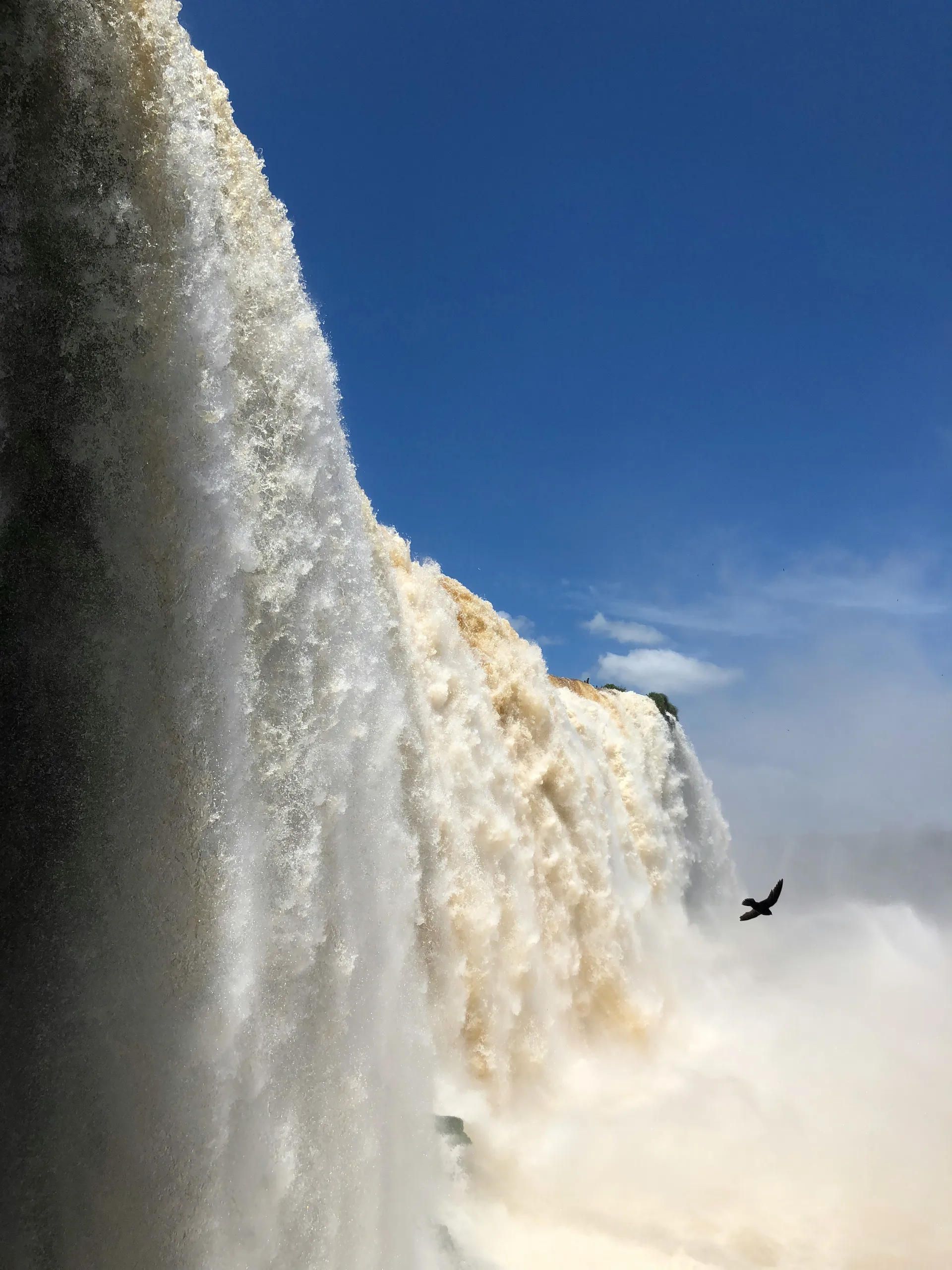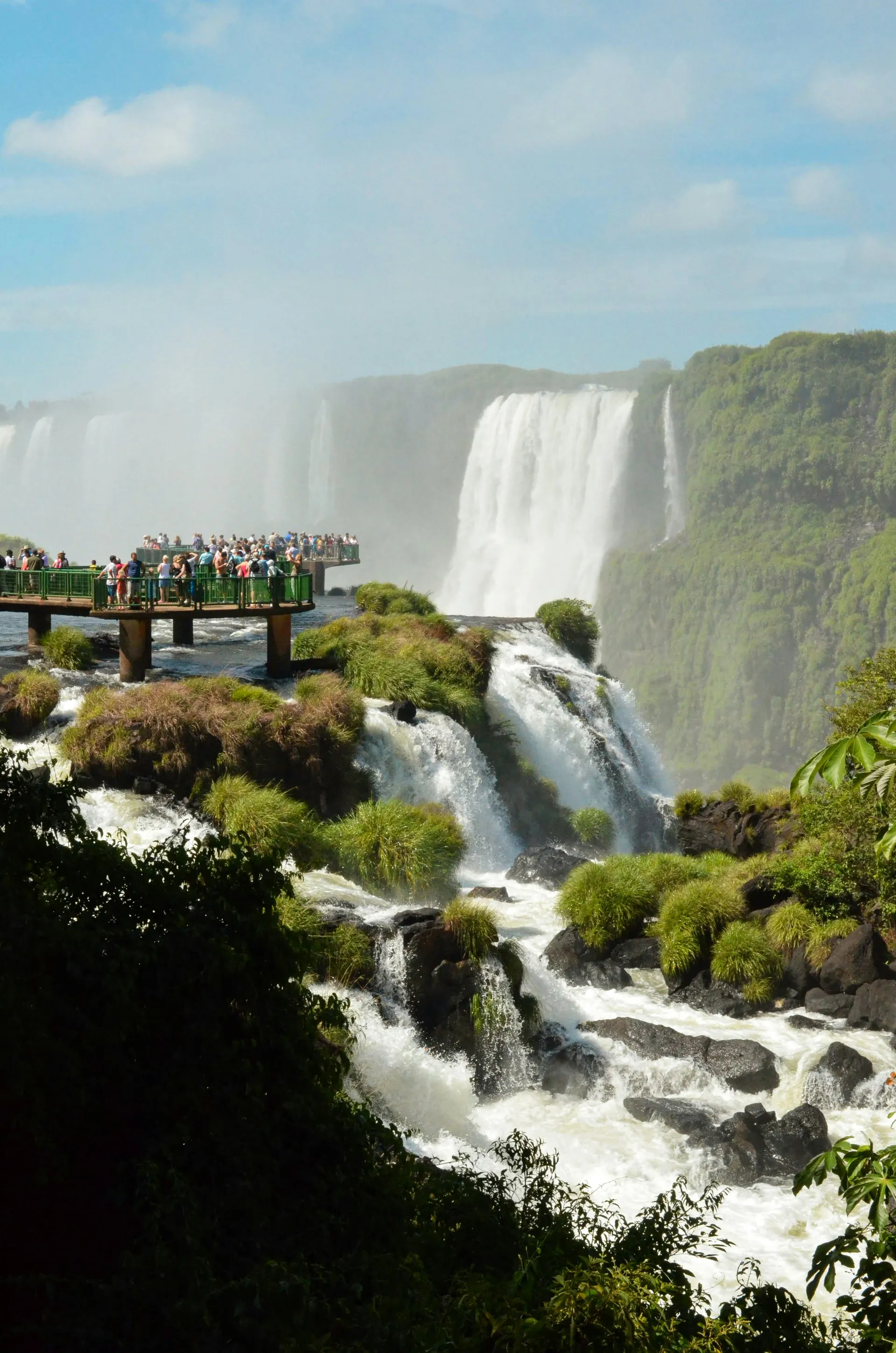
At the triple frontier where Brazil, Argentina, and Paraguay converge, the Iguazu River hurls itself over a basalt escarpment in a spectacle that dwarfs every other waterfall system on Earth. Stretching nearly three kilometres across and comprising approximately 275 individual cascades, Iguazu Falls operates on a scale that overwhelms the senses and defies the capacity of cameras to capture. When Eleanor Roosevelt first saw the falls, she reportedly exclaimed that it made Niagara look like a kitchen faucet — a comparison that, while perhaps unkind to its northern rival, captures the sheer immensity of a natural wonder that pours an average of 1.5 million litres of water per second over its edge into the mist-shrouded gorge below.
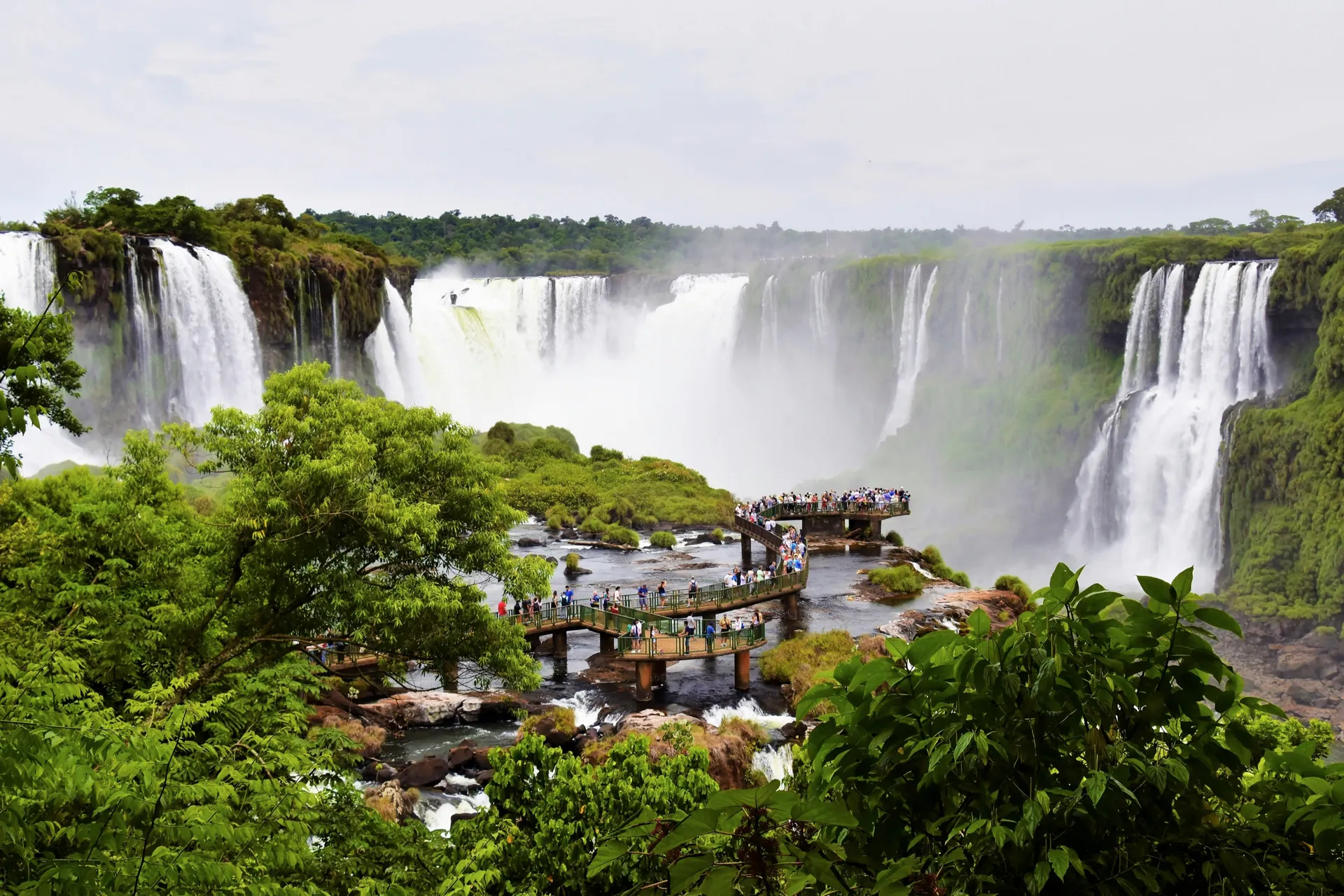
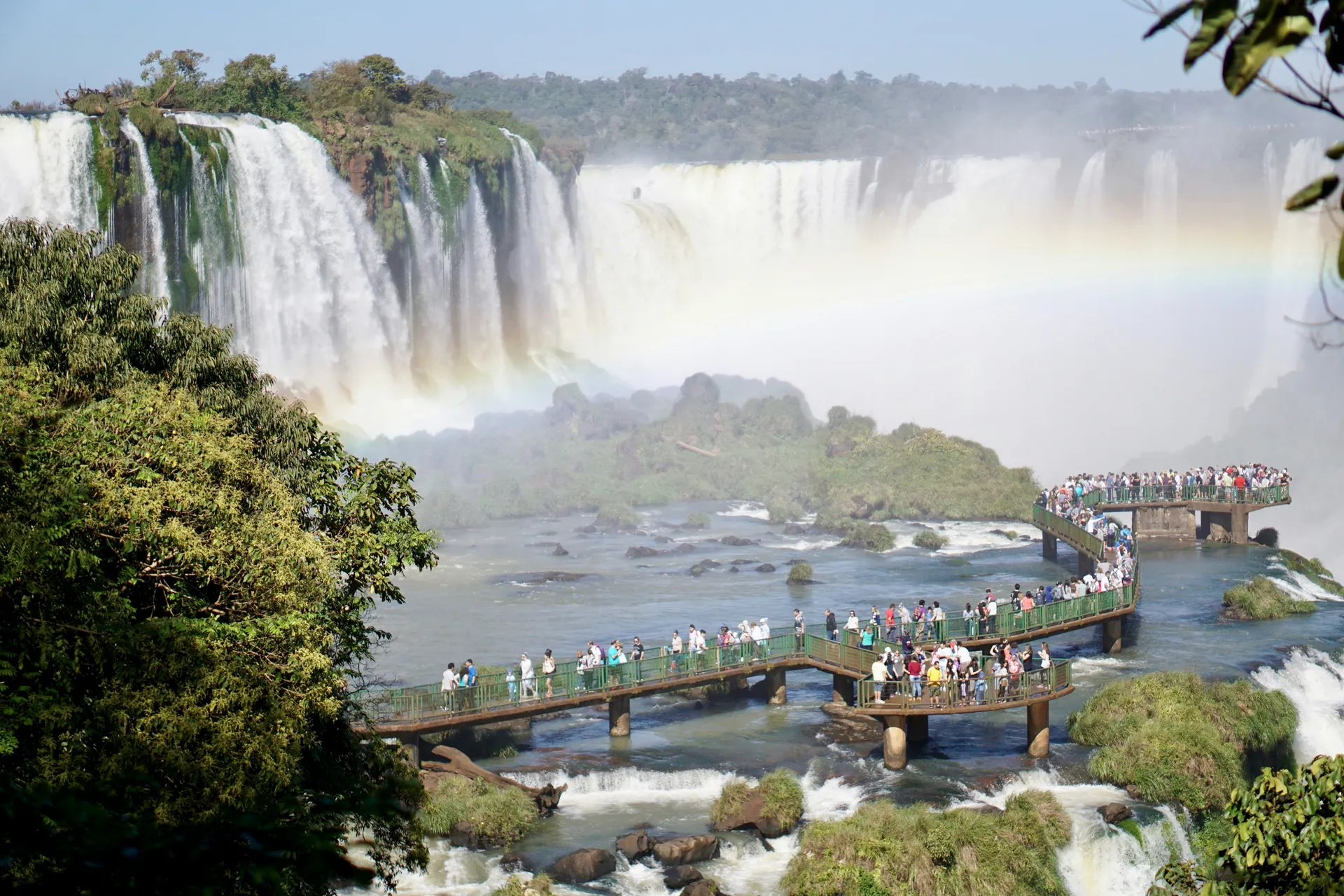
The character of Iguazu shifts depending on whether one approaches from the Brazilian or Argentine side. The Brazilian viewpoint, accessed through the national park, offers a panoramic perspective — a sweeping vista that takes in the full width of the falls from across the river, the mist rising like smoke from the jungle canopy. The Argentine side provides immersion: an extensive system of walkways and catwalks brings visitors to the very brink of individual cascades, and the approach to the Devil's Throat — the thundering U-shaped chasm where fourteen falls converge in a curtain of water eighty metres high — is one of the most exhilarating walks on the planet. The spray drenches everything within a hundred metres, rainbows arc through the mist, and the sound is less a roar than a physical vibration felt in the chest.
The subtropical rainforest surrounding the falls is itself a destination of extraordinary biodiversity. Iguazu National Park, a UNESCO World Heritage Site on both the Argentine and Brazilian sides, protects one of the largest remaining tracts of Atlantic Forest in South America. Coatis — raccoon-like mammals with long, flexible snouts — are ubiquitous along the trails, while toucans, parrots, and great dusky swifts wheel through the mist above the falls. More elusive residents include jaguars, tapirs, and the giant otter. Butterflies, numbering in the thousands, add flashes of iridescent colour to the forest paths, and the humid air carries the sweet, vegetal scent of tropical growth.
Beyond the falls themselves, the triple frontier region offers experiences that add depth to any visit. On the Brazilian side, the Parque das Aves houses one of Latin America's finest bird collections in walk-through aviaries set in native forest. The Itaipu Dam, shared between Brazil and Paraguay, is one of the largest hydroelectric installations in the world and offers engineering tours of its massive turbine halls. On the Argentine side, the town of Puerto Iguazu provides a base with excellent restaurants serving river fish, grilled meats in the Argentine tradition, and the fresh fruit juices that are a hallmark of the region.
Iguazu Falls is accessible by air from Buenos Aires and Sao Paulo, with airports on both the Argentine and Brazilian sides. Cruise passengers on South American itineraries often visit via river excursions from downstream ports. The falls are spectacular year-round, but the period from November through March, during the rainy season, produces the highest water volumes and the most dramatic cascades. The drier months of May through September offer lower water but better visibility and more comfortable temperatures. Visiting both sides of the falls is strongly recommended — they provide genuinely different experiences, and crossing the border is straightforward with proper documentation.