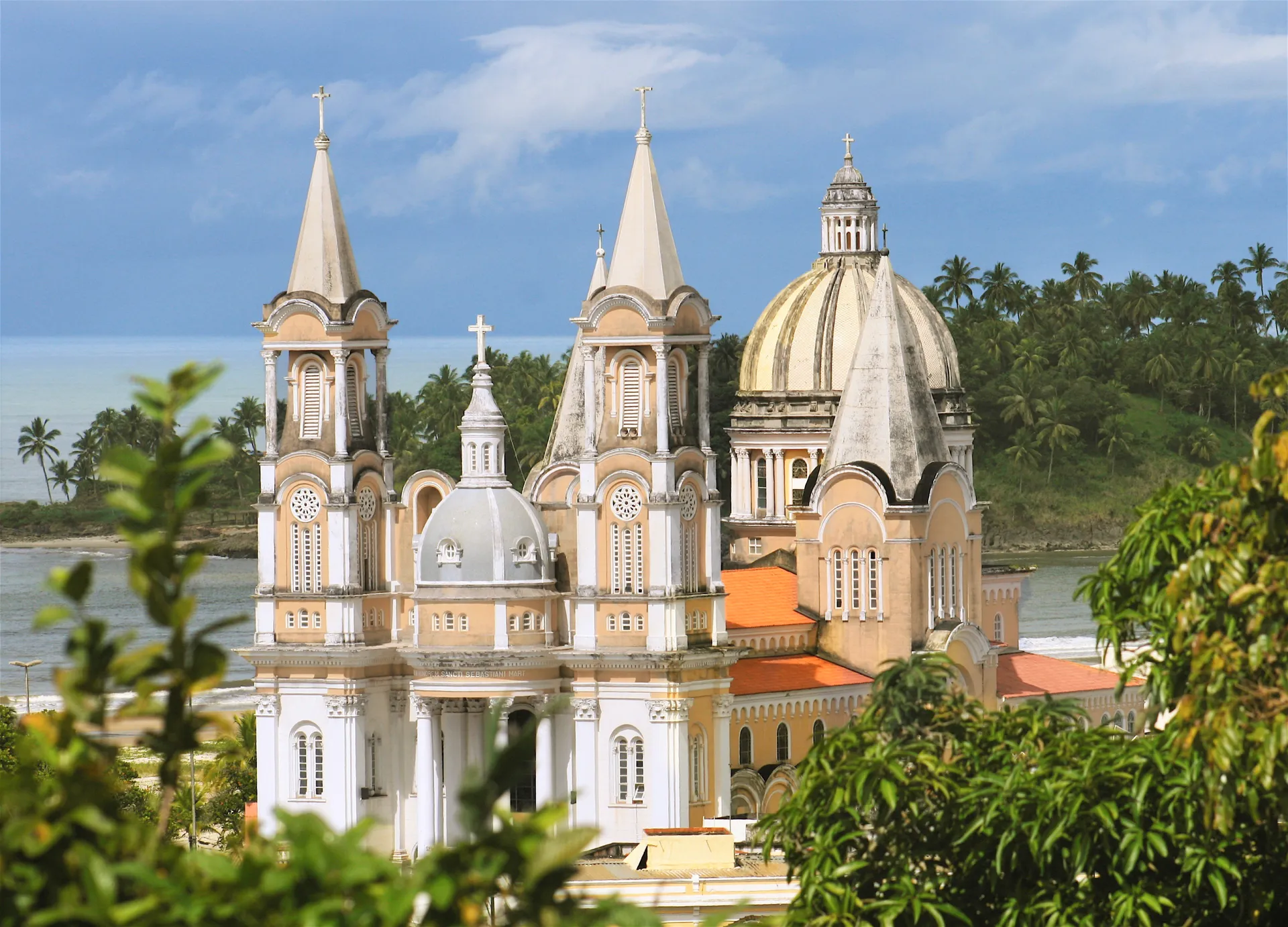
Ilhéus rises from the banks of the Cachoeira and Almada rivers where they empty into the Atlantic along Bahia's cocoa coast, a city whose very identity was forged in the rich, fermented scent of cacao. In the late nineteenth and early twentieth centuries, this was the epicenter of Brazil's cocoa boom — a period of intoxicating wealth that produced the ornate colonial mansions, baroque churches, and operatic dramas of ambition immortalized by Jorge Amado, Ilhéus's most famous son, in his novel 'Gabriela, Clove and Cinnamon.' The city he described — passionate, colorful, shaped by the fortunes and feuds of cacao barons — remains palpably alive in the architecture and spirit of the old town.
The character of Ilhéus is one of tropical languor married to cultural richness. The Cathedral of São Sebastião, completed in 1967 with its striking modernist lines, overlooks the central square where mango trees provide shade against the equatorial sun. Along the waterfront, colonial-era buildings in various states of restoration display the architectural confidence of the cocoa epoch — the Casa de Cultura Jorge Amado, the writer's childhood home, has been converted into a museum that traces both his life and the social history of the cacao trade. The beaches stretch in both directions from the city center: Millionaires Beach to the south, named for the plantation owners who built their seaside homes along its palm-fringed length, and the wilder, less developed strands to the north.
The gastronomy of Ilhéus draws from Bahia's African-inflected culinary tradition and the cacao that still perfumes the surrounding countryside. Moqueca, the slow-simmered fish stew enriched with dendê palm oil and coconut milk, reaches a particular excellence here, where the freshness of the catch — red snapper, shrimp, crab — is measured in hours rather than days. Acarajé, the deep-fried black-eyed pea fritters split and stuffed with vatapá and caruru, are sold from street-side tabuleiros with the same recipes brought from West Africa centuries ago. The cacao experience itself has evolved: artisanal chocolate farms in the surrounding Mata Atlântica now offer tours that trace the journey from pod to bar, culminating in tastings of single-origin chocolate that rival anything produced in Belgium or Switzerland.
The surrounding landscape offers excursions into one of Brazil's most precious ecosystems. The Mata Atlântica — the Atlantic Forest — once covered the entire Brazilian coast but has been reduced to fragments, and the reserves near Ilhéus shelter some of the highest biodiversity on Earth: golden-headed lion tamarins, rare orchids, and toucans inhabit a canopy so dense that the forest floor exists in perpetual twilight. The village of Olivença, fifteen kilometers south, offers a quieter beach experience alongside thermal springs said to possess therapeutic properties. River excursions along the Cachoeira and Almada rivers penetrate deep into cacao plantation country, where the shade-grown trees form a productive agroforestry system that has sustained communities for generations.
Costa Cruises and MSC Cruises include Ilhéus on their Brazilian coastal itineraries, with ships typically docking at the Malhado Port facility near the city center. The compact downtown is walkable from the port, though taxis and organized excursions are recommended for the beaches and cacao farms. The tropical climate means warm temperatures year-round, with the driest period from September through February offering the most comfortable conditions for exploration. The annual Festa de São Sebastião in January and the Carnival celebrations bring the city's Afro-Brazilian cultural heritage to vivid, percussive life.