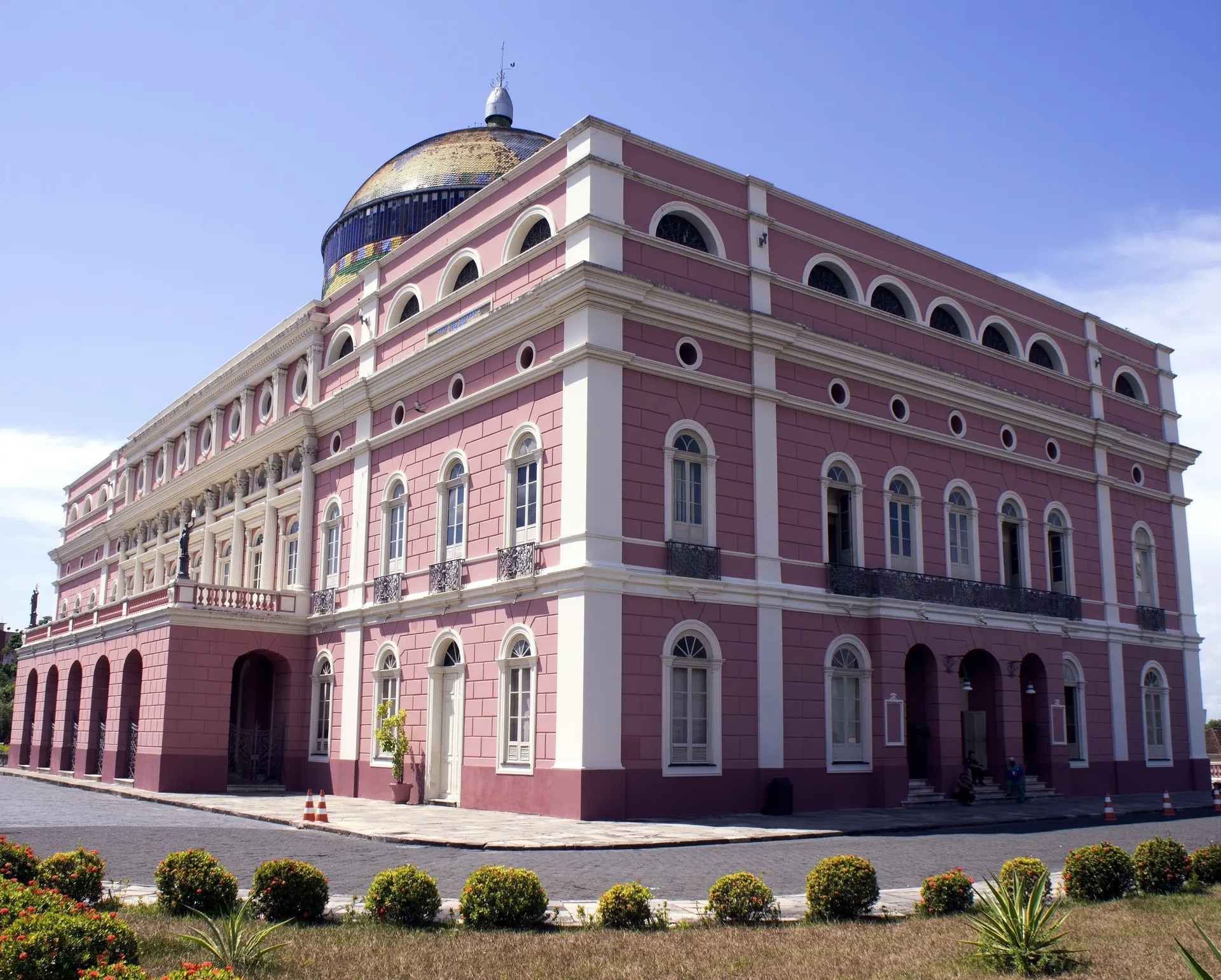
A thousand miles from the Atlantic Ocean, in the heart of the largest tropical rainforest on Earth, Manaus rises from the banks of the Rio Negro like a fever dream of nineteenth-century opulence dropped into the jungle. The city's existence at this scale — two million inhabitants in a metropolis accessible only by river or air — seems to defy logic until one understands the rubber boom that transformed a modest trading post into one of the wealthiest cities in the world between 1880 and 1912. During those delirious decades, Manaus imported marble from Carrara, iron from Glasgow, and tiles from Alsace to build a European city in the Amazon. The legendary Teatro Amazonas opera house, with its dome of thirty-six thousand glazed tiles in the colours of the Brazilian flag, stands as the supreme monument to that era of extraordinary ambition. Celebrity Cruises, Hapag-Lloyd Cruises, Holland America Line, and Oceania Cruises bring passengers deep into the Amazon basin to experience this singular city.
The Meeting of the Waters, visible from any vessel approaching Manaus, is one of nature's most visually striking phenomena. The dark, tannin-rich Rio Negro and the sandy-coloured Rio Solimões flow side by side for six kilometres without mixing, their different temperatures, speeds, and densities creating a visible boundary line that seems painted across the river's surface. This confluence creates the Amazon proper — the world's largest river by volume, carrying one-fifth of all freshwater entering the oceans. Standing at the rail as two rivers become one is to witness geography at its most elemental.
Manaus itself rewards exploration beyond the opera house. The Adolpho Lisboa Market, an Art Nouveau ironwork structure modelled after Les Halles in Paris, teems with Amazonian produce that reads like a botanical inventory of another planet: açaí berries, cupuaçu fruit, tucumã, giant river prawns, and pirarucu — the world's largest scaled freshwater fish, which can exceed three metres. The cuisine of Manaus is unlike anything else in Brazil: tacacá (a hot soup of tucupi broth, dried shrimp, and jambu leaves that numb the tongue), caldeirada de tambaqui (river fish stew with tropical fruits), and the ubiquitous farofa made with farinha d'água, a fermented cassava flour unique to the Amazon.
Excursions from Manaus reveal the rainforest in its full magnificence. The Anavilhanas Archipelago, the world's largest freshwater archipelago with over four hundred islands, offers navigable channels where pink river dolphins surface with startling regularity. Guided jungle walks through the várzea (seasonally flooded forest) introduce visitors to the staggering biodiversity of the Amazon: toucans, macaws, howler monkeys, sloths, and a pharmacopoeia of medicinal plants that indigenous communities have used for millennia. Night excursions to spot caimans — their eyes glowing red in torchlight — add an edge of primal excitement.
The Amazon region experiences two distinct seasons: the wet season (December to May) brings higher water levels that allow boats to navigate deep into the flooded forest, while the dry season (June to November) reveals white-sand beaches along the rivers and concentrates wildlife around shrinking water sources. Either season offers extraordinary experiences, though humidity remains intense year-round. Manaus is not a comfortable city in the conventional sense — it is hot, sprawling, and occasionally chaotic — but it is one of the most extraordinary places a cruise ship can reach, a portal into a world where the boundary between civilisation and wilderness dissolves into green infinity.

