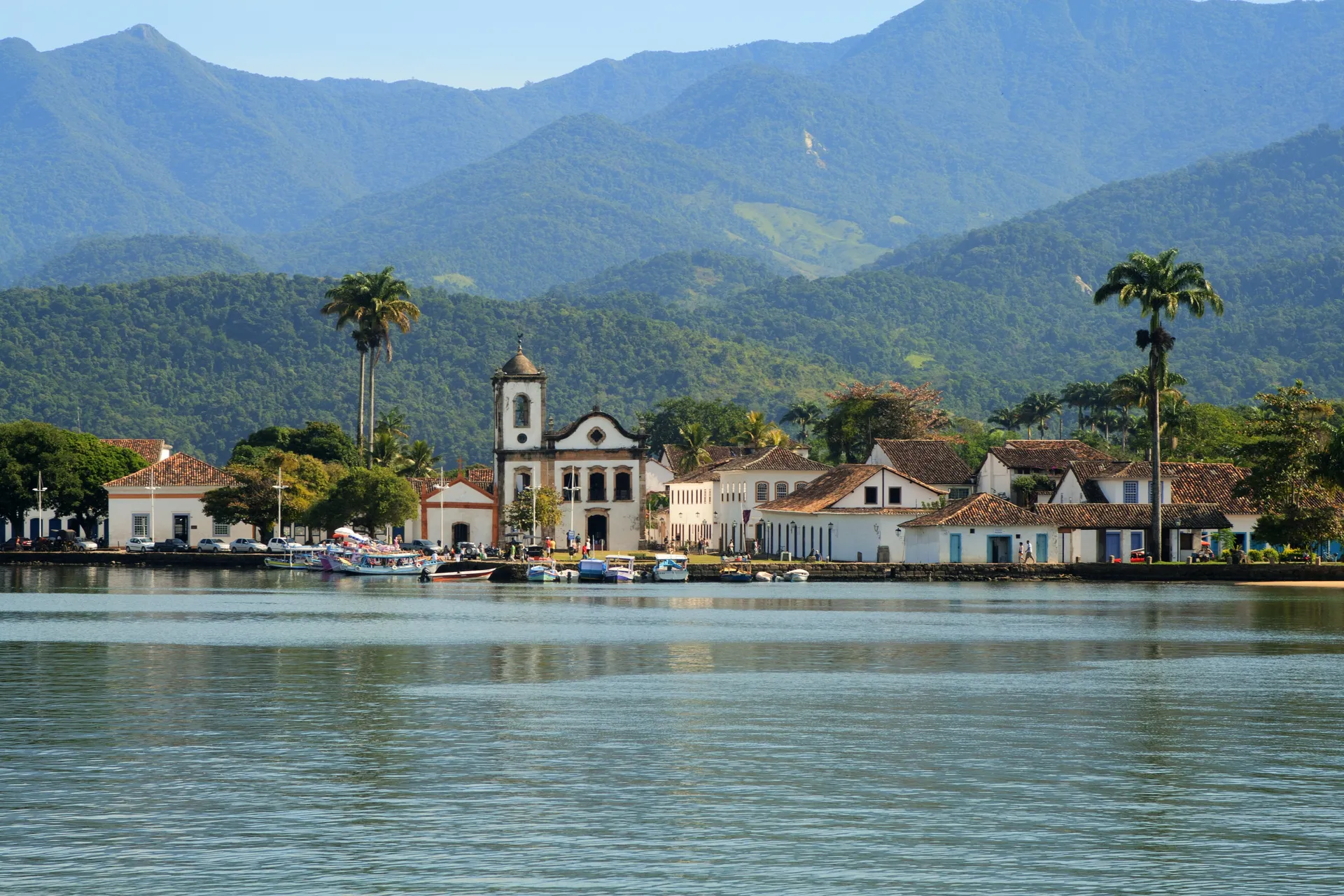
Tumbling down a lush hillside to a harbor of such crystalline beauty that the Portuguese colonial architects who built it might have been collaborating with the tropical forest itself, Paraty is one of Brazil's most enchanting and historically significant coastal towns. Founded in 1667 as the terminus of the Gold Trail — the path along which the riches of Minas Gerais were carried to ships bound for Lisbon — Paraty accumulated wealth, churches, and architectural distinction in proportion to the precious metal that passed through its cobblestoned streets. When the gold route shifted to Rio de Janeiro in the mid-eighteenth century, Paraty was left behind by progress — a fate that proved the town's salvation, preserving its colonial architecture in an amber of benign neglect that subsequent generations would recognize as an irreplaceable heritage.
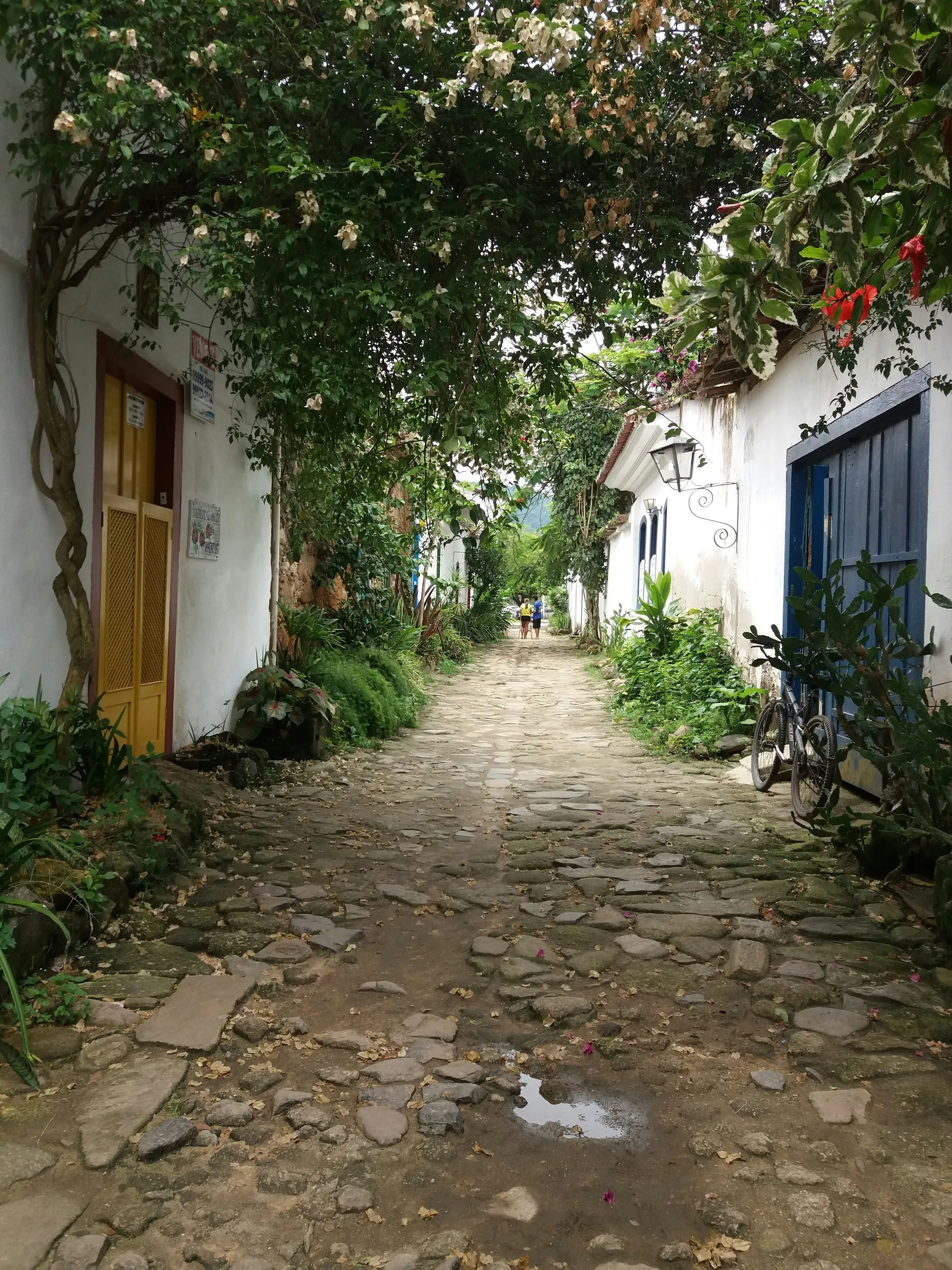
The historic center of Paraty, designated a UNESCO World Heritage Site, presents one of the most homogeneous ensembles of Portuguese colonial architecture in the Americas. Whitewashed buildings with colorful window frames and heavy wooden doors line streets paved with irregular stones that were designed to flood at high tide — a natural cleaning system that still operates today, filling the lanes with seawater twice daily. The four colonial churches, each originally serving a different social stratum — whites, freed slaves, mixed-race communities, and the elite — tell the story of Paraty's rigidly hierarchical colonial society with an architectural candor that no text could match. Nossa Senhora dos Remédios, the grandest, commands the main square with a facade of understated Baroque elegance.
The natural setting amplifies Paraty's architectural beauty into something transcendent. The town sits at the intersection of the Atlantic Forest — one of the world's most biodiverse biomes — and the emerald waters of the Ilha Grande bay, creating a landscape where mountains covered in primary tropical forest plunge to a coastline of hidden beaches, mangrove estuaries, and over sixty-five islands. Boat excursions reveal beaches accessible only by water, natural swimming pools formed by rock formations, and snorkeling sites where tropical fish congregate in waters of extraordinary clarity. The Saco do Mamanguá, a tropical fjord surrounded by forest-clad mountains, provides kayaking and swimming in a setting of almost overwhelming beauty.
Paraty's cultural vitality extends beyond its architecture. The FLIP — Festa Literária Internacional de Paraty — has established the town as one of the most important literary festivals in the Americas, drawing Nobel laureates and international authors to readings and discussions held in colonial buildings that themselves seem characters in some larger narrative. The cachaça tradition is deeply rooted here, with local distilleries producing artisanal sugarcane spirits of remarkable quality — the Caminhos do Ouro cachaça route offers tastings at distilleries set amid the forested mountains, combining cultural heritage with gustatory pleasure. The cuisine blends Portuguese colonial traditions with indigenous Caiçara cooking, producing dishes like fish moqueca and banana da terra preparations that taste of the specific landscape.
Azamara, Oceania Cruises, and Seabourn include Paraty in their South American coastal itineraries, with vessels anchoring in the bay and tendering to the historic waterfront. The tropical climate is warm year-round, though the dry season from May through September offers the most comfortable conditions and the clearest skies for island excursions. Paraty's combination of colonial architecture, tropical nature, and contemporary cultural programming makes it one of the most complete port experiences in South America — a place where the past is preserved without being embalmed and where the natural setting ensures that every visit involves as much time on water as on land.