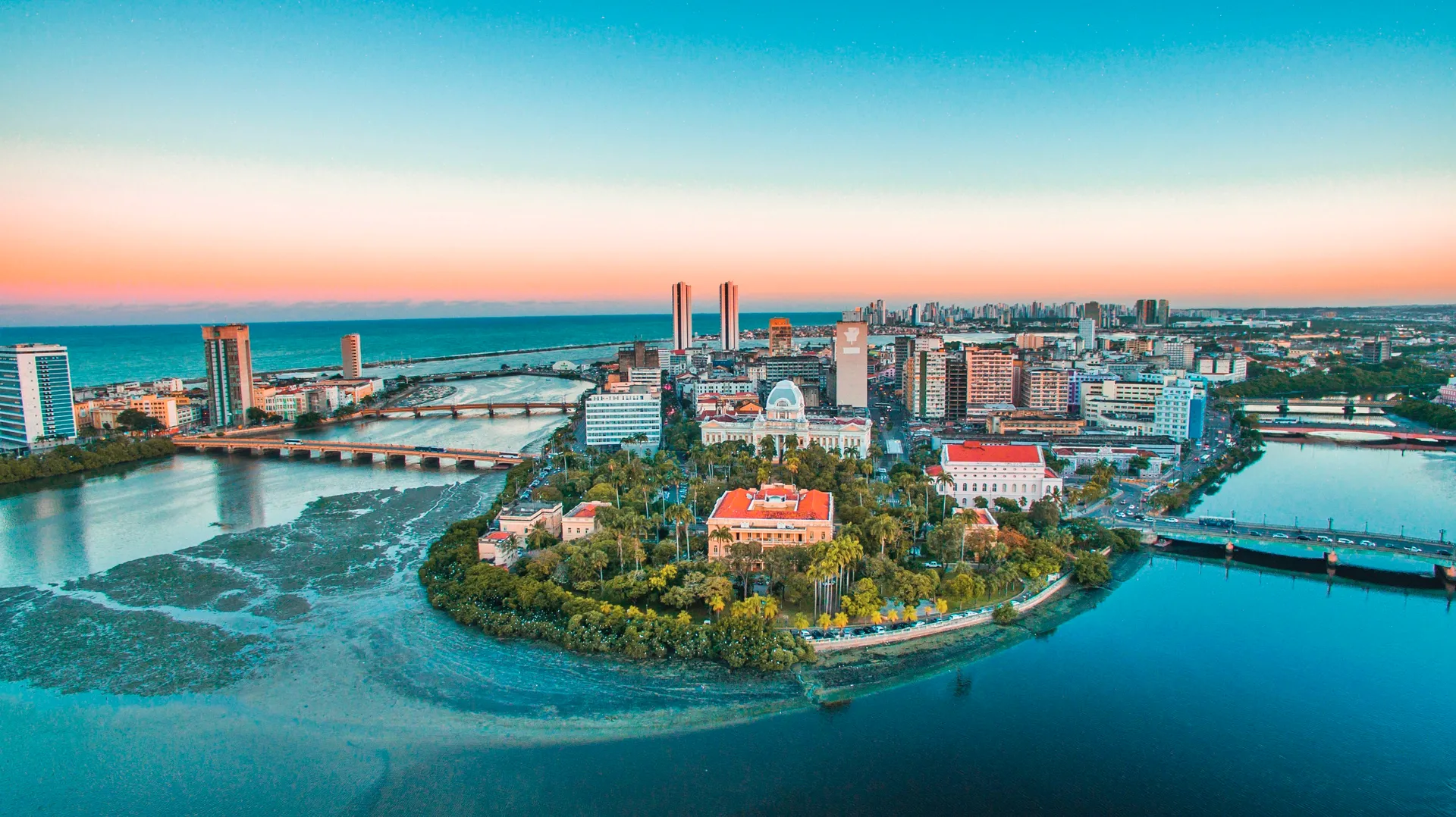
Recife is the Venice of Brazil — not in the touristic sense of gondolas and carnival masks, but in the fundamental, topographic reality of a city built on water. The capital of Pernambuco state sits at the confluence of the Capibaribe and Beberibe rivers, spread across islands, peninsulas, and reclaimed land connected by dozens of bridges that give the city its distinctive character and its nickname: the Cidade das Pontes, City of Bridges. Founded by the Dutch in the 1630s during their brief colonial occupation of northeastern Brazil, Recife retains architectural traces of this unusual heritage — the Dutch brought their canal-building expertise, their religious tolerance, and their commercial pragmatism to a tropical coast more commonly associated with Portuguese colonialism.
The historic centre of Recife Antigo, occupying the island at the harbour mouth, has been revitalised into the city's most vibrant cultural district. The Marco Zero square, where a bronze sun disc marks the symbolic centre of the city, faces the harbour and the sculptural park of Francisco Brennand, the Pernambucan artist whose ceramic totems — part Gaudi, part Amazonian mythology — populate a former tile factory on the outskirts of the city in one of the most extraordinary art installations in the Americas. The Rua do Bom Jesus, formerly Rua dos Judeus, was home to the first synagogue in the Western Hemisphere — the Kahal Zur Israel, established by Sephardic Jews who accompanied the Dutch colonisers in the 1630s, its archaeological remains now preserved as a museum beneath a restored colonial building.
Recife's culinary culture is the pride of the Brazilian northeast. Tapioca — not the pudding, but thin crepes made from cassava starch, filled with everything from coalho cheese and butter to coconut and condensed milk — is the region's most ubiquitous street food, served from carts at every corner and beach. Bolo de rolo, a paper-thin rolled cake with layers of guava paste, is Pernambuco's signature pastry, its laborious preparation — each layer spread and rolled by hand — reflecting a confectionery tradition that dates to Portuguese colonial kitchens. The seafood is magnificent: grilled lobster on the beaches of Boa Viagem, moqueca pernambucana simmered in palm oil and coconut milk, and the legendary sururu — tiny mussels stewed in a broth that locals claim cures all ailments.
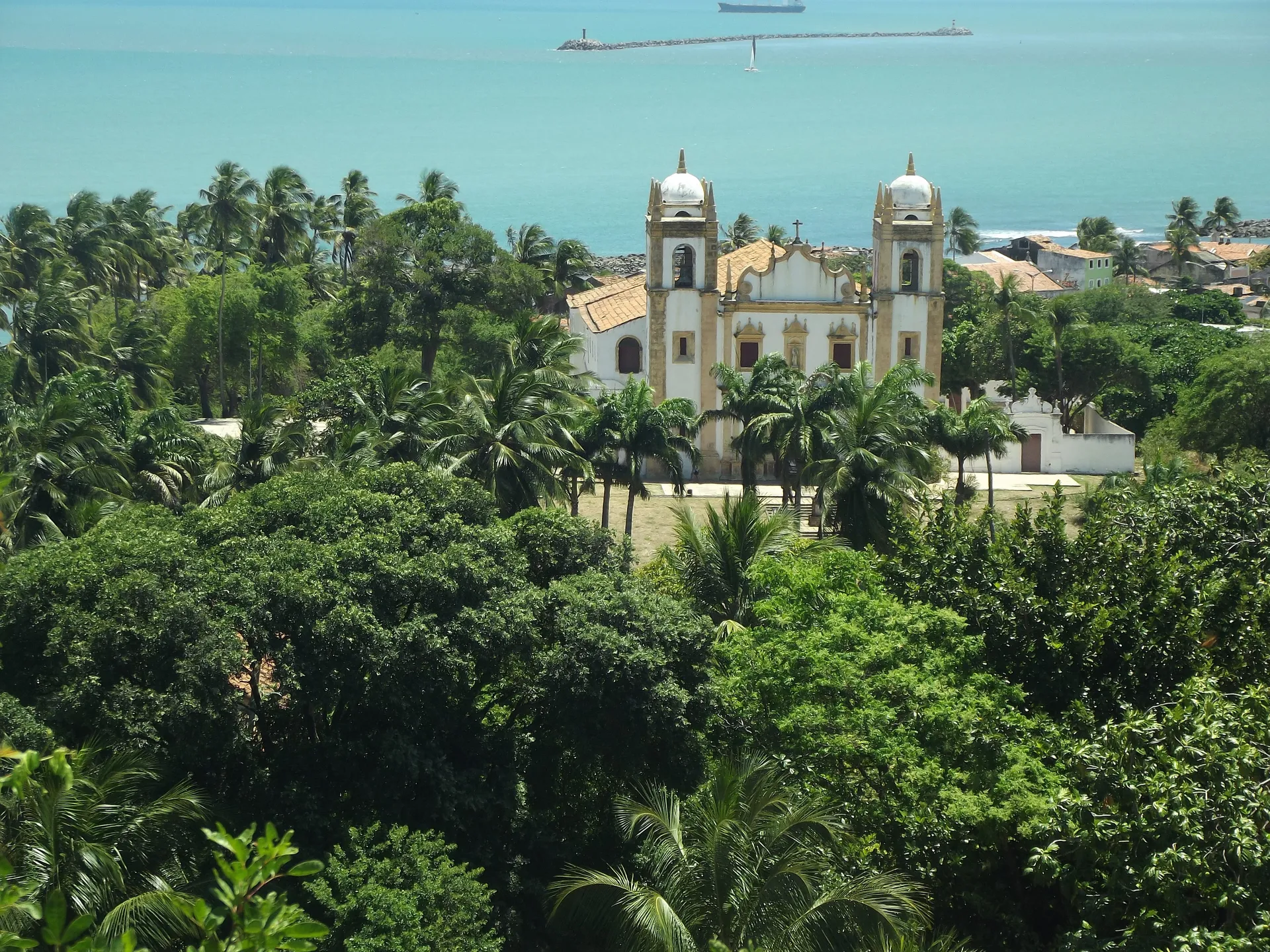
Olinda, the colonial jewel perched on hills immediately north of Recife, is a UNESCO World Heritage Site whose cobblestone streets, pastel-painted churches, and panoramic views across to the modern city skyline compose one of the most picturesque urban landscapes in Brazil. Olinda's Carnival — a more intimate, participatory alternative to Rio's stadium spectacle — fills the narrow streets with giant puppet processions (bonecos de Olinda), frevo dancers spinning their distinctive small umbrellas, and maracatu drum ensembles whose Afro-Brazilian rhythms trace directly to the enslaved populations who built the sugar economy of colonial Pernambuco.
Recife is served by Azamara and MSC Cruises on South American and transatlantic itineraries, with ships docking at the Recife harbour terminal. The ideal visiting window is September through March, when the dry season delivers abundant sunshine and warm temperatures in the high 20s to low 30s, though Recife's tropical latitude ensures beach-worthy weather year-round.