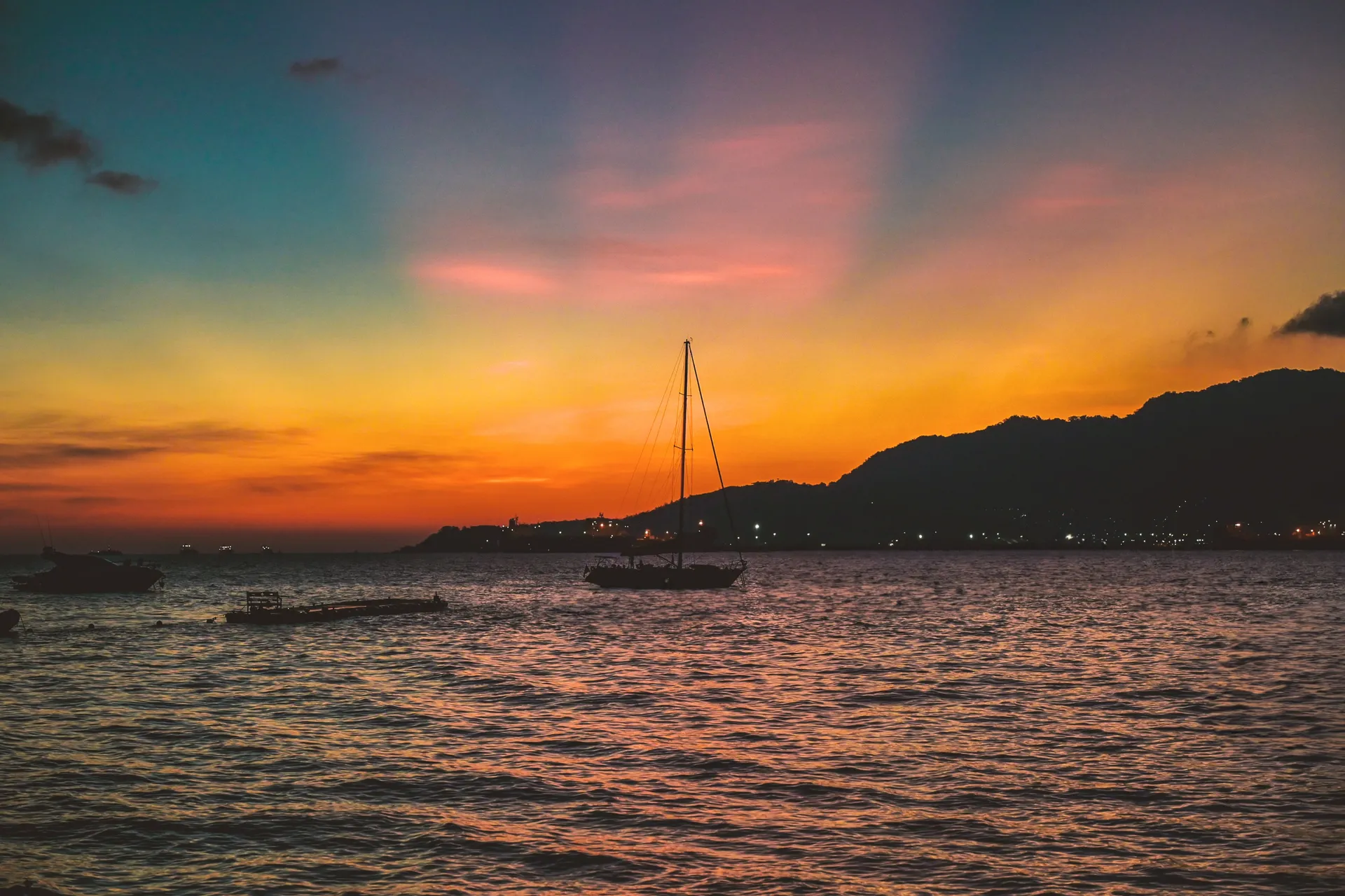
On the northern coast of Santa Catarina state, where the Atlantic Rainforest meets the Baia da Babitonga in a landscape of mangrove-fringed channels and forested islands, Sao Francisco do Sul holds the distinction of being the third-oldest city in Brazil — founded by the Portuguese in 1504, just four years after Pedro Alvares Cabral's first landing. The city's historic center, designated a National Historical Heritage Site, preserves one of the most complete ensembles of colonial and imperial-era architecture in southern Brazil — a succession of pastel-painted facades, baroque churches, and cobblestone streets that reflect nearly five centuries of continuous Portuguese-Brazilian urban life.
The historic center clusters around the harbor, its streets climbing gently from the waterfront past the Church of Nossa Senhora da Graca (1699), the Market Hall, and the National Sea Museum — housed in a handsome nineteenth-century customs building that tells the story of Brazil's maritime history through ship models, navigational instruments, and artifacts recovered from colonial-era wrecks. The architecture spans Portuguese colonial, imperial, and early republican periods, with the characteristic azulejo (glazed tile) facades and wrought-iron balconies that connect Brazilian coastal cities to their Portuguese origins. Unlike the heavily restored historic centers of some Brazilian cities, Sao Francisco do Sul's old town retains an atmosphere of lived-in authenticity.
The cuisine of Santa Catarina's coast reflects the state's unique cultural blend of Portuguese, German, Italian, and Azorean influences. Fresh seafood dominates: camarao (shrimp) from the Babitonga Bay, tainha (mullet) during the winter migration season, and the abundant ostras (oysters) that have made Santa Catarina the largest oyster producer in Brazil. Sequencia de camarao — a multi-course shrimp feast — is the region's signature dining experience, with prawns prepared in a dozen different ways over the course of a meal. Barreado, a meat stew slow-cooked in sealed clay pots for 24 hours, is a traditional celebration dish, while the German influence appears in the excellent craft beers produced by the region's growing number of microbreweries.
The Baia da Babitonga, which the city overlooks, is one of the most important estuarine ecosystems on Brazil's southern coast. The bay's mangrove forests, tidal flats, and islands support populations of the Guiana dolphin (boto-cinza), which can be observed from boat tours that depart from the city's waterfront. The surrounding Atlantic Rainforest fragments harbor a remarkable biodiversity, including howler monkeys, toucans, and over 300 bird species. The beaches of the municipality — Enseada, Ubatuba, and Prainha — offer swimming and surfing along a coastline that combines tropical warmth with the pleasant absence of crowds found on more famous Brazilian beaches.
Sao Francisco do Sul's port handles cruise ships at the commercial terminal, with the historic center a short transfer from the berth. The city is also accessible by road from Joinville (approximately 50 kilometers) and by regional flights. The most pleasant visiting season is October through March (Brazilian spring and summer), when temperatures are warmest and the beaches are at their best. The winter months (June to August) bring cooler weather and the mullet fishing season — a cultural event celebrated with festivals and communal fish fries throughout the coastal communities of Santa Catarina.

