Muara serves as the principal port of Brunei Darussalam, one of the world's smallest yet wealthiest nations—a sultanate on the northern coast of Borneo that has transformed its vast oil and gas reserves into one of the highest standards of living on the planet while maintaining a deep commitment to Malay Islamic monarchy and the preservation of its extraordinary rainforest heritage. The port town itself is modest—a quiet settlement at the tip of the Muara peninsula where the Brunei River meets the South China Sea—but it serves as the gateway to a country that offers cruise visitors a genuinely unique Southeast Asian experience: no alcohol, no nightlife, but a golden-domed capital of serene beauty, pristine mangrove forests, and a hospitality so generous it borders on the overwhelming.
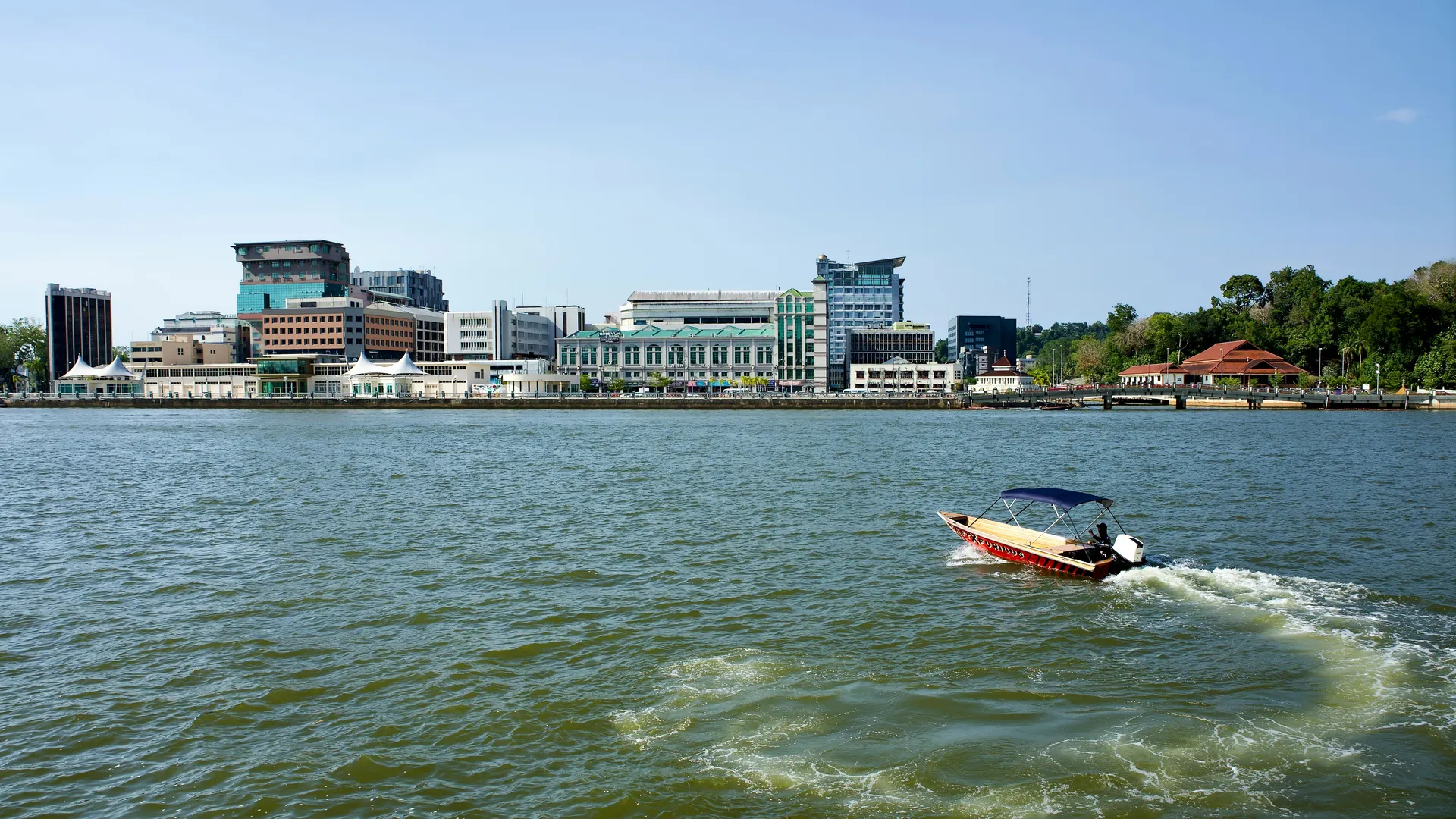
Bandar Seri Begawan, Brunei's capital, lies 25 kilometers from the port and presents a cityscape unlike any other in the region. The Omar Ali Saifuddien Mosque, set beside an artificial lagoon with a replica royal barge, is one of the most photogenic houses of worship in Asia—its golden dome and Italian marble minarets reflected in still water against a backdrop of tropical greenery. The Jame'Asr Hassanil Bolkiah Mosque, even larger, was built to celebrate the Sultan's silver jubilee and can accommodate 5,000 worshippers beneath 29 golden domes. Kampong Ayer, the world's largest water village, has housed Brunei's population on stilts above the Brunei River for over 1,300 years—a fully functioning community of 30,000 residents with its own schools, mosques, fire stations, and water taxis connecting a labyrinth of wooden walkways to the modern city onshore.
Bruneian cuisine reflects the nation's Malay heritage with influences from Chinese, Indian, and indigenous traditions. Ambuyat, the national dish, is a starchy, glue-like substance derived from the sago palm, eaten communally by wrapping it around a two-pronged bamboo fork and dipping it into a variety of sauces—typically a sour fruit-based cacah or a rich shrimp-paste-based condiment. Nasi katok—rice with fried chicken and sambal—is the beloved street food available at every corner for under a dollar. The morning and night markets offer a rotating feast of satay, roti canai, kuih (colorful Malay cakes), and grilled seafood. Royal Brunei's cuisine reaches its most refined expression in the restaurants of the Empire Hotel & Country Club, a vast, opulent complex that offers a glimpse into the scale of luxury the sultanate's wealth can command.
Beyond the capital, Brunei's natural heritage is its most compelling asset. The Ulu Temburong National Park, accessible by longboat through pristine mangrove channels, protects one of the last untouched tracts of primary lowland rainforest in Borneo. A canopy walkway suspended 50 meters above the forest floor offers views across an unbroken green expanse that stretches to the horizon—a humbling reminder of what Borneo looked like before logging transformed much of the island. Proboscis monkeys, found only on Borneo, inhabit the mangrove forests along the Brunei River and can be spotted on evening river cruises from the capital. The Tasek Merimbun Heritage Park protects Brunei's largest natural lake, surrounded by peat swamp forest teeming with birdlife.
Costa Cruises and Oceania Cruises call at Muara port, which features a modern cruise terminal with good facilities. Shore excursions to Bandar Seri Begawan are well-organized, with air-conditioned coaches making the 30-minute drive to the capital. The country is safe, clean, and English is widely spoken alongside Malay. Brunei's equatorial climate means warm, humid conditions year-round, with temperatures consistently around 28–33°C. The driest months are February through April, though brief tropical downpours can occur at any time. Visitors should note that Brunei enforces Sharia law: alcohol is prohibited, and modest dress is expected when visiting mosques. For cruise travelers accustomed to the well-trodden ports of Southeast Asia, Brunei offers something refreshingly different—a quietly confident nation that has chosen preservation over development and tradition over spectacle.

