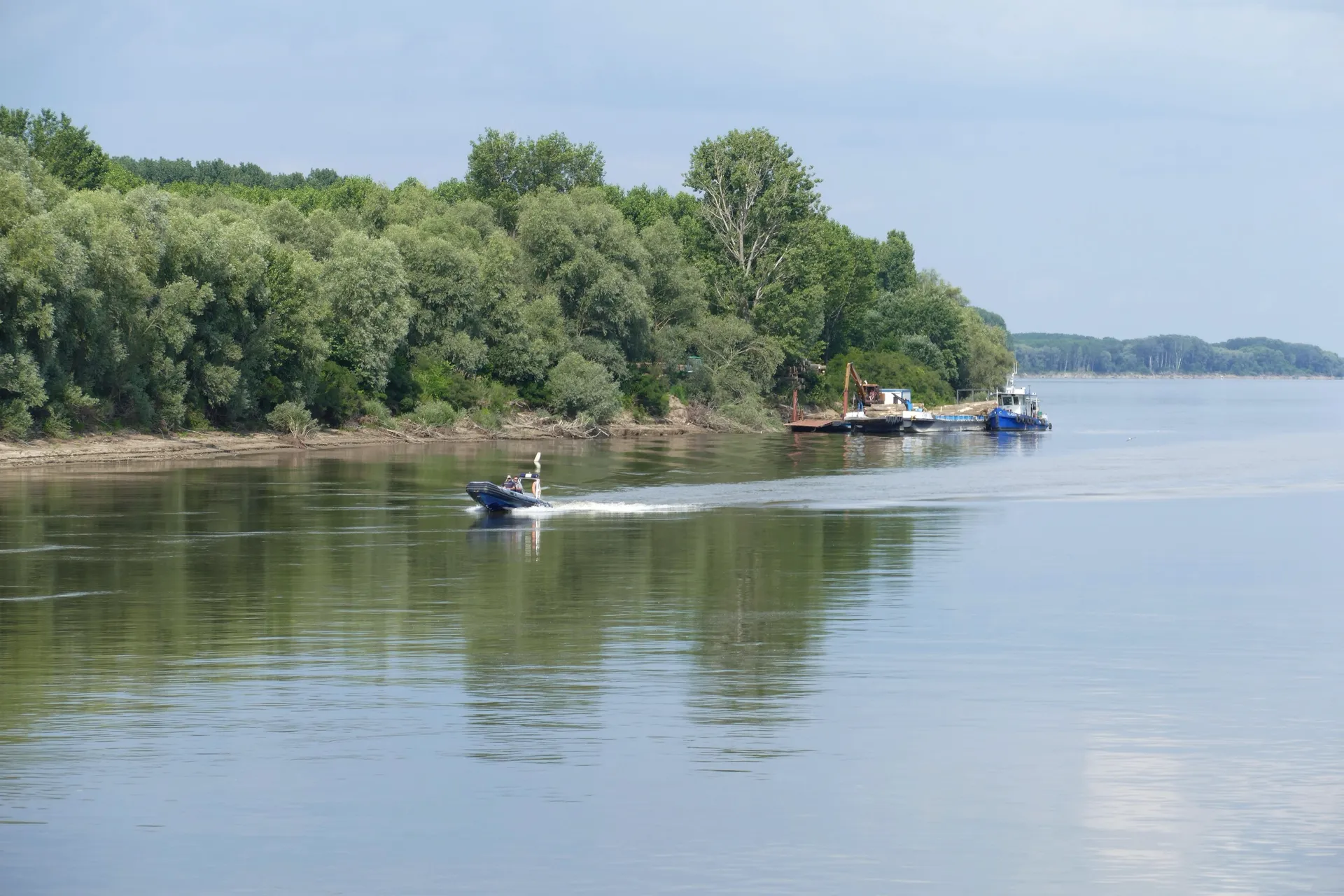
On the banks of the Danube in northern Bulgaria, where the great river carves a broad valley between the Danubian Plain and the distant Balkan Mountains, Nikopol occupies one of the most historically resonant positions in southeastern Europe. This small city — perched on limestone cliffs above the river — witnessed one of the medieval world's most consequential battles in 1396, when an Ottoman army under Sultan Bayezid I defeated the last major Crusader force, effectively securing Ottoman control of the Balkans for centuries to come.
The fortress of Nikopol, whose ruins crown the cliffs above the Danube, tells the story of a strategic position coveted by every power that sought to control the river crossing. Roman fortifications, medieval Bulgarian strongholds, and Ottoman additions layer upon one another in a palimpsest of military architecture that spans more than a millennium. Walking the fortress grounds, with the Danube flowing far below and the Romanian plain stretching to the northern horizon, one gains an immediate understanding of why this location commanded such strategic importance — the river here is wide but fordable, and whoever controlled the crossing controlled the movement of armies and commerce alike.
The town below the fortress preserves the quiet charm of a Bulgarian river settlement that has gracefully accepted a supporting role in the nation's modern story. The clock tower, a remnant of Ottoman administration, still marks the hours above streets lined with nineteenth-century merchant houses whose architecture reflects the National Revival period — Bulgaria's cultural awakening in the decades before liberation from Ottoman rule. The Church of Saints Peter and Paul, rebuilt after the Russo-Turkish War, contains icons and frescoes that demonstrate the continuity of Orthodox artistic traditions through centuries of foreign domination.
Bulgarian cuisine reaches some of its finest expressions in the Danubian region, where river fish and agricultural abundance combine with a culinary tradition that balances Mediterranean and Central European influences. Freshwater fish from the Danube — particularly carp and catfish — are prepared in regional styles that have evolved over centuries. Shopska salad, the national dish of tomatoes, cucumbers, peppers, and sirene cheese, achieves particular excellence when made with the sun-ripened produce of the Danubian plain. Local wines from the nearby Pleven region complement meals with robust reds that reflect the continental climate's warm summers and cold winters.
Nikopol is typically visited by river cruise vessels navigating the Danube between Budapest and the Black Sea, though it also serves as a port of call for expedition cruises exploring the lower Danube. The town is compact and walkable, with the fortress, old town, and riverside promenade all accessible within a comfortable morning's exploration. Spring (April-May) and autumn (September-October) offer the most pleasant temperatures, though the fortress provides shade during summer visits. For history enthusiasts navigating the Danube, Nikopol provides a concentrated encounter with the forces — military, cultural, and geographical — that shaped southeastern Europe's turbulent and fascinating past.

