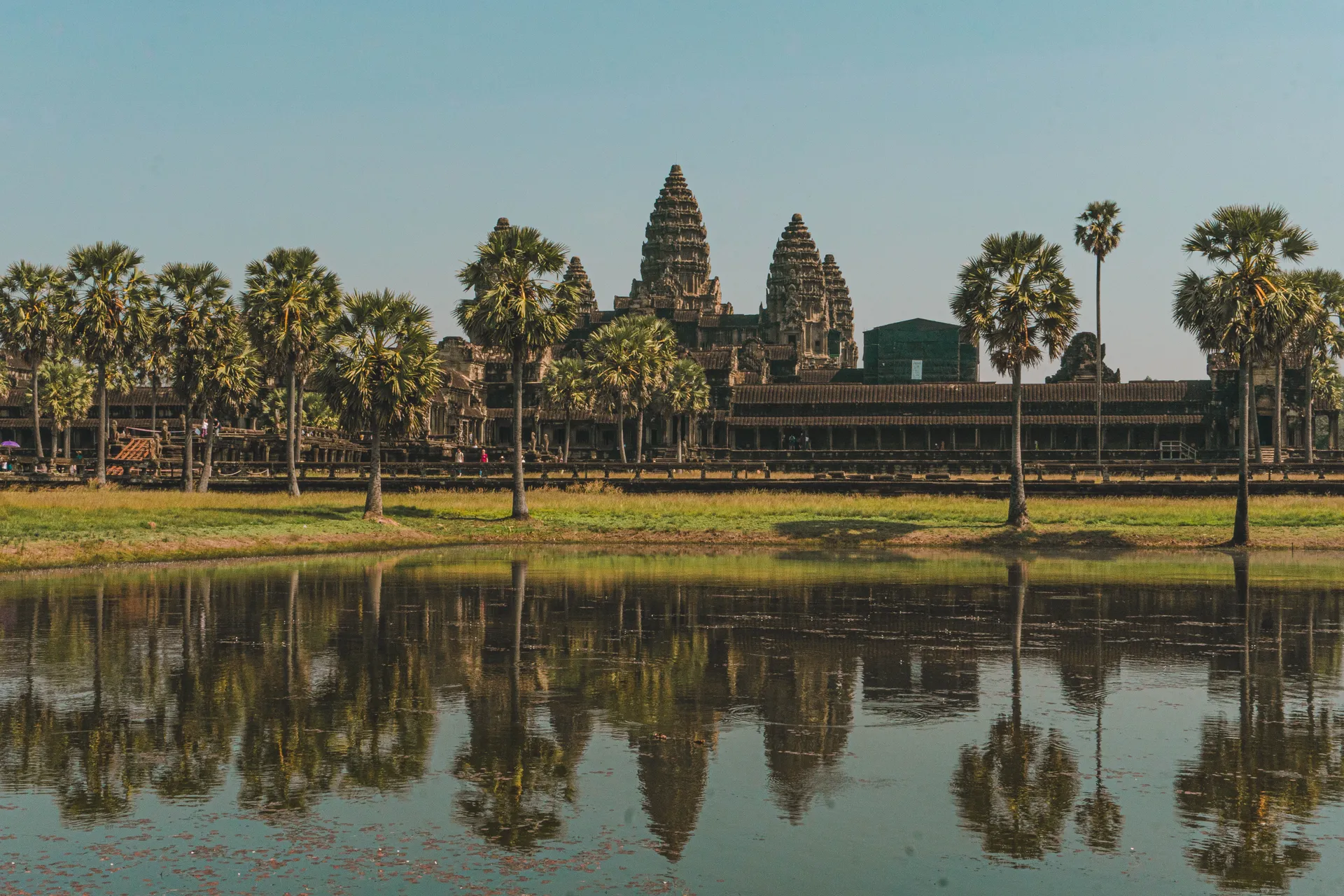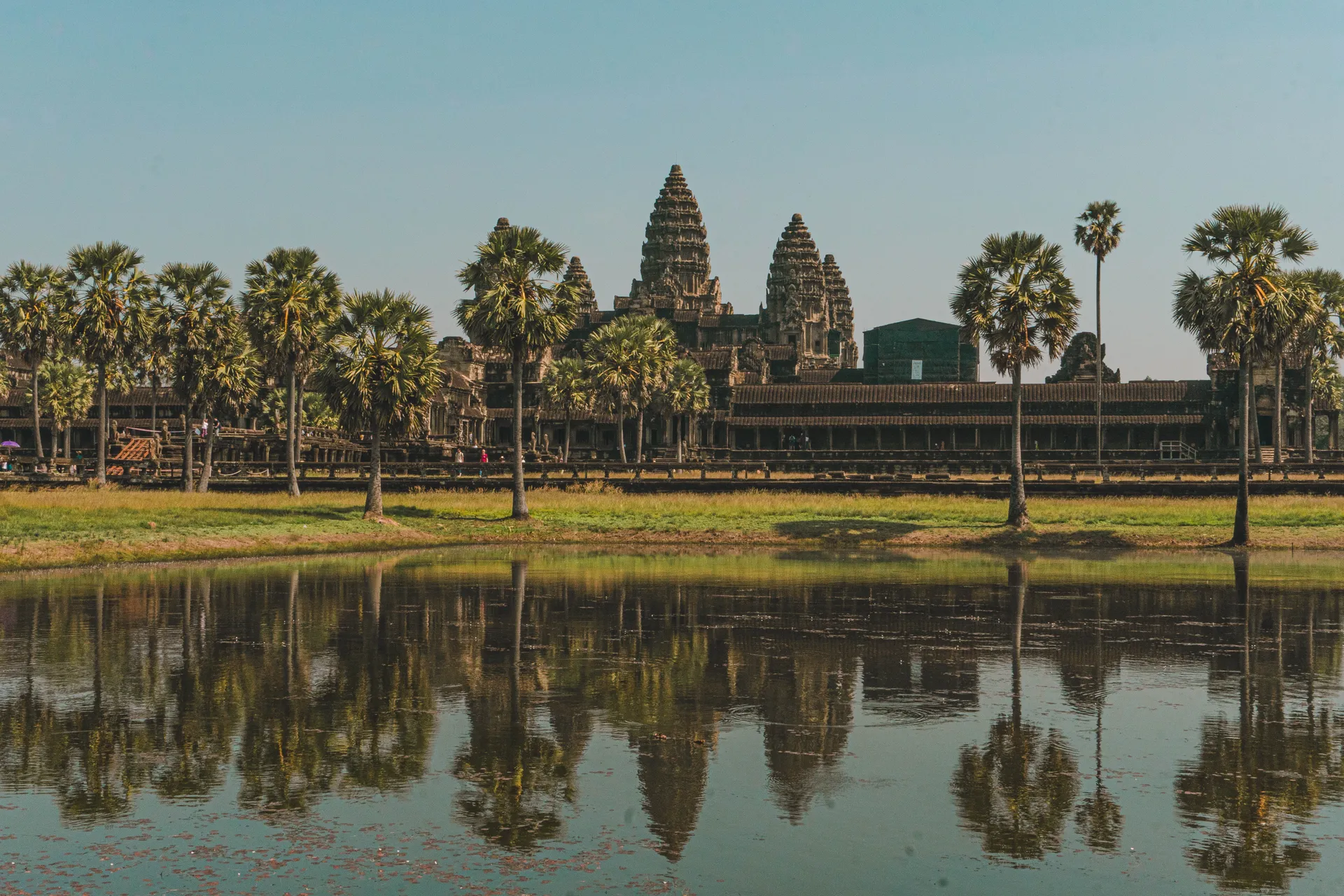
Angkor Ban is a riverside village on the banks of the Mekong in Kampong Cham Province, a world away from the temple complexes of Angkor Wat yet steeped in its own quieter Khmer heritage. The village's name — meaning "closed temple" — hints at a vanished past: ruins of a modest laterite sanctuary lie partially hidden among the trees, a reminder that the Angkor Empire's influence once stretched far along the Mekong corridor. During the brutal Khmer Rouge years of 1975-1979, rural communities like Angkor Ban suffered devastating losses, and the village's patient rebuilding over the subsequent decades stands as a testament to Cambodian resilience.
What makes Angkor Ban remarkable for river cruise travelers is its unvarnished authenticity. Unlike purpose-built tourist stops, this is a working agricultural community where stilted wooden houses — painted in faded blues and greens — line dusty paths beneath towering sugar palms. The village pagoda, with its elaborately painted ceiling depicting scenes from the Jataka tales, serves as the social and spiritual center. Farmers tend paddies of fragrant jasmine rice, while fishermen cast their nets into the coffee-colored Mekong. Children bicycle along the raised paths between rice fields, and the rhythm of life here has changed remarkably little over generations.
Cambodian village cuisine is elemental and deeply flavorful. Amok trey, the national dish — fish steamed in banana leaves with a silky coconut curry of lemongrass, galangal, and turmeric — is prepared in homes across the village. Prahok, the pungent fermented fish paste that is the backbone of Khmer cooking, intensifies soups and stir-fries with a depth of umami that defines the cuisine. Fresh rice noodle soup (kuy teav), morning glory stir-fried with garlic, and palm sugar desserts made from the sap of the village's ubiquitous sugar palms round out a diet of beautiful simplicity. Village visits often include demonstrations of traditional rice paper and silk weaving.
From Angkor Ban, excursions follow the Mekong's course. Kampong Cham, the provincial capital twenty minutes downstream, features a bustling riverside market and the remarkable bamboo bridge — rebuilt each dry season by hand — that crosses to Koh Paen island. The pre-Angkorian temple of Wat Nokor, an eleventh-century sandstone complex with a modern pagoda built inside its ruins, lies just beyond. Upstream, the rare Irrawaddy dolphins of Kratie — one of the last remaining freshwater populations of this critically endangered species — can be spotted from boats, a two-to-three-hour journey north.
Angkor Ban is visited by river cruise lines navigating the Mekong between Vietnam and Cambodia. AmaWaterways, APT Cruising, Avalon Waterways, Emerald Cruises, Scenic River Cruises, and Uniworld River Cruises include this village in their itineraries, with vessels such as the AmaDara, Scenic Spirit, and Mekong Jewel calling here. The cruise season runs from November through April, coinciding with Cambodia's dry season, when water levels are manageable and the countryside glows under clear blue skies — December through February offers the most comfortable temperatures, typically in the high twenties Celsius.