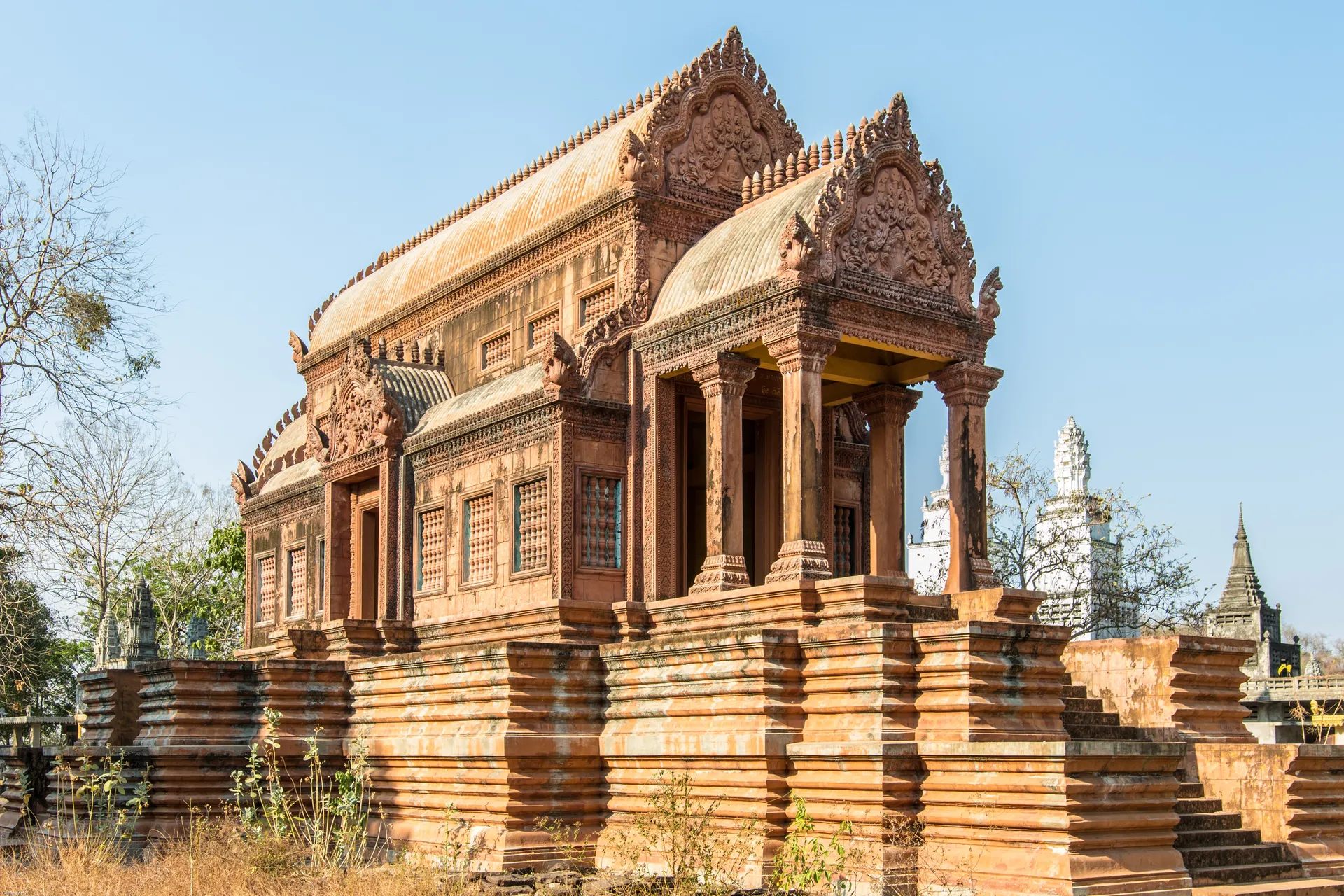
Kampong Cham, Cambodia's third-largest city, stretches along the western bank of the Mekong River at a point where the great waterway, having journeyed nearly three thousand kilometers from the Tibetan Plateau, begins its final, languorous descent toward the delta. The city's name derives from the Cham people, a Muslim minority whose ancestors once ruled the mighty Champa kingdom that dominated coastal Vietnam from the second through the seventeenth century. French colonial administrators made Kampong Cham a provincial capital, and their legacy endures in the weathered Art Deco shophouses and tree-lined boulevards that give the town a faded, dreamlike elegance.
What distinguishes Kampong Cham is its intimate, unhurried atmosphere — a quality increasingly rare in Southeast Asia's rapidly modernizing cities. Monks in saffron robes collect alms at dawn along the riverfront promenade, while fishermen cast nets from wooden pirogues in the coffee-colored Mekong. The bamboo bridge to Koh Paen island, rebuilt each dry season by hand and dismantled before the monsoon floods, is one of the longest bamboo bridges in the world — a feat of communal engineering that speaks to the ingenuity and resilience of rural Cambodia. On Koh Paen itself, farmers tend tobacco, fruit orchards, and vegetable gardens in a pastoral landscape of stilt houses and wandering water buffalo.
Cambodian cuisine along the Mekong is a revelation of freshness and balance. Fish amok, the national dish, is a sublime curry of freshwater fish steamed in banana leaves with coconut milk, kroeung paste (a fragrant blend of lemongrass, galangal, turmeric, and kaffir lime), and egg. Lok lak — stir-fried beef cubes served on a bed of greens with a tangy lime-and-pepper dipping sauce — is found at every riverside restaurant. Morning markets overflow with num pang (Cambodian baguette sandwiches stuffed with pâté, pickled vegetables, and cilantro), tropical fruits like rambutan and mangosteen, and freshly pressed sugar cane juice. For an afternoon treat, try nom krok — crispy coconut rice cakes cooked in a clay mold over charcoal.
From Kampong Cham, river cruisers can explore some of Cambodia's most significant sites. The twin temples of Phnom Pros and Phnom Srey ("Man Hill" and "Woman Hill"), adorned with legends of a gender competition from Khmer mythology, are just outside town. The pre-Angkorian temple of Wat Nokor, dating to the eleventh century and now engulfed by a modern pagoda, offers a haunting palimpsest of old and new. Phnom Penh, Cambodia's vibrant capital, lies approximately 120 kilometers downstream, reachable by river in a scenic half-day journey; from there, the temples of Angkor — the largest religious complex ever built — are a short flight away.
Mekong River cruises calling at Kampong Cham represent some of the finest river voyaging in Asia. AmaWaterways operates the luxurious AmaDara, while Scenic River Cruises sails the Scenic Spirit with its sun deck pool and opulent suites. Uniworld River Cruises offers the Mekong Jewel, and APT Cruising provides its signature all-inclusive experience. Avalon Waterways features panoramic-window staterooms on the Mekong, while Viking brings its trademark Scandinavian-modern design. Fred Olsen Cruise Lines rounds out the roster with its ocean-to-river expedition itineraries. The best time to cruise is November through March, during the dry season when the Mekong runs clear and the weather is pleasantly warm.