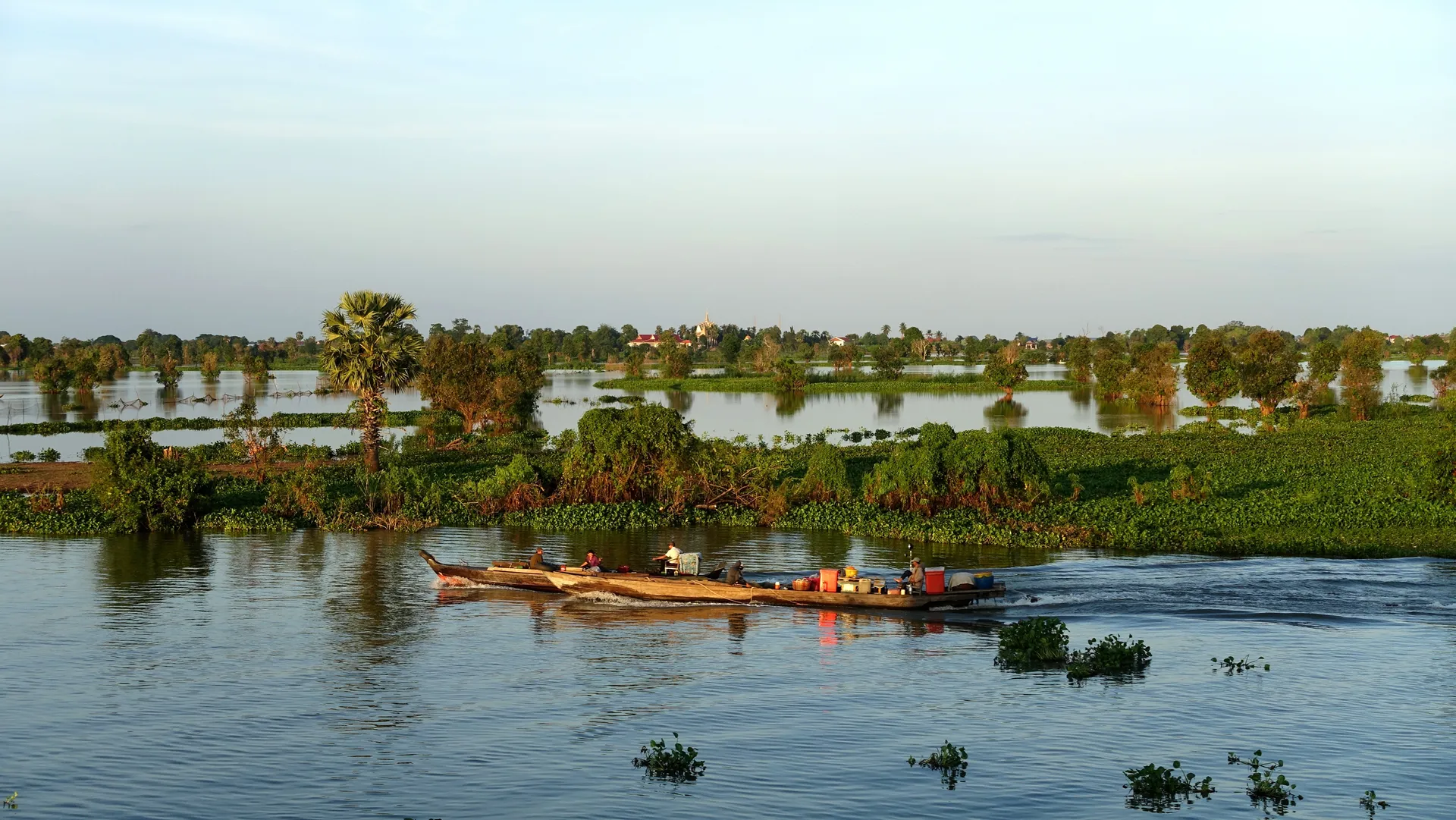
An hour's drive northwest of Phnom Penh, where the Tonle Sap River widens into the flood plains that feed Cambodia's great inland sea, Kampong Chhnang is a riverside province whose name — meaning "Port of Pottery" — declares the craft that has defined this community for centuries. The clay deposits along the Tonle Sap's banks have supplied Khmer potters with raw material since the Angkorian period, and the village of Ondong Rossey, just outside the provincial capital, remains one of the last places in Southeast Asia where traditional pottery is shaped entirely by hand, without a wheel, using a technique so ancient it predates the potter's wheel itself.
The floating villages of Kampong Chhnang are the province's most visually striking feature. Entire communities live on the water in houses built on pontoons or stilts, rising and falling with the extraordinary seasonal fluctuations of the Tonle Sap system — water levels can change by as much as eight metres between the dry season and the monsoon peak, expanding the Tonle Sap Lake from 2,500 to over 16,000 square kilometres and creating the largest freshwater fishery in Southeast Asia. The floating village of Chong Kos, accessible by small boat from the provincial capital, is a complete waterborne community: schools, shops, fish farms, and even a floating petrol station, all moored to a river bottom that may be a metre deep in March and ten metres deep by October.
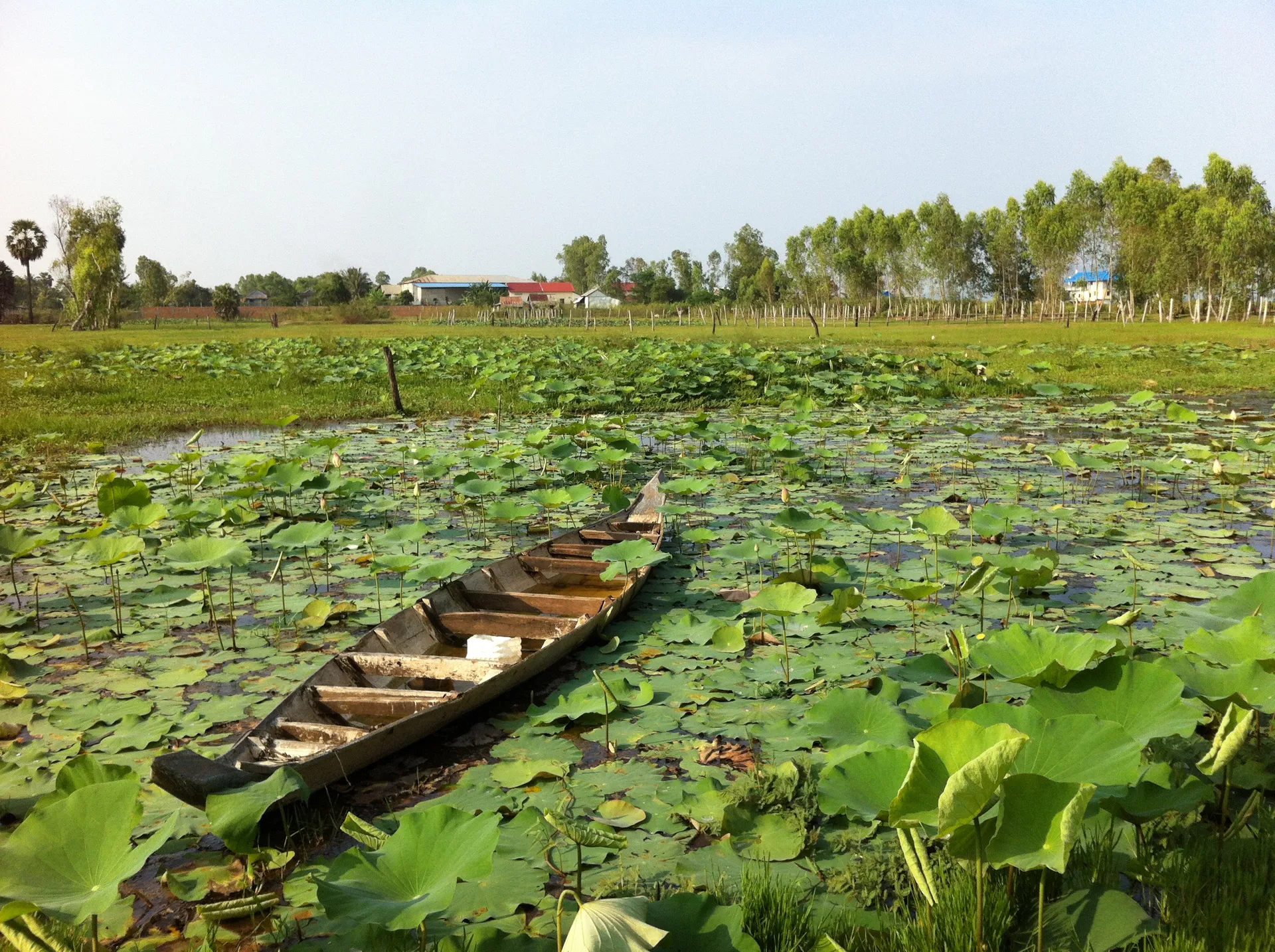
Life in Kampong Chhnang moves to the rhythm of the river and the rice paddy. The province is one of Cambodia's most productive agricultural regions, its alluvial flood plains producing rice harvests that have sustained Khmer civilisation for millennia. The local cuisine reflects this abundance: prahok, the fermented fish paste that is the backbone of Cambodian cooking, is produced here in quantities that supply markets across the country, its pungent, umami-rich flavour an acquired taste for visitors but an indispensable ingredient for Cambodians. Amok trey, steamed fish curry in banana leaf, and samlor korko, a complex vegetable soup considered Cambodia's national dish, are served at riverfront restaurants where the view encompasses the broad, brown sweep of the Tonle Sap in all its monsoon grandeur.
The pottery tradition of Ondong Rossey provides a window into pre-industrial Khmer craft practice. Women — pottery in Cambodia is traditionally a female art — shape cooking pots, water jars, and decorative vessels from riverbank clay using a paddle-and-anvil technique, then fire them in open-air kilns fuelled by rice husks. The resulting vessels, unglazed and elegantly simple, are sold at local markets and along the roadside, their forms virtually unchanged from examples excavated at Angkorian-era kiln sites. Visitors can watch the potters at work, try their hand at shaping clay, and purchase finished pieces directly — a cultural exchange that is among the most authentic craft experiences available in Cambodia.
Kampong Chhnang is visited by CroisiEurope on Mekong and Tonle Sap river cruise itineraries, with vessels mooring at the provincial capital's river port. The most comfortable visiting season is November through March, when the flood waters have receded, temperatures are cooler, and the floating villages are most easily navigated by small boat. The wet season from June through October, while hotter and more humid, offers the dramatic spectacle of the flood in full flow.