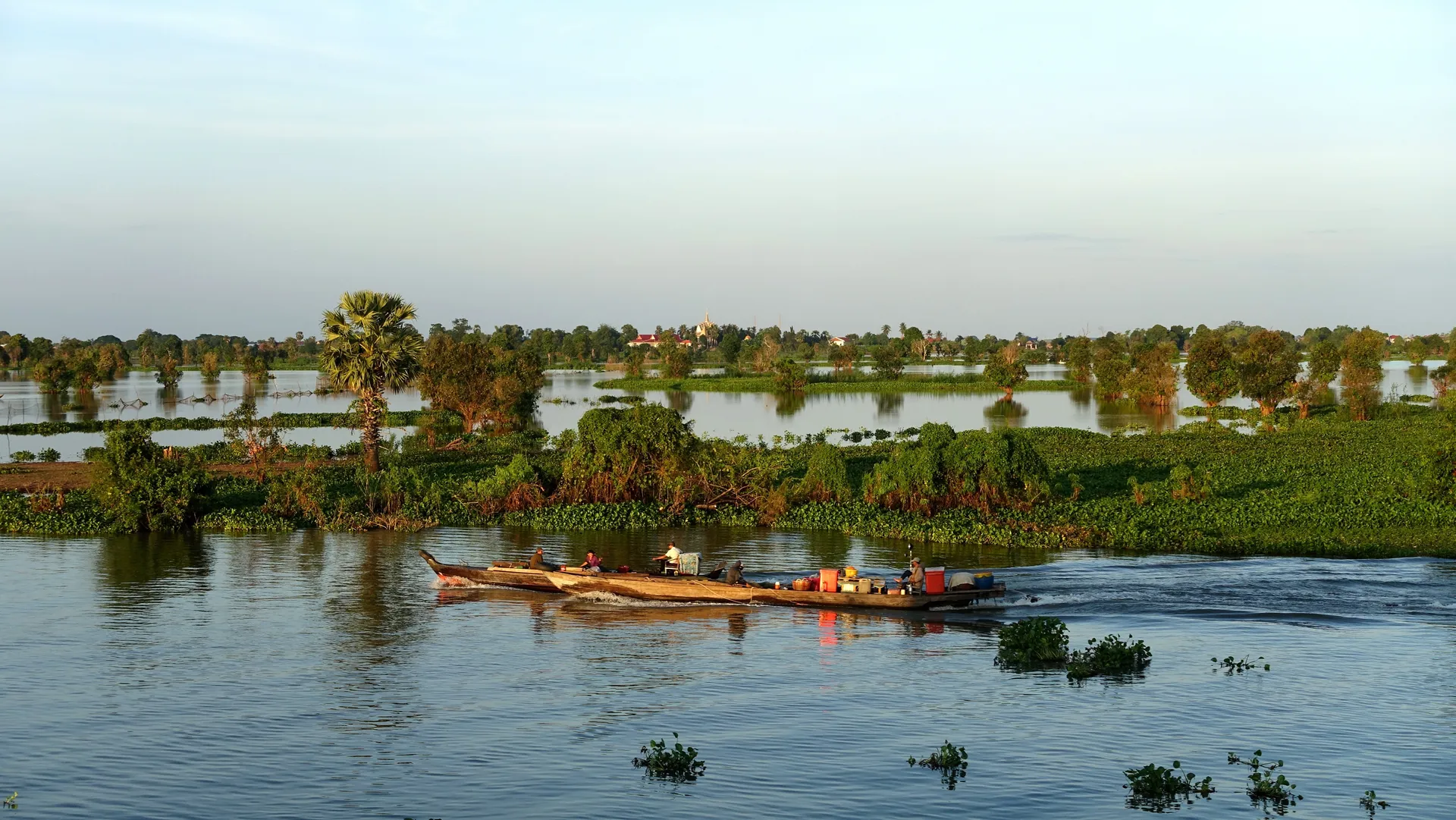
Tonle Sap is not merely a lake — it is the beating heart of Cambodia, a hydrological phenomenon of global significance that sustains the livelihoods of over a million people and supports one of the world's most productive freshwater ecosystems. This vast, shallow basin in the center of the Cambodian lowlands performs an annual miracle: during the monsoon season, the swollen Mekong River forces the Tonle Sap River to reverse its flow, flooding the lake to five or six times its dry-season size and transforming it from a modest 2,500 square kilometers into an inland sea of up to 16,000 square kilometers. This "pulse" drives one of the most productive fisheries on Earth and nourishes the flooded forests and rice paddies that are the foundation of Cambodian life.
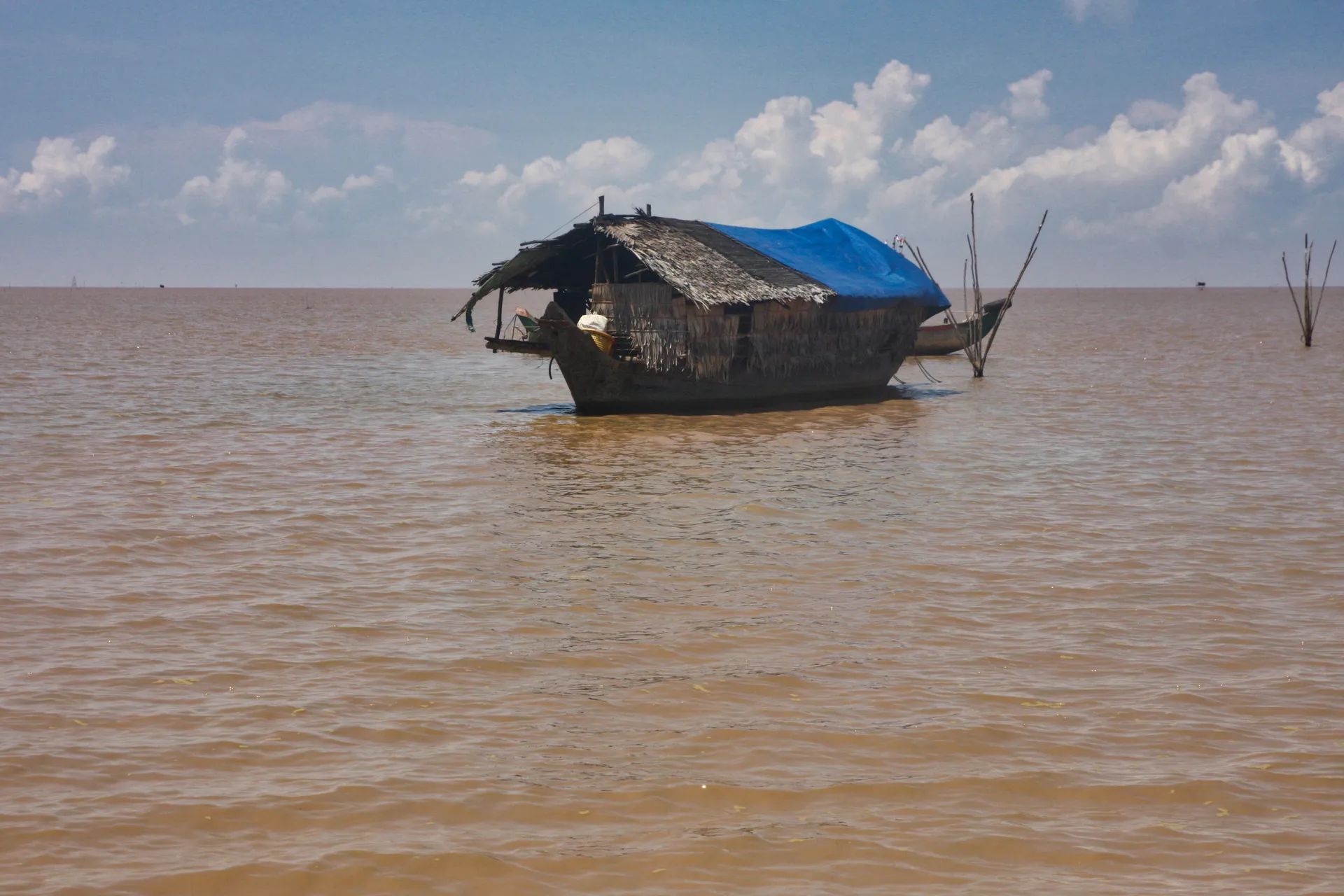
The floating villages of Tonle Sap are among the most extraordinary human settlements on the planet. Communities of thousands live entirely on water — their houses, schools, shops, police stations, and even basketball courts are built on floating platforms that rise and fall with the lake's seasonal fluctuations. Kampong Khleang, one of the largest of these communities, stretches for kilometers along the lakeshore, its stilted houses rising dramatically on wooden poles that can reach ten meters or more during the flood season. During the dry season, the houses tower above mudflats; during the monsoon, the water laps at the doorsteps, and the entire community operates by boat.
Cambodian cuisine, intimately connected to the resources of Tonle Sap, is one of Southeast Asia's most underrated culinary traditions. Prahok — fermented fish paste — is the foundational flavor of Khmer cooking, providing the umami backbone to curries, soups, and stir-fries. Fish amok — a delicate curry of freshwater fish steamed in banana leaves with coconut cream, lemongrass, and kaffir lime — is Cambodia's national dish and reaches its finest expression in the communities surrounding the lake, where the fish is hours rather than days old. Dried and smoked fish, prepared during the dry season when the catches are enormous, sustain families through the lean months and are traded throughout the country.
The ecological importance of Tonle Sap extends far beyond its fisheries. The flooded forests that surround the lake — inundated for months each year — provide critical breeding habitat for fish, waterbirds, and the globally endangered species that depend on this unique ecosystem. The Prek Toal Bird Sanctuary, in the lake's northwestern corner, hosts the largest colonies of water birds in Southeast Asia — milky storks, spot-billed pelicans, painted storks, and the greater adjutant, one of the world's most endangered large birds. The lake itself is a UNESCO Biosphere Reserve, its seasonal rhythm representing one of the most remarkable freshwater ecosystems on Earth.
Tonle Sap is visited by river cruise vessels operating on the Mekong and Tonle Sap River systems, with excursions into the floating villages typically conducted by small motorboats or traditional wooden boats. The lake can also be accessed by road from Siem Reap, the gateway city for Angkor Wat, which lies just 15 kilometers from the lakeshore. The best time to visit the floating villages is during or just after the monsoon season (September to January), when water levels are highest and the communities are fully afloat. The dry season (February to May) offers a dramatically different landscape — exposed mudflats, towering stilts, and a sense of the lake's astonishing seasonal transformation.