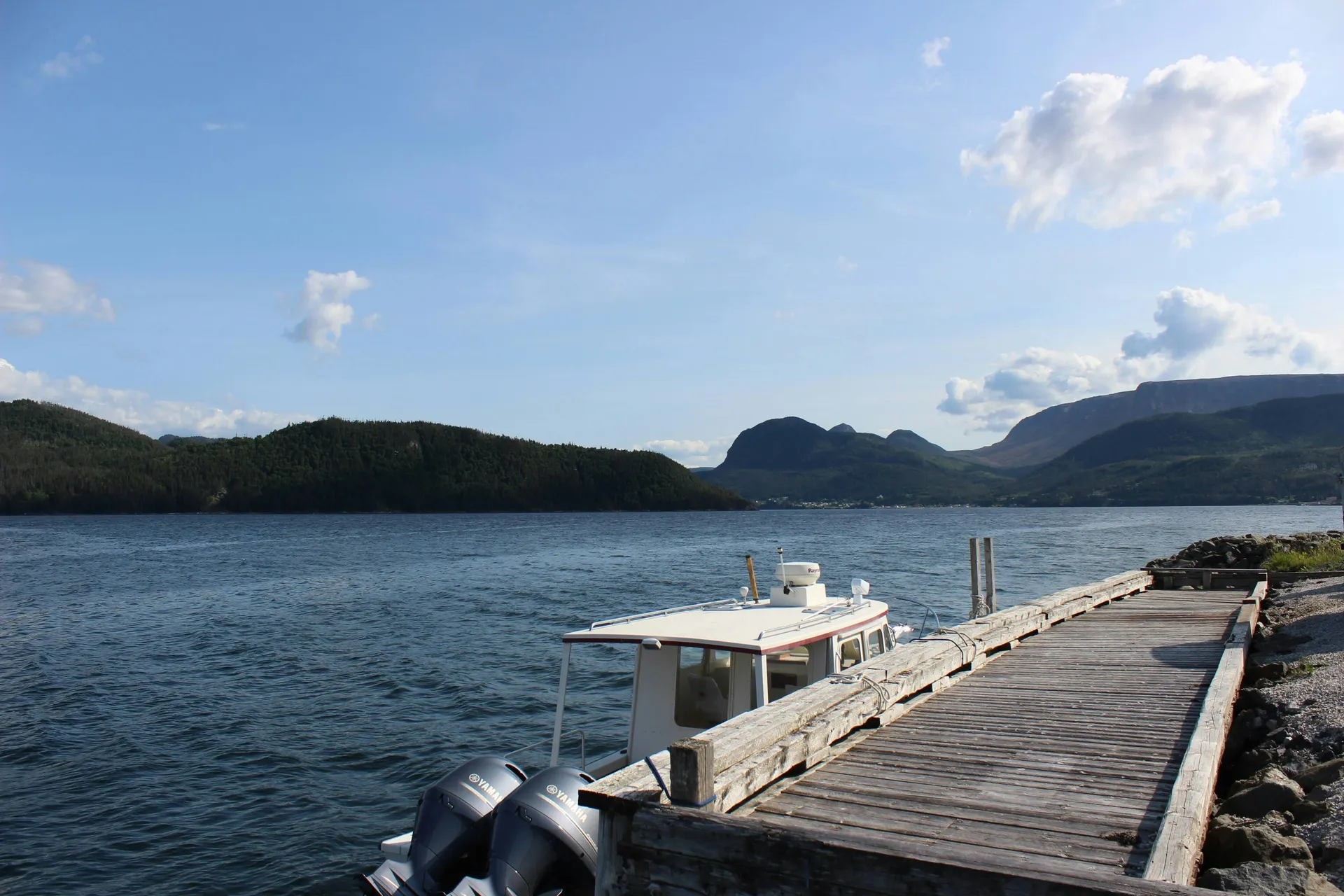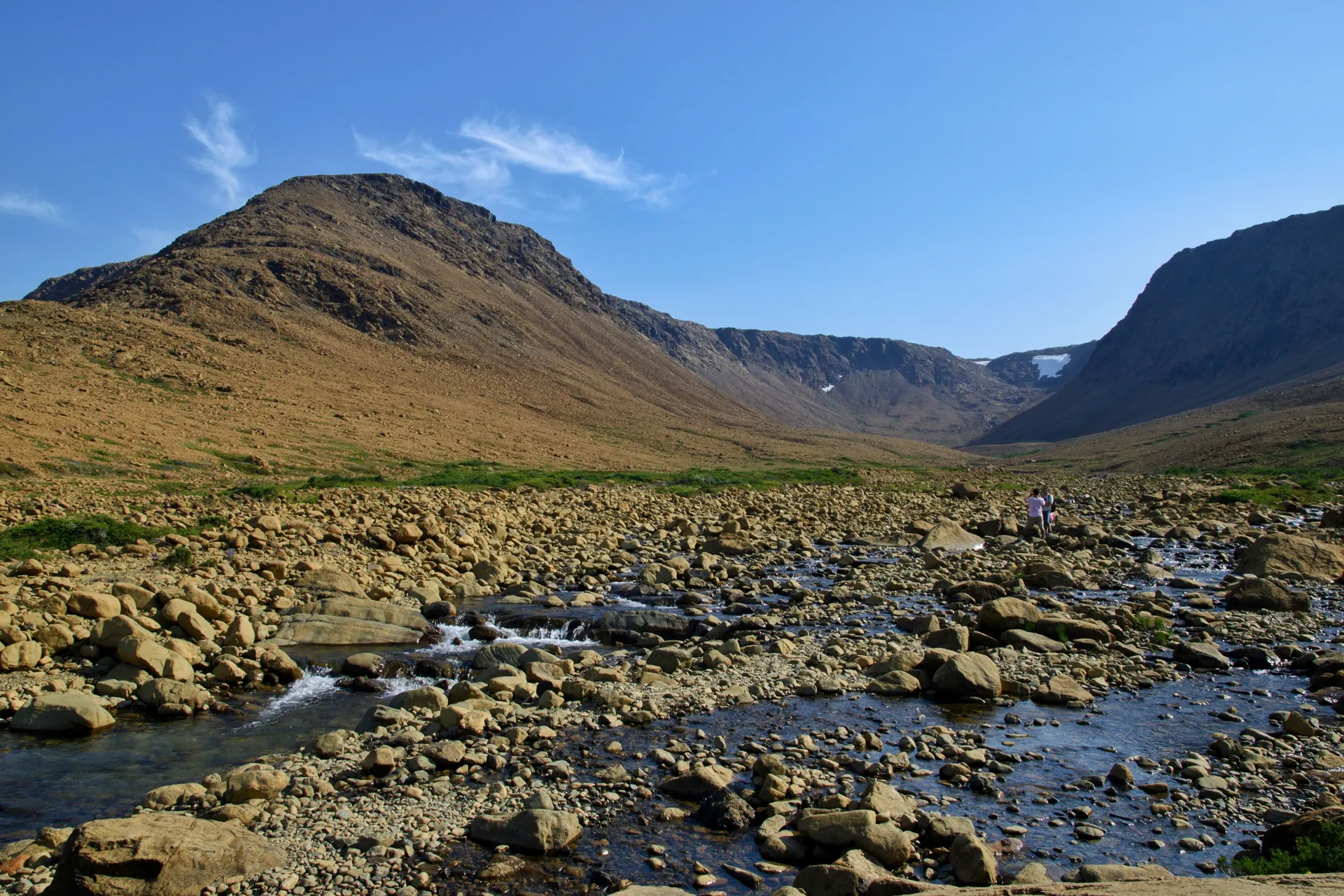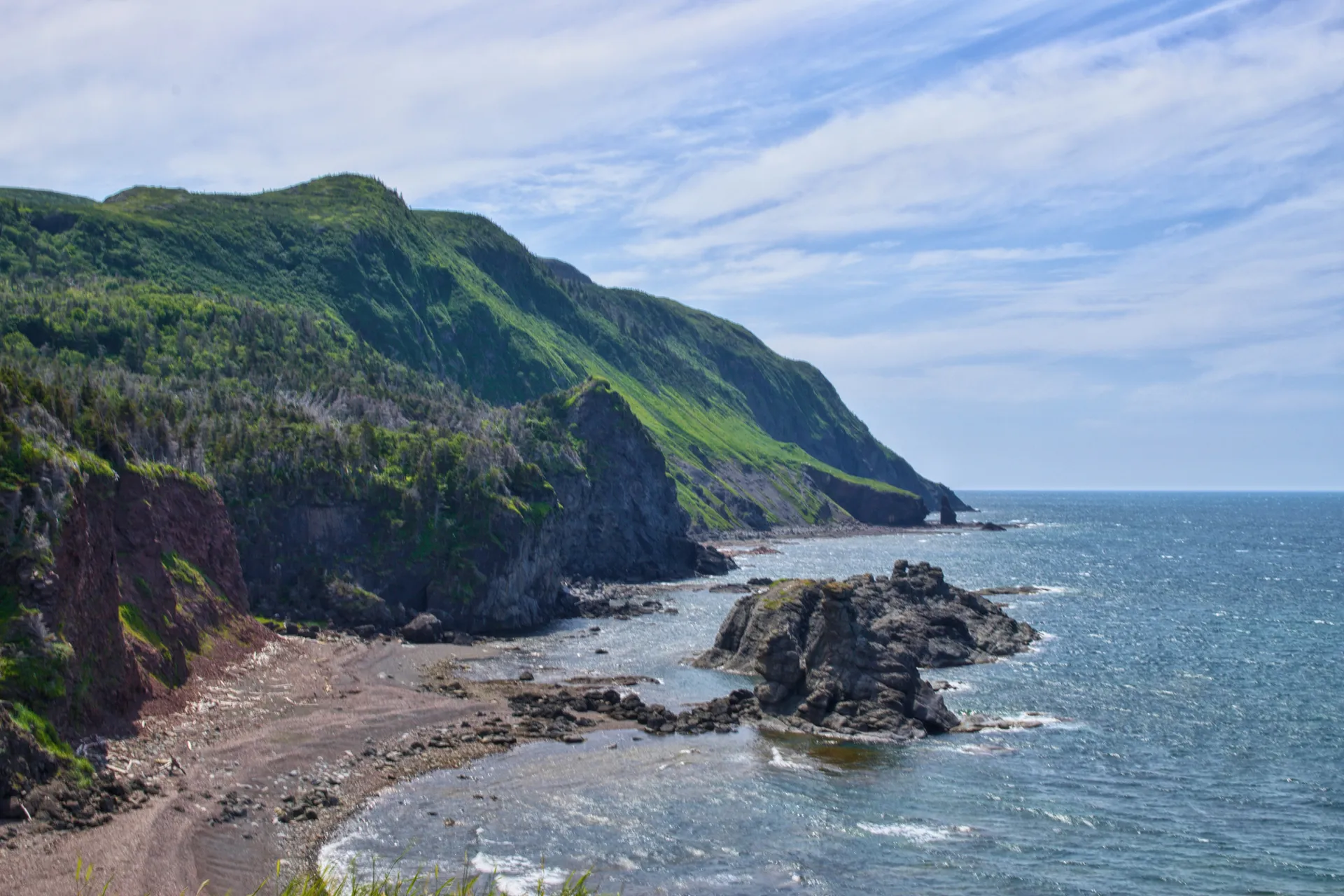
Bonne Bay cuts deep into the western coast of Newfoundland like a fjord transplanted from Norway — and geologically speaking, that is not far from the truth. This dramatic inlet, flanked by the flat-topped plateaus of the Long Range Mountains, lies at the heart of Gros Morne National Park, a UNESCO World Heritage Site recognized for exposing one of the best illustrations of the process of plate tectonics found anywhere on Earth. The Tablelands, a rust-coloured massif of peridotite rock visible from the bay's southern arm, represents a slab of the Earth's mantle thrust to the surface 485 million years ago — a geological marvel so significant that it helped prove the theory of continental drift.
The communities surrounding Bonne Bay — Woody Point, Norris Point, and Trout River — retain the quiet character of Newfoundland outport life. Brightly painted clapboard houses perch above the waterline, their stages (fishing platforms) jutting over the bay where cod was once split and salted in quantities that fed empires. The cod moratorium of 1992 devastated these communities, but the establishment of Gros Morne as a national park has provided an alternative economy rooted in ecotourism, and today the bay's residents welcome visitors with the legendary hospitality that Newfoundlanders call "the best kind." The Gros Morne Theatre Festival in Woody Point, staged in a converted heritage building each summer, produces original works that draw on the region's storytelling traditions and musical heritage.
The culinary traditions of Bonne Bay are rooted in the cold North Atlantic. Cod tongues — the gelatinous, surprisingly delicate morsels from the fish's throat — are pan-fried in scrunchions (rendered salt pork fat) and served as a local delicacy that visitors either adore or approach with trepidation. Moose, which outnumber humans in Newfoundland, appears on menus as stew, burgers, and sausage, while bakeapples (cloudberries), foraged from the bogs of the Long Range plateau, are transformed into jam, pie, and a luminous orange sauce that accompanies everything from pancakes to cheesecake. Touton — fried bread dough served hot with molasses — is the quintessential Newfoundland breakfast, best consumed at a kitchen table overlooking the bay while fog rolls through the narrows.
Gros Morne National Park offers some of eastern Canada's finest hiking, and Bonne Bay serves as the base camp. The Western Brook Pond boat tour — a two-kilometre hike through boreal forest followed by a two-hour cruise through a landlocked fjord flanked by 600-metre cliffs — is widely considered one of Canada's top ten natural experiences. The Gros Morne Mountain Trail ascends through tuckamore (wind-stunted spruce) to an arctic-alpine plateau where caribou graze and the views extend across the Gulf of St. Lawrence to Quebec's North Shore. The Tablelands Trail offers a gentler walk through the otherworldly peridotite landscape, where virtually nothing grows because the rock's chemical composition is toxic to most plant life — an eerie, Mars-like terrain mere steps from lush boreal forest.
Bonne Bay serves as a tender port for expedition and small cruise ships, which anchor in the deep, sheltered waters of the bay. The best time to visit is from June through September, when the hiking trails are snow-free, the boat tours operate, and the long subarctic days provide up to 16 hours of daylight. July and August offer the warmest temperatures, while September brings spectacular fall colours to the boreal forests and the chance to witness moose during the rutting season, when bulls emerge from the forest with an impressive disregard for human presence.