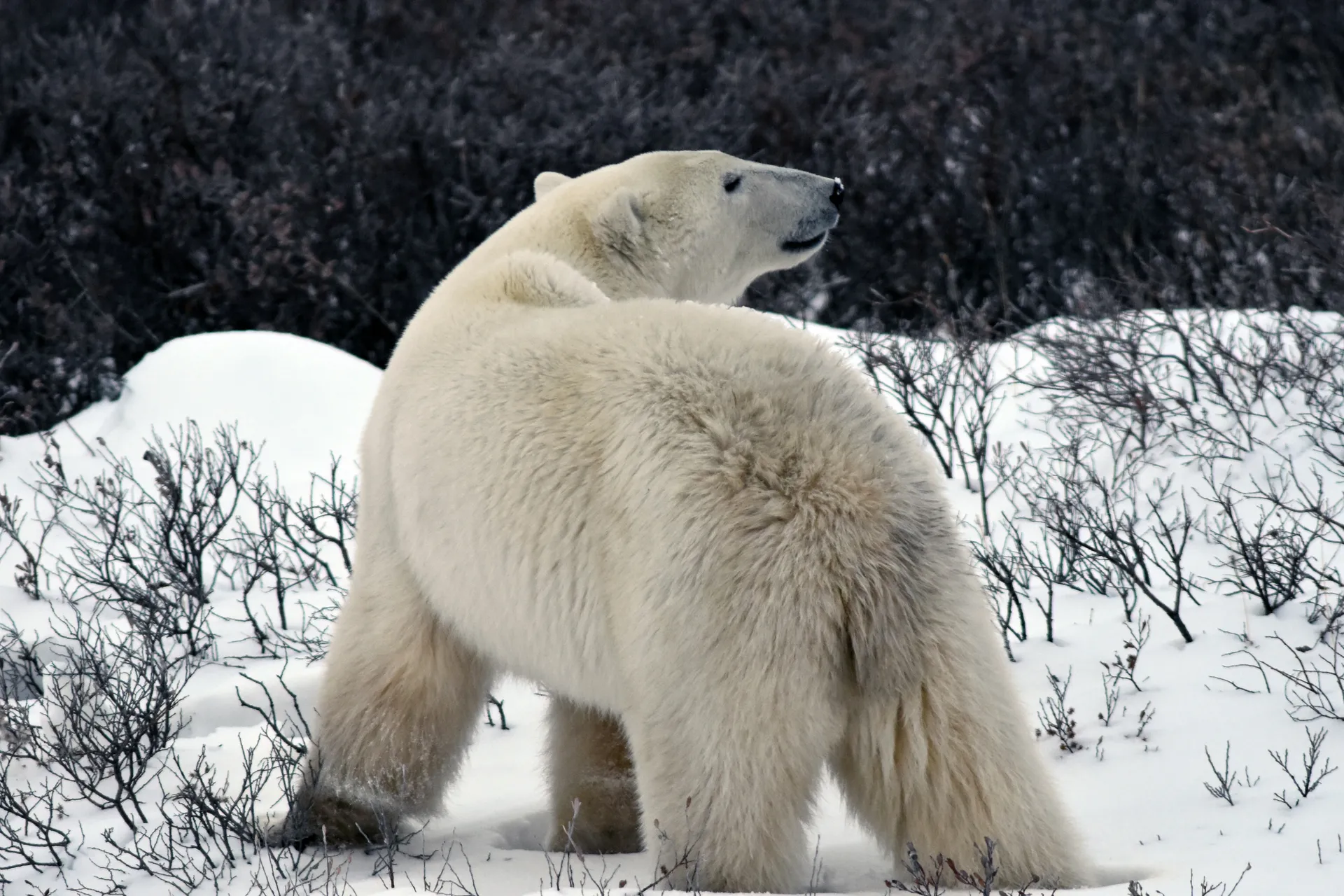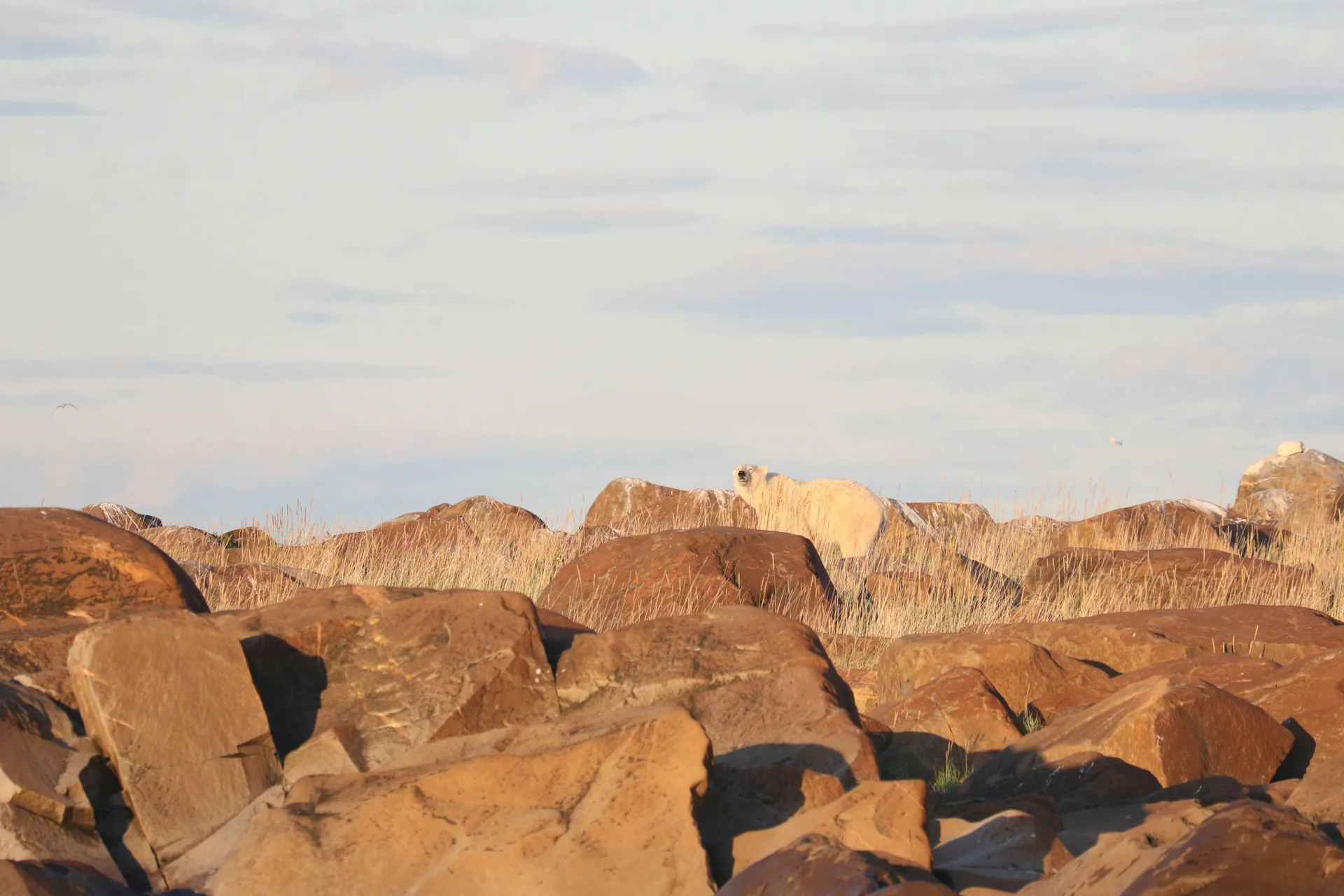
On the western shore of Hudson Bay, where the boreal forest surrenders to the Arctic tundra in a ragged line of stunted spruce, Churchill occupies one of the most extraordinary ecological crossroads on the planet. This remote Manitoba town of barely nine hundred permanent residents has earned the title "Polar Bear Capital of the World" — not through marketing invention but through the annual congregation of up to a thousand polar bears along the coastline each autumn, waiting for Hudson Bay to freeze so they can resume hunting seals on the ice.
Churchill's polar bear season, peaking in October and November, is one of wildlife tourism's supreme experiences. Purpose-built tundra vehicles — massive wheeled platforms with heated viewing decks — transport visitors across the coastal flats where bears gather, wrestle, and rest. The encounters are remarkably intimate; bears routinely approach the vehicles with curious indifference, rising on hind legs to investigate these strange mobile structures. It is humbling, electric, and unlike any wildlife experience available elsewhere. The town itself has adapted to coexistence with bears — a polar bear alert program patrols the streets, and a holding facility temporarily manages animals that wander too close to town.
But Churchill is far more than a single-species destination. In summer, some 3,500 beluga whales congregate in the warm, shallow waters of the Churchill River estuary — one of the largest beluga gatherings in the world. Snorkelling and kayaking among these "canaries of the sea," whose clicks and whistles are audible even above water, ranks among the most magical wildlife encounters anywhere. The belugas are extraordinarily curious, approaching swimmers and kayakers with apparent delight, their white forms gliding through the green water like aquatic ghosts.
The region's human history runs deep. The Prince of Wales Fort National Historic Site, a massive stone fortification built by the Hudson's Bay Company between 1731 and 1771, guards the river mouth. Pre-contact Inuit and Dene presence stretches back thousands of years, and the town's Itsanitaq Museum houses an exceptional collection of Inuit carvings and artifacts. The culinary scene is compact but rewarding; Lazy Bear Lodge serves Arctic char, caribou, and muskox in a wilderness lodge atmosphere, while local dining pairs northern proteins with unexpected sophistication.
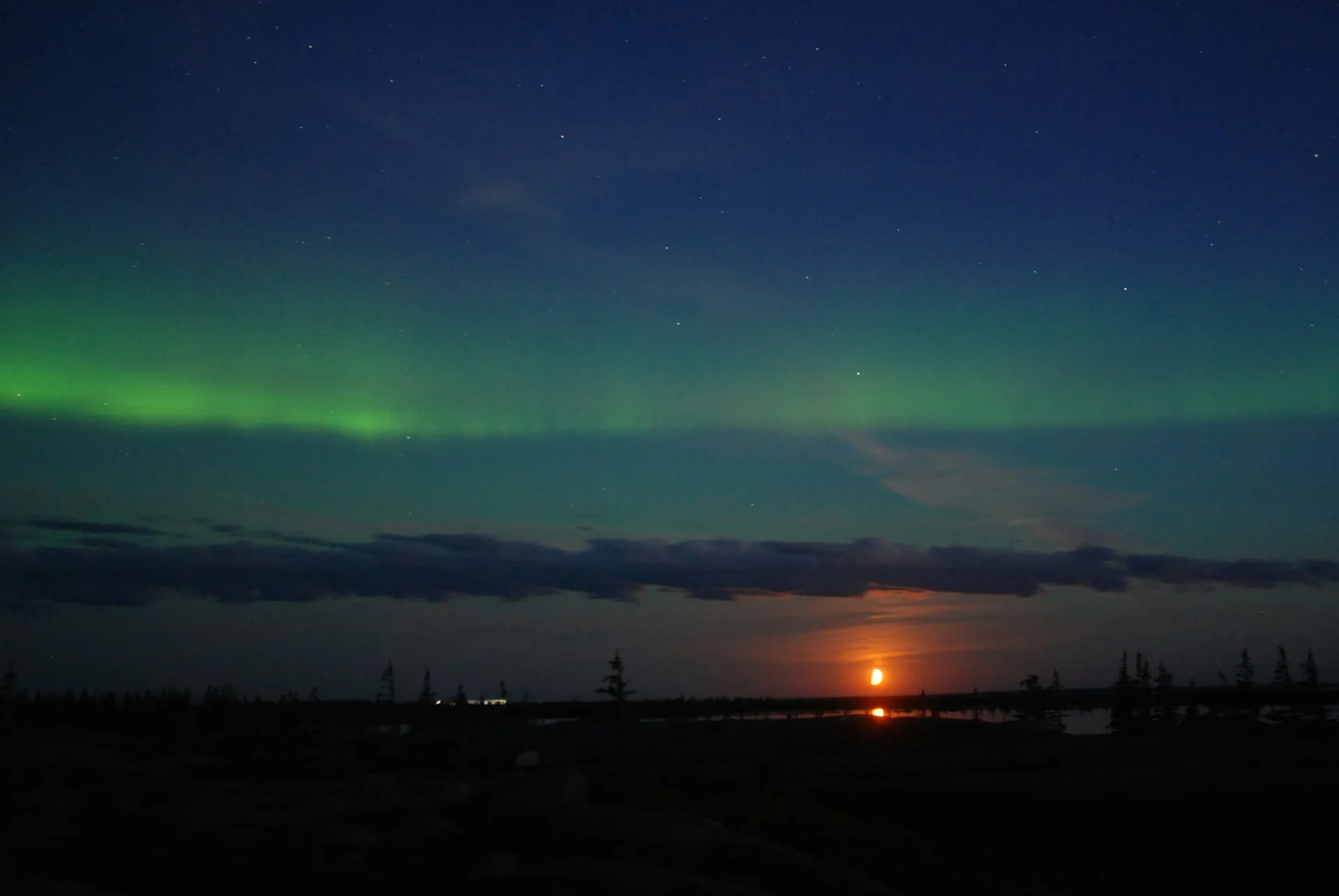
Churchill is also one of the most accessible aurora borealis viewing locations in the world, with the northern lights visible an average of 300 nights per year. The town is reached by air from Winnipeg (2.5 hours) or by the legendary VIA Rail service (approximately 48 hours) — one of North America's great train journeys. Polar bear season runs October-November; beluga season July-August; aurora season January-March. Each delivers a different Churchill, and each is unforgettable.