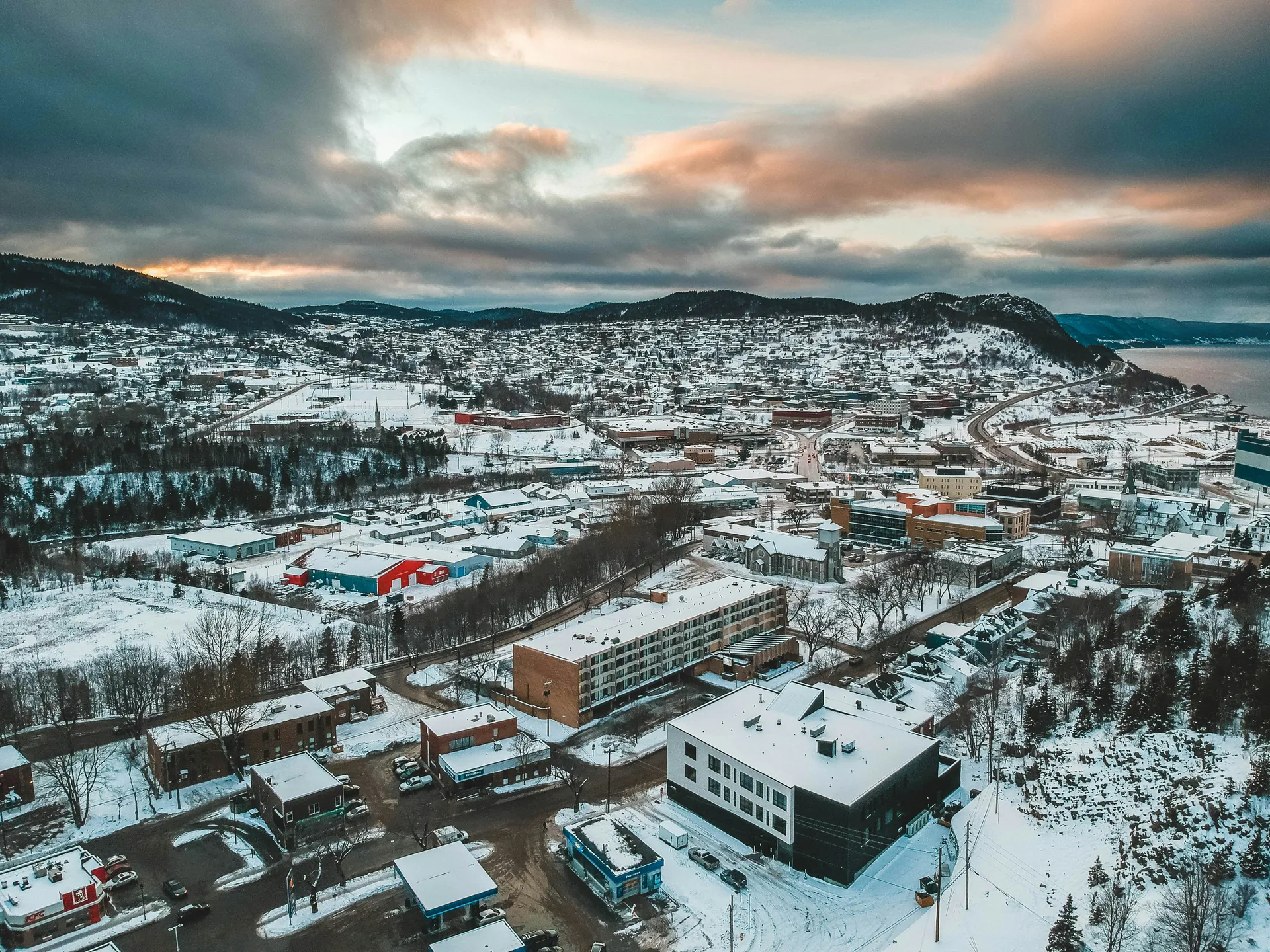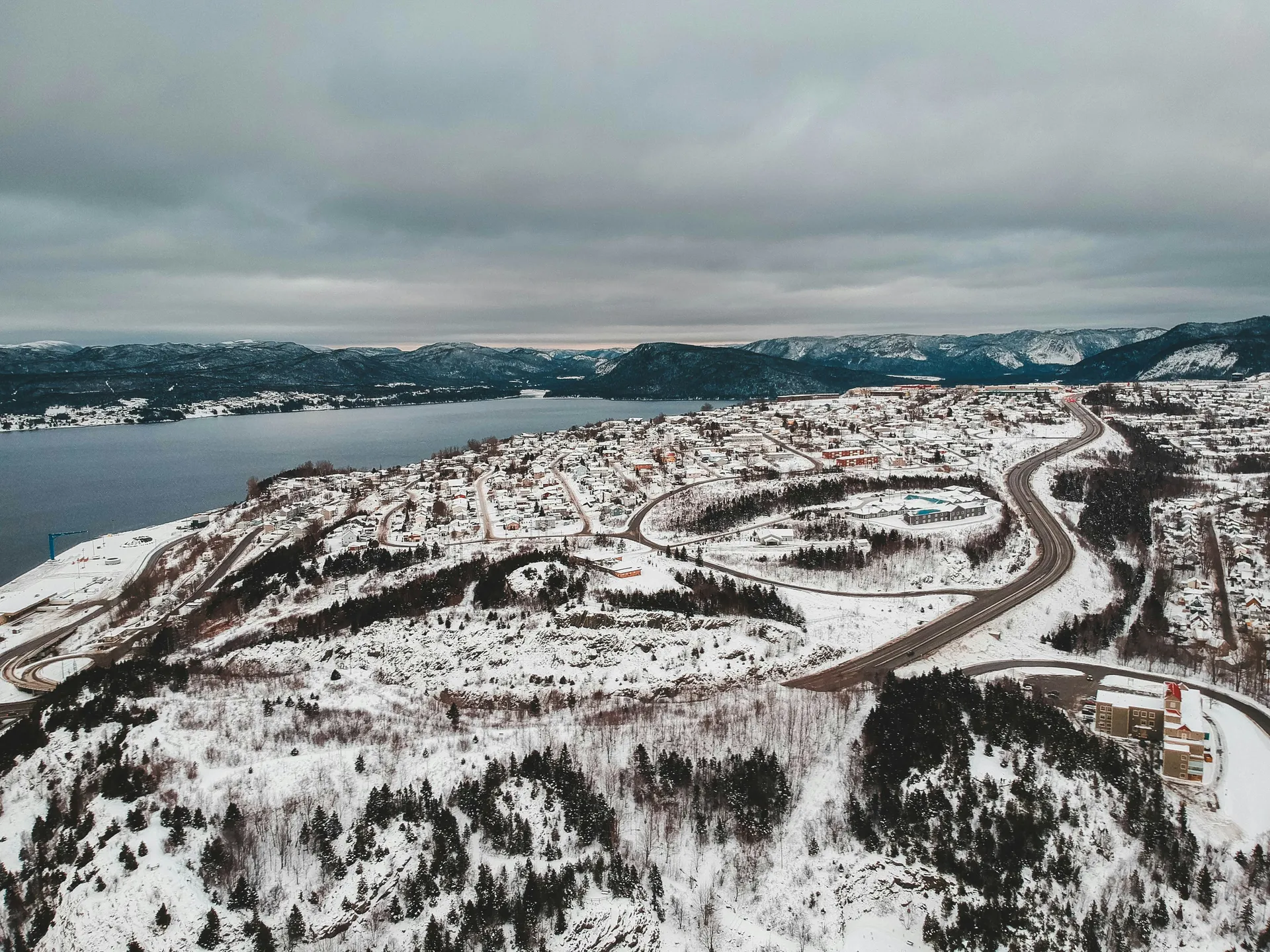
When Captain James Cook sailed into the sheltered waters of the Bay of Islands in 1767, he found a landscape so dramatically sculpted by glaciers and rivers that he spent weeks charting its inlets and headlands. Corner Brook, Newfoundland's second-largest city, grew up around that same protected harbor on the island's rugged west coast, eventually becoming a pulp and paper town whose mill smokestacks rose against a backdrop of the Long Range Mountains—the northernmost extension of the Appalachian chain. Today the mill's influence has faded, but the mountains remain, framing the city in a cinematic sweep of forested slopes and deep-cut valleys.
Corner Brook possesses a quiet, unhurried character that rewards the curious traveler. The city climbs steeply from the waterfront, its residential streets offering surprising vistas of the bay at nearly every turn. The Corner Brook Museum and Archives, housed in a heritage building downtown, traces the region's story from the Mi'kmaq and Beothuk peoples through the French and British colonial periods to the paper mill era. The Captain James Cook Monument, perched on a promontory overlooking the bay, provides one of the finest views in western Newfoundland—a panorama of island-studded water and distant headlands that explains in a glance why Cook lingered here.
The culinary traditions of western Newfoundland are rooted in the sea and the boreal forest. Cod tongues, pan-fried to a golden crisp, remain a beloved delicacy, while moose stew and bakeapple berry desserts reflect the island's hunting and foraging heritage. Jiggs' dinner—a boiled affair of salt beef, root vegetables, and pease pudding—is the quintessential Newfoundland Sunday meal, served with the kind of generous hospitality that defines the province. The craft beer movement has reached Corner Brook as well, with local breweries producing ales that pair beautifully with the region's hearty fare.
The surrounding wilderness is extraordinary. Gros Morne National Park, a UNESCO World Heritage Site just ninety minutes north, is one of Canada's most spectacular natural areas, where the Tablelands expose a rare slab of the Earth's mantle pushed to the surface by tectonic forces half a billion years ago. The park's Western Brook Pond—actually a landlocked fjord—offers boat tours through towering cliff walls that rival any Norwegian fjord in dramatic scale. The Humber River, flowing through Corner Brook itself, is legendary among Atlantic salmon anglers, drawing fly fishers from around the world each summer.
Cruise ships dock at the city's dedicated terminal on the waterfront, within easy reach of downtown attractions. The pier's location at the head of the Bay of Islands means arrivals are treated to a scenic approach through island-dotted waters. Most visitors use Corner Brook as a gateway to Gros Morne, with organized excursions departing directly from the terminal. The cruising season runs from late May through October, with July and August offering the warmest weather—daytime highs around 22°C—and the longest days. Autumn brings spectacular foliage and fewer crowds, while the clarity of the fall light over the bay is something photographers travel great distances to capture.