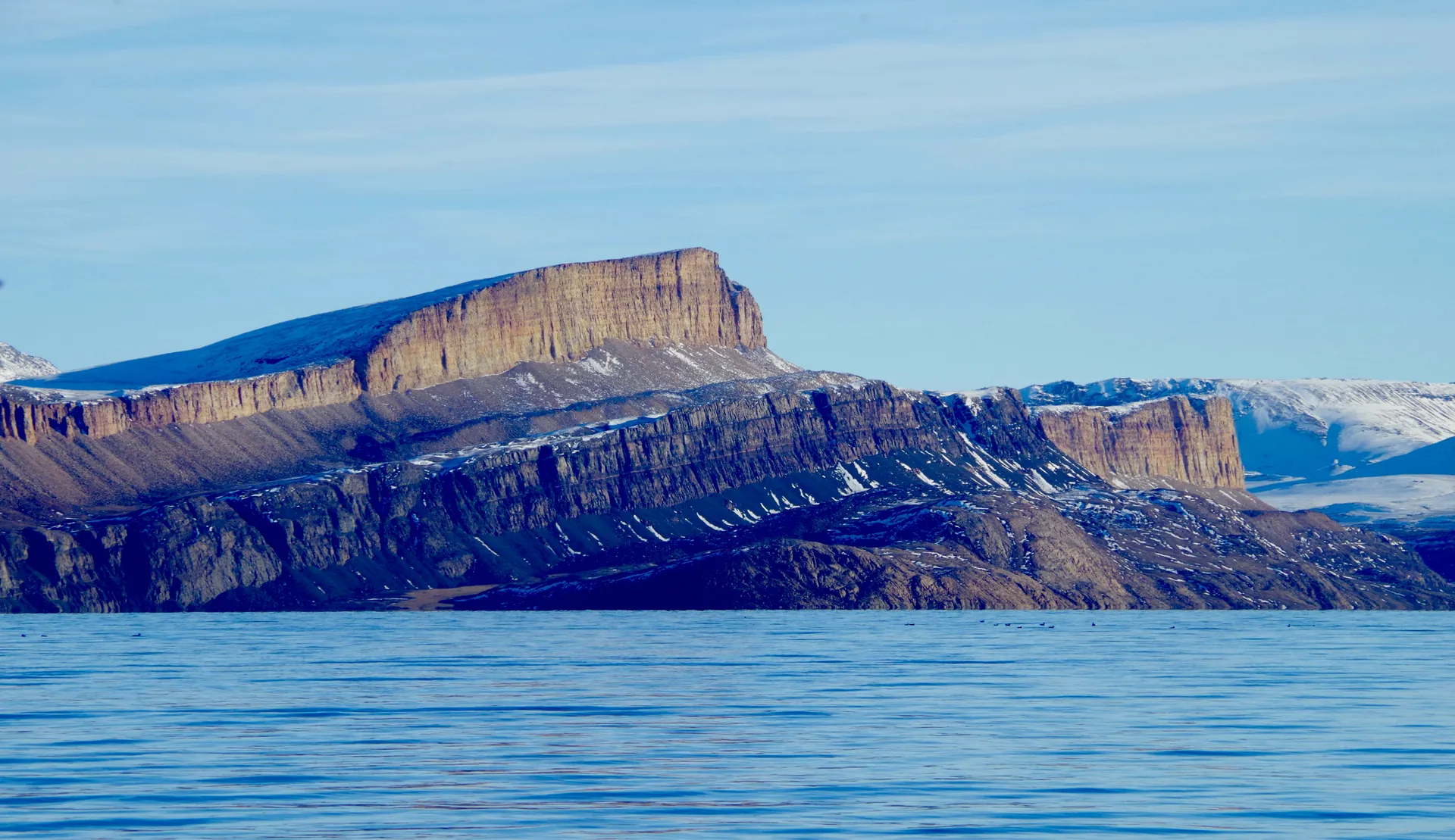
On the southeastern shore of Devon Island, overlooking the mouth of Lancaster Sound, the abandoned buildings of Dundas Harbour stand as lonely sentinels of a failed experiment in Arctic sovereignty. Established in 1924 as a Royal Canadian Mounted Police detachment — one of the most remote postings in the history of law enforcement — the settlement was intended to assert Canadian control over the High Arctic islands. Two RCMP officers died here during the settlement's intermittent occupation, and their graves, marked by simple white crosses against the infinite grey of the Arctic landscape, remain among the most poignant monuments in the Canadian North.
The harbour itself occupies a sheltered bay framed by steep, weathered cliffs that rise to the barren plateau of Devon Island's interior. The ruins of the RCMP post, the Hudson's Bay Company trading buildings, and the remnants of an Inuit relocation camp from the 1930s create a ghostly archaeological landscape that speaks volumes about the forces — political, commercial, and cultural — that collided in the Canadian Arctic during the twentieth century. The buildings are slowly collapsing under the weight of decades of snow, ice, and wind, adding an elegiac quality to every visit.
There are no services at Dundas Harbour. Expedition ships provide all necessities, and landings are conducted by Zodiac onto a gravel beach where the remains of whale bones — from the commercial whaling era that preceded the RCMP post — still litter the shore. Some vessels arrange guided walks through the settlement, where naturalists and historians contextualize the ruins within the broader story of Arctic exploration and colonization. Hot chocolate served on the beach while contemplating the vast emptiness of Lancaster Sound is an experience of surreal contrast.
The wildlife around Dundas Harbour is exceptional even by Arctic standards. The steep cliffs above the settlement host nesting sites for thick-billed murres and black-legged kittiwakes, while the waters below attract beluga whales, narwhals, and walruses. Polar bears are frequently sighted — indeed, bear safety protocols are a serious consideration for any landing. Arctic hares, distinguishable from the surrounding rock only by their movement, appear in groups on the hillsides. Muskoxen, their shaggy forms seemingly unchanged since the Pleistocene, occasionally graze on the sparse tundra vegetation above the harbour.
Dundas Harbour is visited exclusively by expedition cruise ships on Northwest Passage and High Arctic itineraries, typically between late July and early September. Landings are entirely weather-dependent, and guides conduct thorough polar bear sweeps before passengers disembark. The site requires no special permits beyond those held by the expedition operator, though all visitors are expected to respect the heritage buildings and the RCMP graves. For those fortunate enough to land, Dundas Harbour offers an encounter with Arctic history that is simultaneously intimate and vast.

