L'Anse aux Meadows stands at the northern tip of Newfoundland as proof that the Vikings reached North America five centuries before Columbus — a UNESCO World Heritage Site of global significance that transforms not merely the history of exploration but our understanding of the medieval world's reach. The archaeological remains here, dating to approximately 1000 AD, are the only confirmed Norse settlement in North America.
Discovered in 1960 by Norwegian explorer Helge Ingstad and his archaeologist wife Anne Stine Ingstad, the site's eight turf-walled structures once housed approximately sixty to ninety Norse Greenlanders who used this outpost as a base for exploring the Gulf of St. Lawrence and harvesting resources — timber, iron, and butternuts — unavailable in Greenland. The archaeological evidence, including a bronze cloak pin, iron rivets, and a spindle whorl, confirmed Norse presence beyond reasonable doubt and earned L'Anse aux Meadows its UNESCO inscription in 1978.
The site today consists of the original archaeological remains — grassy mounds that reveal their structure through subtle elevation changes — and three reconstructed Norse buildings that bring the settlement's scale and daily life into physical comprehension. Parks Canada interpreters in period costume demonstrate Norse crafts including iron smelting, woodworking, and textile production with the scholarly accuracy that this site demands.
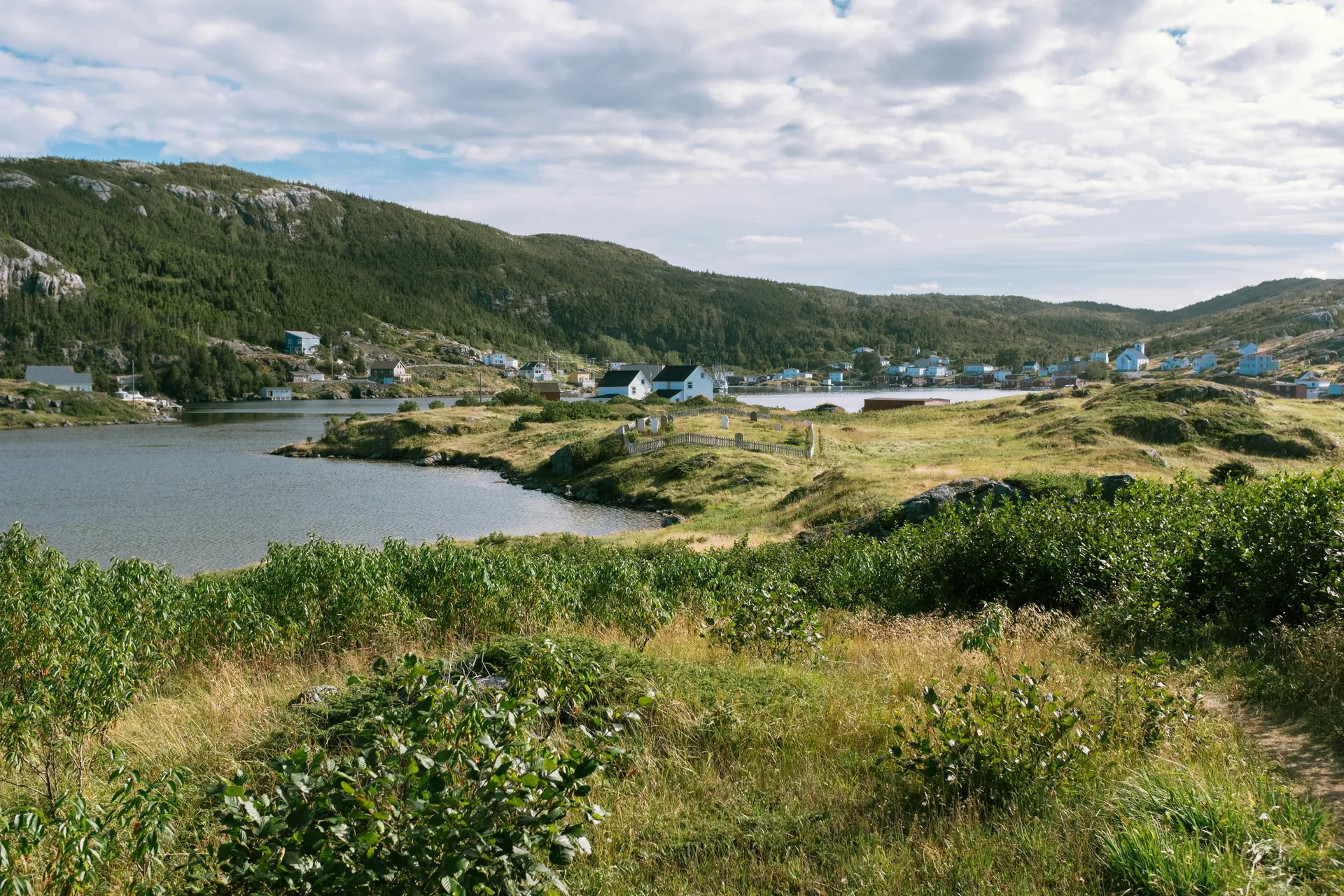
Seabourn and Viking include L'Anse aux Meadows on Canadian Atlantic and expedition itineraries, their passengers making landfall at a point where history's greatest navigational achievement meets one of North America's most hauntingly beautiful landscapes. The surrounding coastline — rocky, windswept, and scattered with icebergs that drift south from Greenland each spring — evokes the conditions that Norse explorers would have encountered, lending the visit an atmospheric authenticity that no museum can replicate.
June through September provides the only practical visiting window, with July and August offering the warmest temperatures and the interpretive programs at full operation. Late May and June add the possibility of iceberg viewing, when massive bergs from Greenland's glaciers drift past in eerie majesty. L'Anse aux Meadows is not merely a historical site but a philosophical one — a place that forces reconsideration of who discovered what, and when, and what 'discovery' even means.

