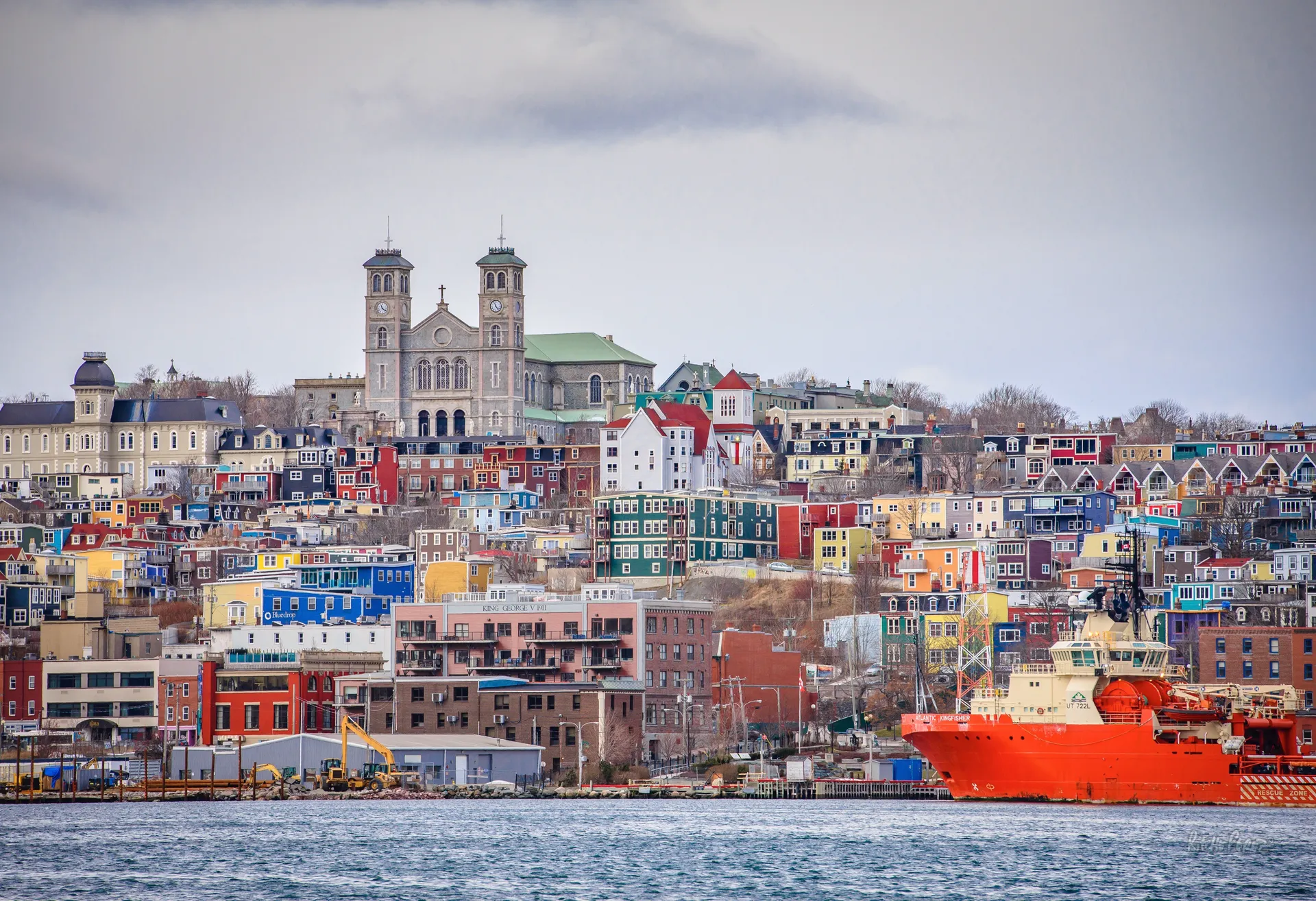
Newfoundland — the easternmost province of Canada, closer to Ireland than to Vancouver — is a place where the North American continent meets the Atlantic with a force and a beauty that have shaped one of the most distinctive cultures in the New World. The island's 9,656-kilometer coastline — longer than the entire Atlantic seaboard of the United States — is a succession of fjords, headlands, sea stacks, and fishing villages that have weathered five centuries of cod, conquest, and the kind of weather that builds character by the afternoon.
The island's cultural identity is inseparable from the sea and from the cod fishery that sustained it for five hundred years. John Cabot's 1497 landing at Bonavista opened the Grand Banks to European fishermen, and for centuries, Newfoundland's economy revolved around the cod that schooled in almost unimaginable numbers over the continental shelf. The 1992 moratorium that closed the fishery devastated communities and ended a way of life, but the cultural legacy endures in the outport villages that dot the coast, in the distinctive Newfoundland English (with its Irish, West Country, and maritime inflections), and in the music — the fiddle tunes, sea shanties, and accordion-driven kitchen parties that make Newfoundland one of the most musically alive places in North America.
Newfoundland cuisine is hearty, maritime, and utterly distinctive. Jiggs' dinner — salt beef boiled with cabbage, turnip, potatoes, carrots, and pease pudding — is the Sunday staple that defines comfort food in these latitudes. Fish and brewis — salt cod rehydrated and served with hardtack biscuit and scrunchions (fried salt pork) — connects the present directly to the cod fishery's heyday. Toutons — fried dough served with molasses — are the breakfast that a Newfoundland morning demands. Moose, hunted across the island's boreal forests, appears as steaks, stews, and burgers in restaurants and homes. The berry season — partridgeberries, bakeapples, and blueberries — transforms the late summer into a frenzy of picking, preserving, and pie-making.
The island's natural landscapes are on a scale that demands respect. Gros Morne National Park, a UNESCO World Heritage Site on the western coast, exposes the Earth's mantle rock in one of the most important geological sites on the planet — the Tablelands, a rust-colored plateau of peridotite normally found deep beneath the Earth's crust, rise above the fjords and forests in a landscape of alien beauty. The eastern coast offers iceberg season (May to June), when icebergs calved from Greenland's glaciers drift south past the headlands — "Iceberg Alley" provides sightings accessible from shore and from boat tours. L'Anse aux Meadows, at the island's northern tip, is the only confirmed Viking settlement in North America, dating to approximately 1000 AD.
Newfoundland is accessible by air to St. John's and Deer Lake airports, and by ferry from North Sydney, Nova Scotia. Cruise ships call at St. John's, Corner Brook, and several smaller ports. The visiting season runs from June to October, with summer (July-August) offering the warmest temperatures and iceberg season (May-June) providing unique spectacles. Autumn brings dramatic storm-watching and the foliage season. Newfoundland is not a destination that reveals its charms quickly — it asks visitors to slow down, listen to the wind and the fiddle, and accept that some of the most meaningful travel experiences come wrapped in fog, salt spray, and the warmth of people who have always known that home is the most important place of all.

