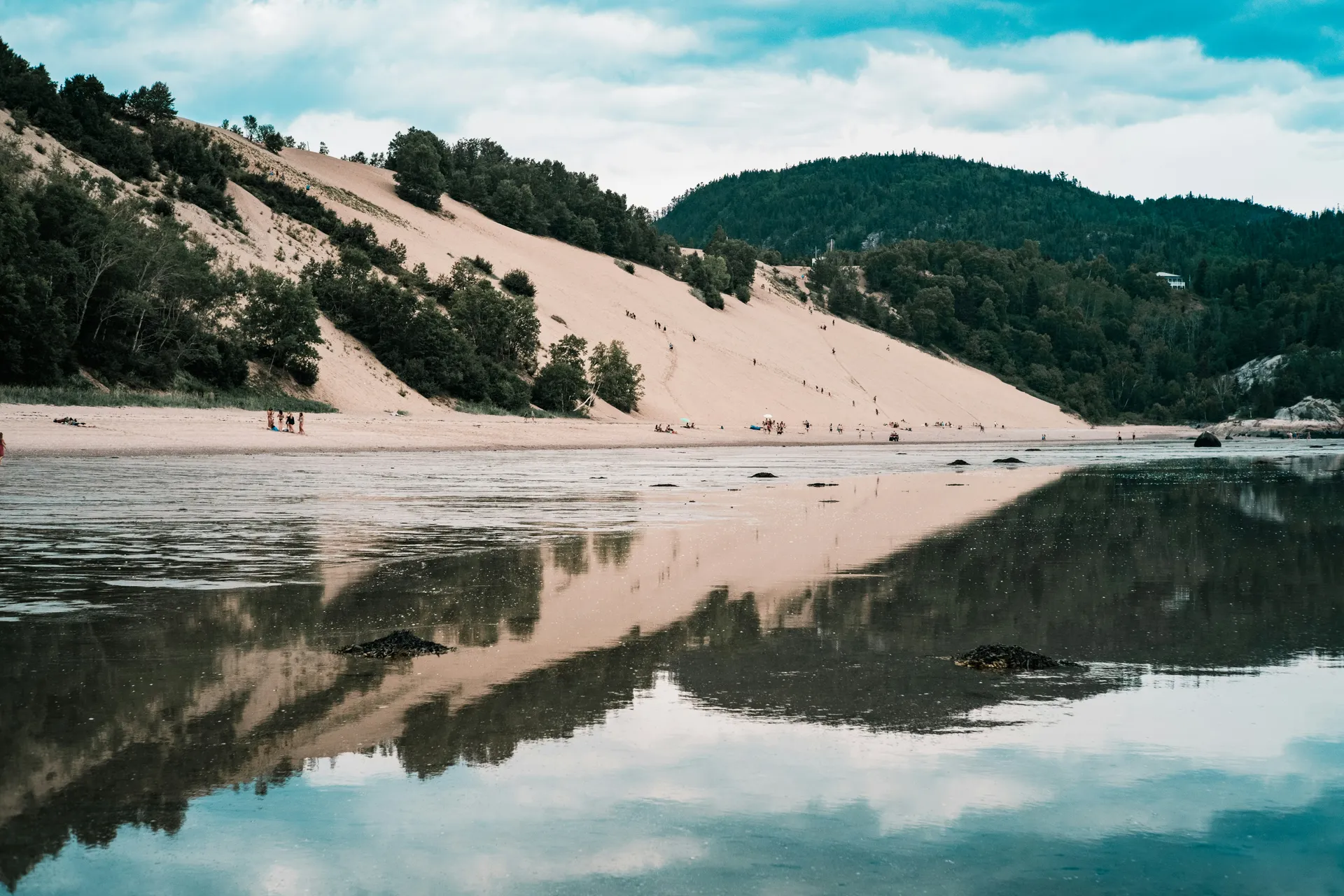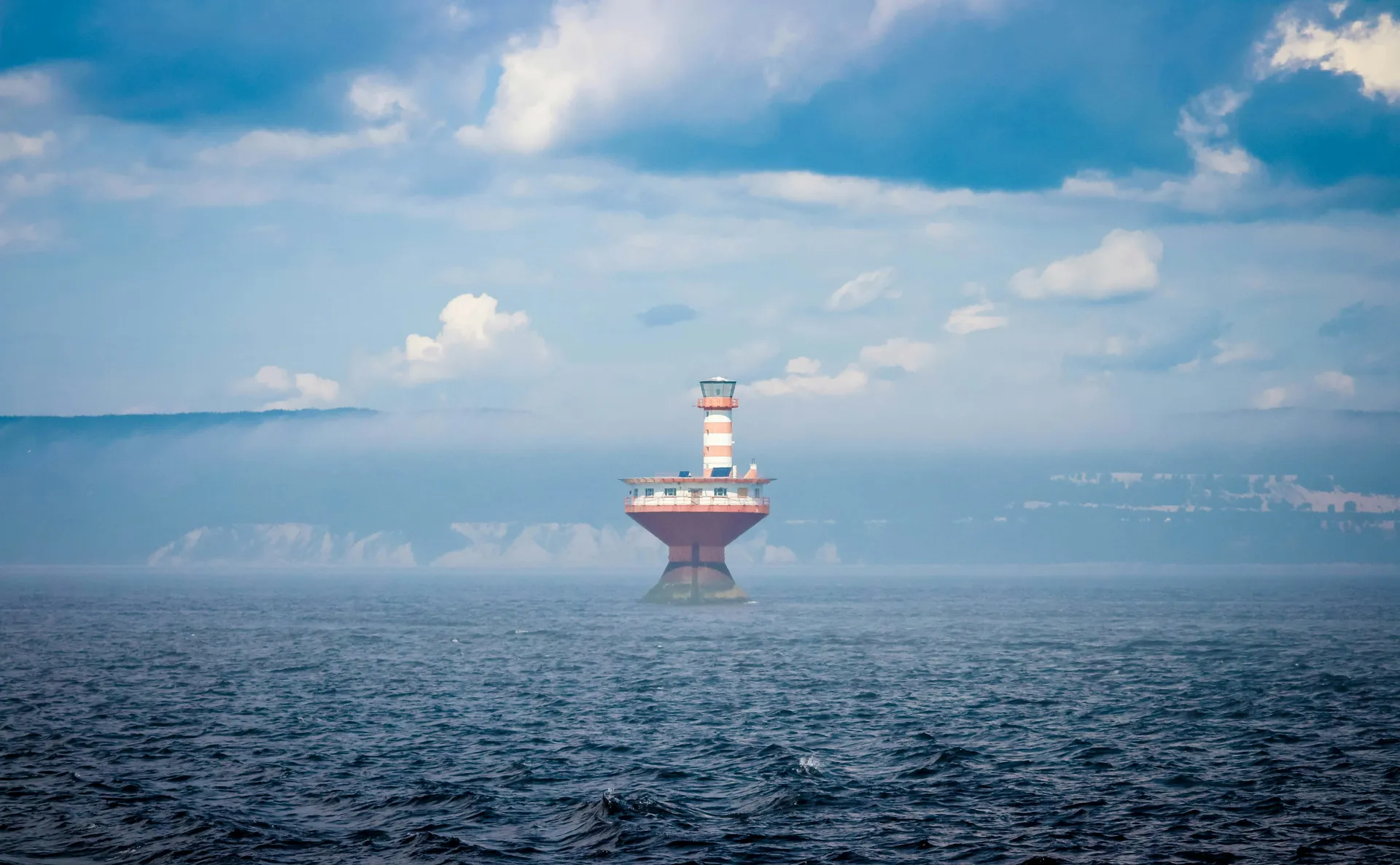
Where the Saguenay River plunges into the St. Lawrence through a fjord of 300-metre granite cliffs, the village of Tadoussac occupies one of the most ecologically significant convergence points in the North Atlantic. The meeting of the cold, nutrient-rich Saguenay waters with the St. Lawrence's tidal currents creates an upwelling of extraordinary biological productivity — a submarine cafeteria that draws up to 13 species of whale to this stretch of river every summer, making Tadoussac one of the world's premier whale-watching destinations. Beluga whales, a resident population of approximately 900 individuals, are visible from shore year-round, their white backs breaking the surface like slow-rolling snowbanks against the dark water.
Tadoussac is also one of the oldest European settlements in North America. Pierre de Chauvin de Tonnetuit established a fur trading post here in 1600 — eight years before the founding of Quebec City — and a reconstruction of his original trading post stands in the village today. The Petite Chapelle de Tadoussac, built in 1747, is the oldest surviving wooden church in North America, its red-roofed simplicity set against the immensity of the Saguenay fjord in a juxtaposition of human modesty and geological grandeur that perfectly captures the character of the place. The Hotel Tadoussac, a grand red-roofed Victorian resort hotel built in 1942, dominates the waterfront with an elegance that recalls the era when wealthy Montrealers summered on the Lower St. Lawrence.
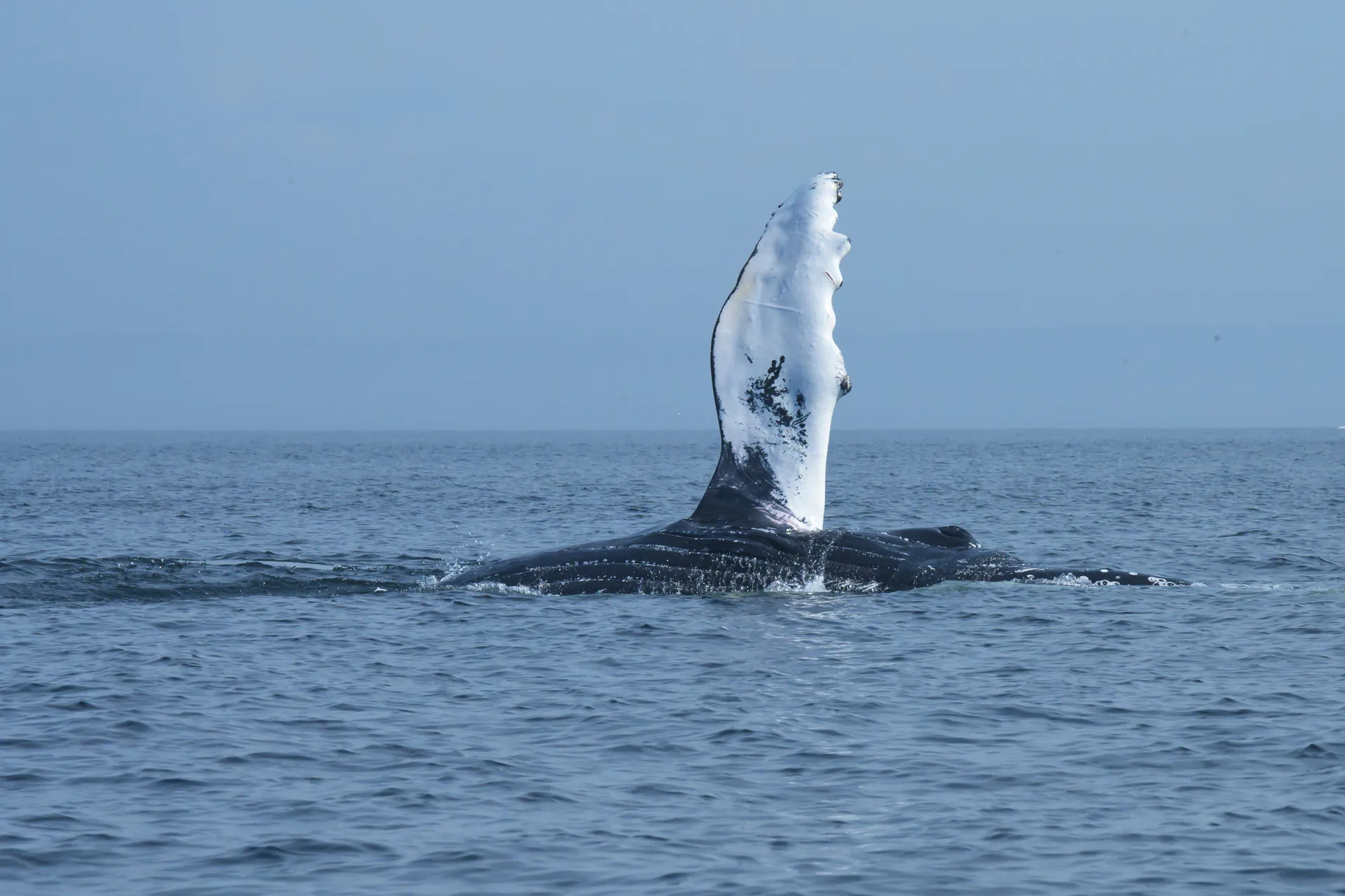
The whale-watching from Tadoussac is extraordinary in both its diversity and its reliability. From June through October, the Saguenay-St. Lawrence Marine Park — a protected area encompassing the confluence zone — hosts fin whales, minke whales, humpback whales, and the occasional blue whale — the largest animal ever to have lived on Earth, whose 30-metre bulk surfaces with a breath visible for kilometres. Excursions range from large catamarans offering heated cabins to small Zodiac craft that bring passengers to within metres of surfacing whales — close enough to hear the explosive exhalation and feel the mist of the blow. The belugas, while not approached as closely to protect the endangered population, are often visible from the village promenade and the hiking trails along the Saguenay shore.
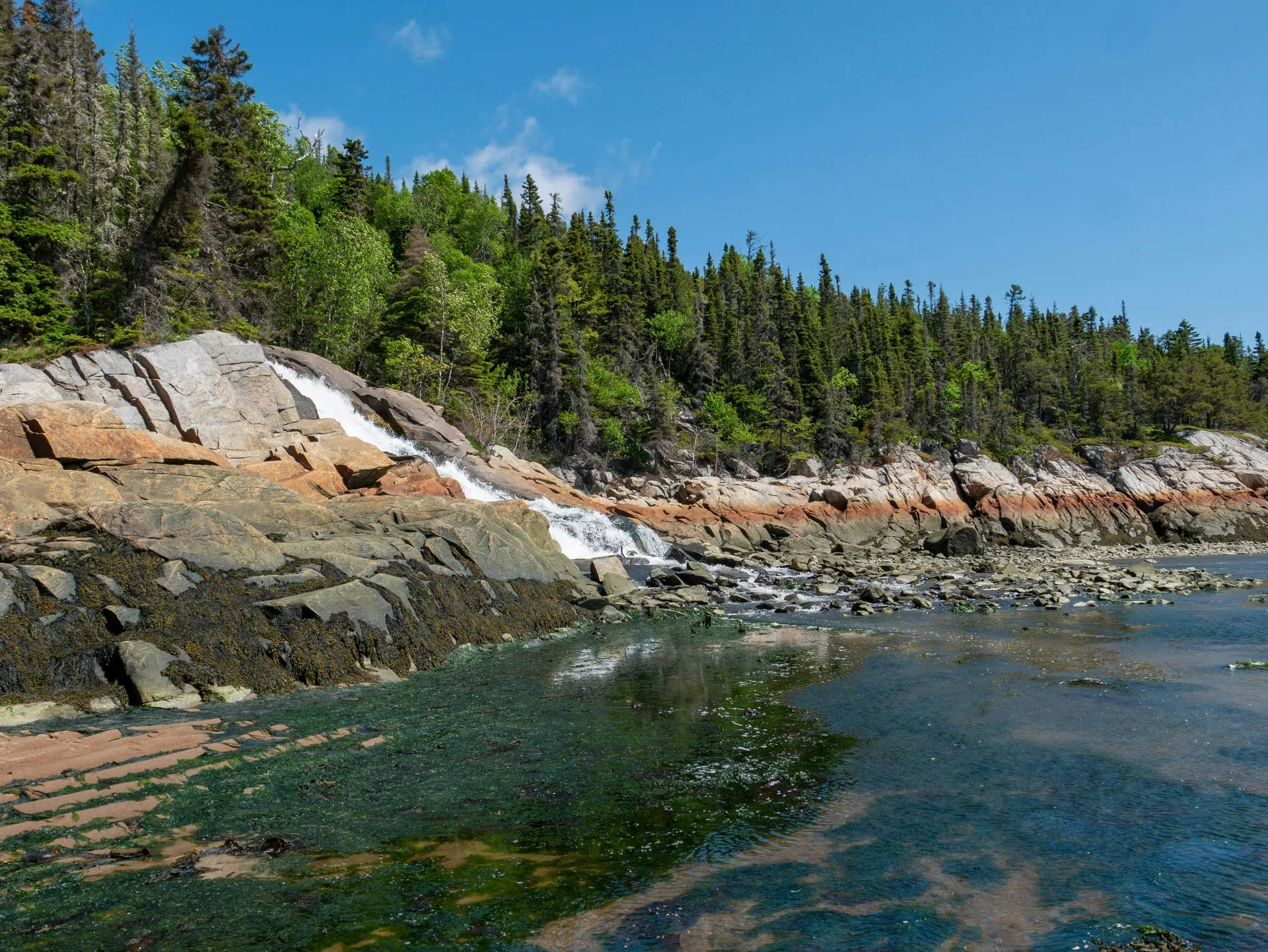
The Saguenay Fjord, extending 100 kilometres inland from Tadoussac, is the southernmost fjord in the Northern Hemisphere and one of the most dramatic landscapes in eastern Canada. Kayaking excursions navigate between the granite walls, which rise directly from water depths exceeding 270 metres — a geological feature formed by the same tectonic rift that created the St. Lawrence valley. The Parc National du Fjord-du-Saguenay offers hiking trails along the fjord rim, including the Statue Trail to the Notre-Dame-du-Saguenay statue, whose vantage point reveals the fjord as a dark slash through an endless carpet of boreal forest.
Tadoussac is visited by Ponant and Viking on St. Lawrence and Canadian maritime itineraries. The whale-watching season runs from June through October, with August and September being peak months when the greatest diversity of species is present and the water is at its most productive. The autumn foliage in late September adds spectacular colour to the boreal forests surrounding the fjord, creating a visual backdrop that enhances an already unforgettable wildlife experience.