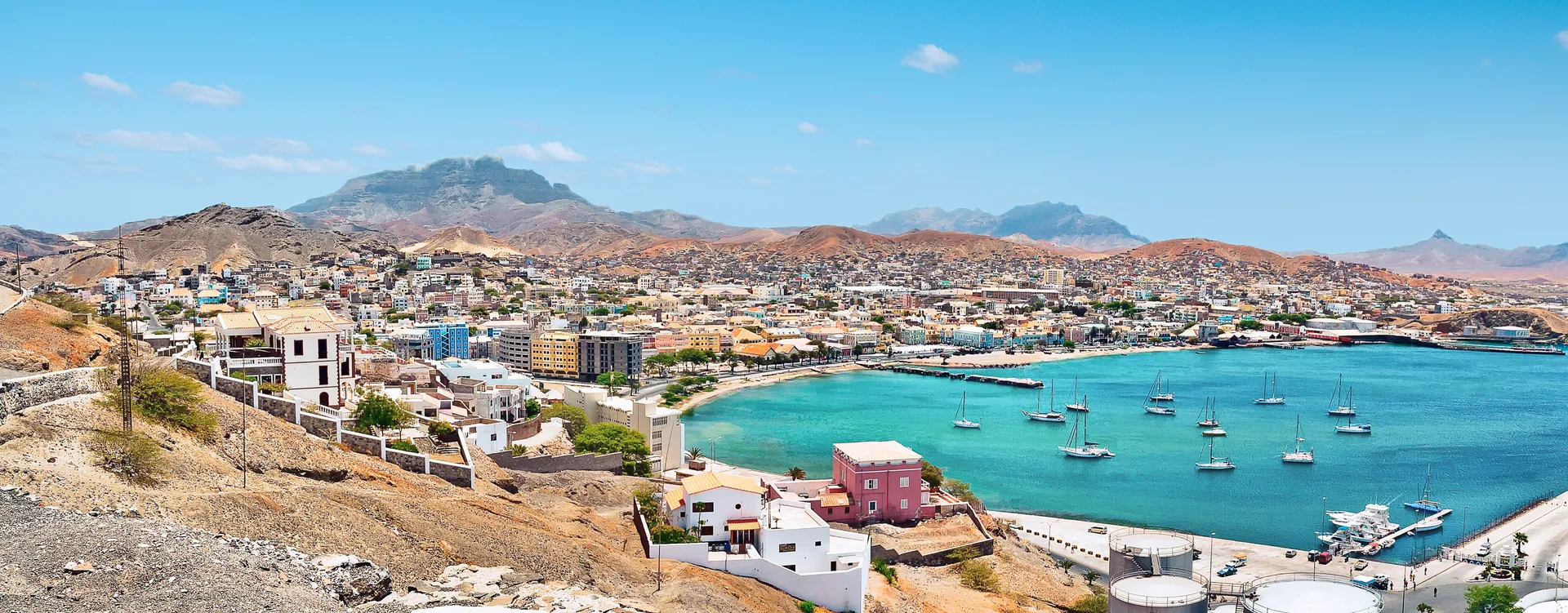
Where the Atlantic meets the southern trade winds, Mindelo rises from the crescent shore of Porto Grande — one of the finest natural harbors in the mid-Atlantic. Founded as a coaling station in the 1830s to fuel steamships on the route between Europe and South America, this port city on the island of São Vicente quickly attracted a cosmopolitan mix of British merchants, Portuguese administrators, and seafarers from every continent. It was here, in the cultural ferment of the early twentieth century, that Cesária Évora was born in 1941, the barefoot diva whose morna ballads carried the melancholy beauty of Cape Verde to concert halls worldwide. Her legacy lingers in every cobblestone lane of the old quarter, where the faint drift of a violin or a cavaquinho still spills from open doorways at dusk.
Mindelo is a city that wears its contradictions gracefully. The pastel facades of Rua de Lisboa echo a faded Portuguese grandeur, yet the murals that bloom across warehouse walls speak to a restless, contemporary creative energy. The Praça Amílcar Cabral — named for the revolutionary who helped ignite Cape Verdean independence in 1975 — pulses with café life beneath jacaranda shade, while the Torre de Belém replica at the waterfront stands as a quiet nod to colonial memory. There is a languor here that is neither laziness nor indifference but something closer to an art of living: the rhythm of a place that has learned to savour wind, light, and conversation in equal measure.
No visit to Mindelo is complete without surrendering to its table. Begin with *cachupa rica*, the archipelago's national dish — a slow-simmered stew of hominy corn, beans, linguiça sausage, and tender pork, enriched with sweet potato and manioc. At waterfront restaurants along the Marginal, grilled *atum* (yellowfin tuna) arrives still sizzling, dressed only in lime and piri-piri. Sample *pastéis de milho*, crisp cornmeal pastries stuffed with fresh-caught tuna, or the delicate *caldo de peixe*, a fragrant fish broth laced with green banana and coriander. Pair everything with a glass of *grogue* — Cape Verde's potent sugarcane spirit, often softened into *pontche* with honey and lime — and you will understand why Mindelo's culinary identity is as singular as its music.
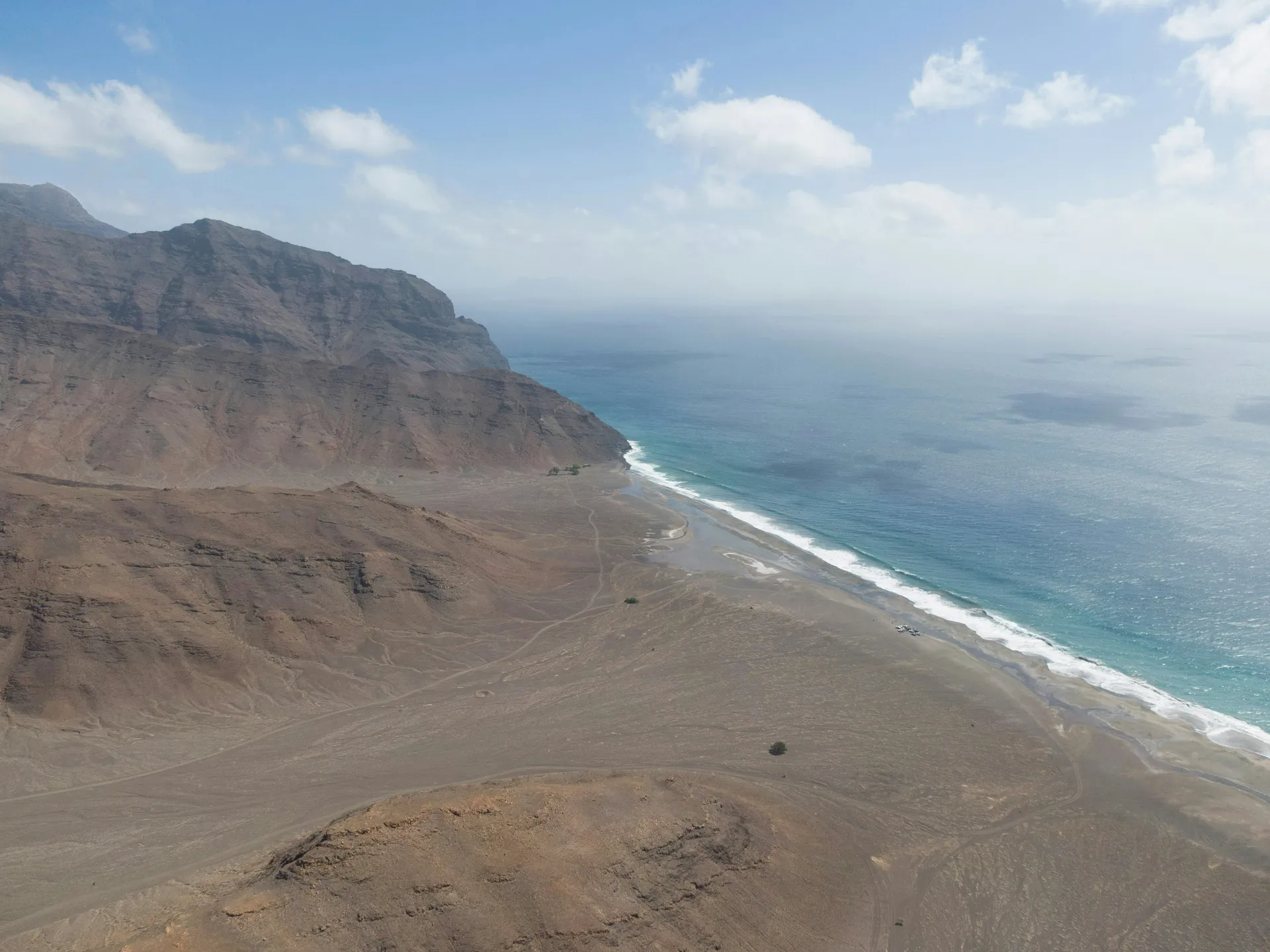
The wider Cape Verdean archipelago unfolds like a private atlas of contrasts. A short ferry crossing to Santo Antão reveals one of West Africa's most dramatic landscapes — terraced valleys plunging between volcanic ridges, threaded by hiking trails that rival Madeira's levadas. To the south, Fogo Island is crowned by Pico do Fogo, a near-perfect volcanic cone rising to 2,829 metres, where vineyards flourish in the caldera's mineral-rich soil and São Filipe's sobrado mansions recall a nineteenth-century planter aristocracy. Eastward, the windswept dunes of Boa Vista Island and the quiet charm of Sal Rei offer a Saharan counterpoint — endless blonde beaches, loggerhead turtle nesting grounds, and a silence broken only by surf. For those seeking deeper solitude, São Nicolau Island and the unhurried Cidade do Maio provide landscapes almost untouched by tourism.
Mindelo's deepwater harbour has long made it a natural waypoint for transatlantic repositioning voyages and West African coastal itineraries. Silversea and Regent Seven Seas Cruises frequently include Porto Grande on their expedition and grand-voyage routings, while Seabourn and Ponant favour the port for intimate calls that allow passengers to explore São Vicente's interior by private vehicle. Cunard's Queens have graced the harbour on world-cruise segments since the golden age of ocean travel, and Hapag-Lloyd Cruises brings its *Europa* and *Europa 2* for cultural-enrichment calls. MSC Cruises and Costa Cruises connect Mindelo to broader Atlantic and Canary Islands circuits, and TUI Cruises Mein Schiff offers the port as a highlight on its winter-sun repositioning sailings. Regardless of the vessel, arriving by sea — watching Mindelo's amphitheatre of pastel houses materialize from the Atlantic haze — remains one of cruising's most quietly thrilling landfalls.