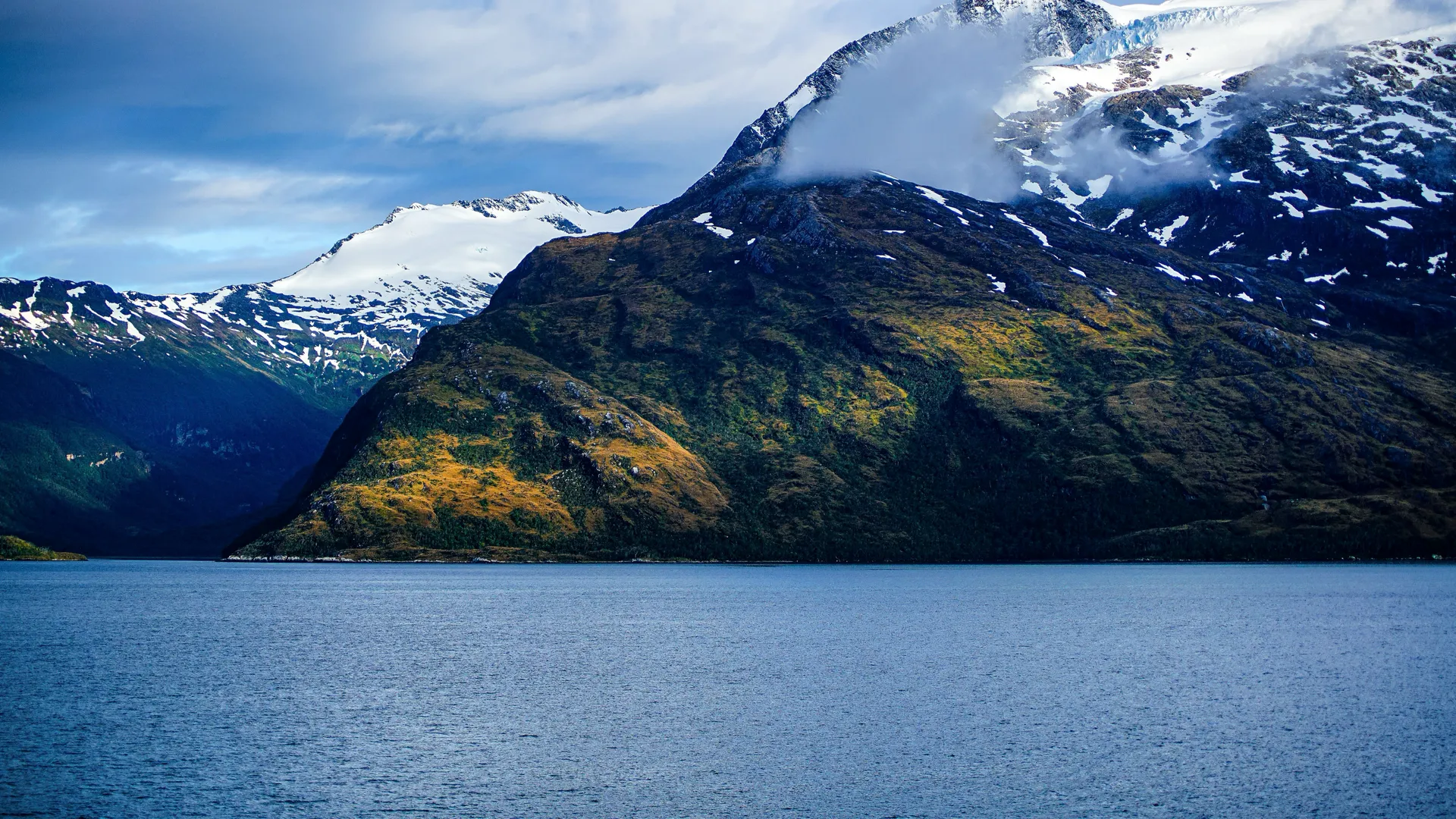
One hundred and eighty kilometers west of Robinson Crusoe Island, at the far end of the Juan Fernández Archipelago, Alejandro Selkirk Island rises from the deep Pacific in a wall of volcanic rock that reaches 1,650 meters at its summit — making it one of the tallest oceanic islands in the South Pacific. Formerly known as Más Afuera ("Farther Away"), this rugged, mist-shrouded island is among the most remote inhabited places in the Pacific and harbors endemic species found nowhere else on Earth.
The island's biological significance is immense. Its cloud forests, occupying the upper slopes above 500 meters, support a unique assemblage of ferns, mosses, and flowering plants that have evolved in complete isolation for millions of years. The Masafuera rayadito, a small endemic bird, exists only on this island — its entire world population confined to the forests of a single volcanic peak in the middle of the Pacific Ocean. The Juan Fernández fur seal, hunted to near-extinction by eighteenth and nineteenth-century sealers, has made a remarkable recovery and can be observed in growing colonies along the island's rocky coastline.
A small seasonal fishing community of approximately fifty to eighty residents occupies a settlement at the island's only accessible anchorage. These fishermen arrive from Robinson Crusoe Island during the lobster season (October through May) to harvest the prized Juan Fernández rock lobster from the surrounding waters. Their temporary camp — a collection of modest wooden structures clinging to a narrow shelf above the sea — speaks of lives lived in intimate, sometimes harsh dialogue with one of the Pacific's most unforgiving environments.
The island's terrain is extraordinarily rugged, with near-vertical cliffs on most of its coastline and a deeply eroded interior of narrow ridges and steep valleys. Hiking to the summit — when conditions permit — passes through distinct vegetation zones, from the sparse coastal scrub through dense fern forest to the cloud zone where the endemic species concentrate. The views from the upper slopes, when the clouds part, reveal an ocean stretching unbroken in every direction — a visceral reminder of the island's profound isolation.
Alejandro Selkirk Island is accessible only by sea, with expedition cruise ships anchoring offshore in the island's single protected cove and using tenders for shore access. Landing is weather-dependent, and the island's exposed position means that conditions can deteriorate rapidly. The austral summer from December through March offers the best chance of successful landings, though the island's maritime climate ensures that rain and wind are possible at any time. This is genuinely remote expedition territory — there are no tourist facilities, no marked trails, and no guarantee of access. When conditions align, however, the experience of stepping onto one of the Pacific's most isolated inhabited islands is one of expedition cruising's most exclusive rewards.

