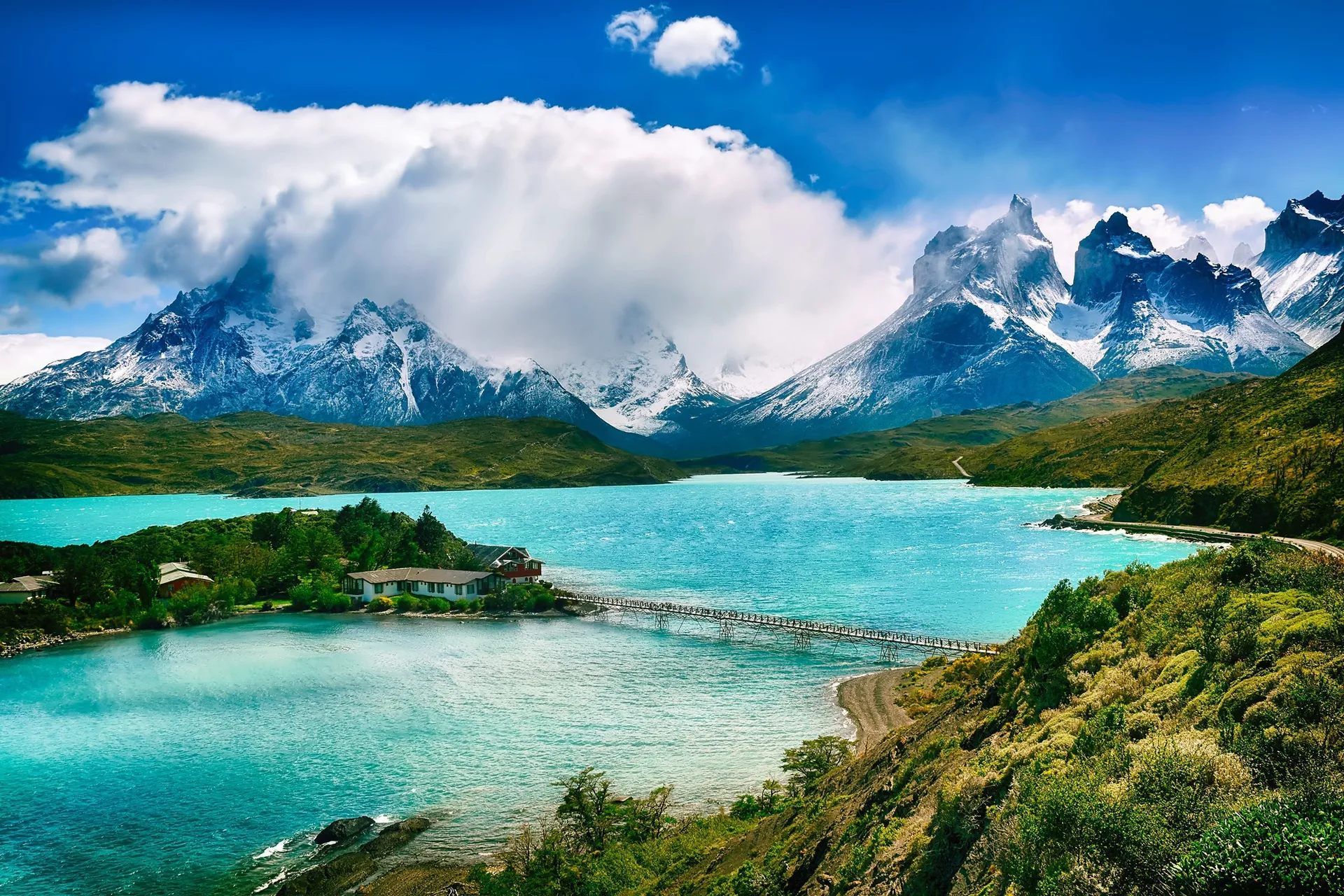
The Chilean Fjords constitute one of the planet's last great wilderness frontiers—a labyrinth of channels, glaciers, and temperate rainforest stretching over 1,600 kilometers along Patagonia's western coast, from Puerto Montt in the north to Cape Horn in the south. This is a landscape of almost incomprehensible scale and drama: tidewater glaciers calve icebergs into jade-green fjords, volcanoes rise snow-capped above forests of ancient alerce trees, and the only signs of human habitation are the occasional fishing village, lighthouse, or remote military outpost clinging to the shore. The Chilean Fjords receive some of the heaviest rainfall on Earth—up to 7,000 millimeters annually—creating conditions that sustain one of the largest remaining temperate rainforests on the planet.
The northern fjords, accessible from Puerto Montt and the island of Chiloé, offer a landscape where volcanism and glaciation have sculpted the coast into a dramatic sequence of inlets, islands, and channels. The Carretera Austral, the legendary highway carved through the Aysén region, provides overland access to points along the coast, but the fjords themselves are best experienced by ship—the channels are too narrow and numerous for road access, and the isolation of the coastline has preserved ecosystems that have changed little since the last Ice Age. Further south, the fjords deepen and the glaciers multiply: the Northern and Southern Patagonian Ice Fields, the largest ice masses in the Southern Hemisphere outside Antarctica, feed hundreds of glaciers that descend into the fjords, their blue-white faces calving into the water with thunderous reports.
Wildlife in the Chilean Fjords reflects the extraordinary productivity of these cold, nutrient-rich waters. Magellanic and Humboldt penguins inhabit colonies along the coast, while Chilean dolphins (the tonina, one of the smallest cetacean species) and Peale's dolphins ride the bow waves of passing vessels. Southern elephant seals and South American fur seals haul out on rocky islets. The Andean condor, with its three-meter wingspan, soars above the peaks, and the steamer duck—a flightless species endemic to southern South America—churns across the fjord surfaces in its characteristic paddlewheel motion. The dense forest that lines the fjords supports the pudu (the world's smallest deer), the kodkod (South America's smallest wild cat), and the endangered huemul (the South Andean deer featured on Chile's coat of arms).
The human history of the Chilean Fjords belongs primarily to the Kawésqar and Yagán peoples, maritime nomads who navigated these waters in bark canoes for over 6,000 years—one of the most extreme examples of human adaptation to a hostile environment anywhere on the planet. These peoples maintained a semi-permanent existence on the water, their canoes serving as home, transport, and fishing platform, with small fires burning continuously on clay hearths in the center of each vessel—the "canoe fires" that gave Tierra del Fuego (Land of Fire) its name. European contact devastated their populations through disease, and their numbers are now tragically small, but their legacy is preserved in the place names, archaeological sites, and the ongoing efforts of cultural preservation organizations.
Azamara, Hapag-Lloyd Cruises, Holland America Line, Quark Expeditions, Regent Seven Seas Cruises, and Scenic Ocean Cruises all navigate the Chilean Fjords on their Patagonia and South America itineraries. Ships transit the channels at slow speed, offering extended viewing of glaciers, wildlife, and the unfolding panorama of one of the world's most dramatic coastlines. Key passages include the Strait of Magellan, the Beagle Channel (named for Darwin's ship), and the narrow channels between the Southern Patagonian Ice Field and the outer islands. The cruising season runs from October through March (Southern Hemisphere spring and summer), with December through February offering the longest days and mildest temperatures (8–15°C). Weather is notoriously unpredictable—rain, wind, and dramatic clouds are the norm, and passengers should pack for multiple seasons in a single day. The Chilean Fjords are not a destination for those who require certainty or comfort—they are a destination for those who seek the raw, overwhelming experience of witnessing a landscape in which nature remains, unambiguously, in charge.

