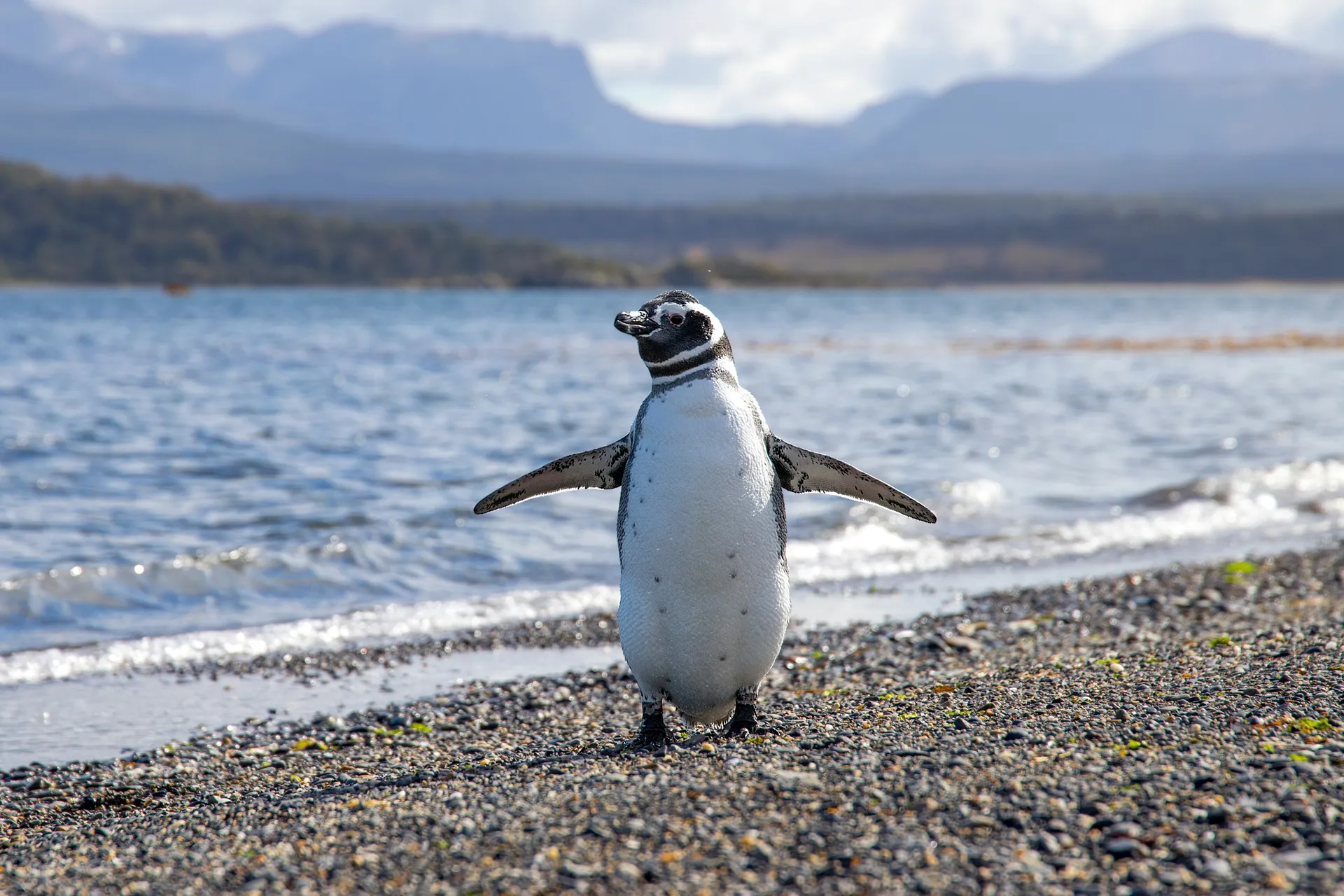
Scattered like emerald fragments across the steely waters of the Beagle Channel in southern Chile, the Tucker Islets are a small group of islands that serve as one of Patagonia's most important breeding colonies for Magellanic penguins and other seabirds. Located in the western reaches of the channel, between Tierra del Fuego and Isla Gordon, these windswept islets offer expedition cruise passengers an intimate encounter with sub-Antarctic wildlife in a setting of austere, wind-scoured beauty.
The Magellanic penguin colony on the Tucker Islets numbers in the thousands during the breeding season, the birds occupying burrows dug into the peaty soil beneath the low scrub that covers the islands. Watching these charming, black-and-white birds waddle between their nesting sites and the water's edge — pausing to bray their distinctive donkey-like calls — provides reliable entertainment and photographic opportunities. The penguins are joined by significant numbers of imperial cormorants, whose nesting colonies on the rock faces present a more vertical spectacle of densely packed birds and the constant coming-and-going of parents returning from fishing forays.
The marine environment around the Tucker Islets is characteristically rich for the Beagle Channel. South American sea lions patrol the kelp-fringed shorelines, their bull males bellowing territorial challenges that echo off the rock faces. Kelp geese — striking black-and-white birds found only along the coasts of southern South America — pick their way across the intertidal zone. In the surrounding waters, Peale's dolphins occasionally accompany Zodiac craft with the playful curiosity that characterizes the smaller dolphin species of these cold southern seas.
The landscape surrounding the Tucker Islets amplifies the wildlife experience with scenery of severe grandeur. The snow-capped peaks of the Darwin Range form the northern horizon, their glaciers descending through dark forests of Antarctic beech toward the channel. The water itself shifts between slate gray and deep blue depending on the light, and the ever-present wind — a defining feature of Patagonian life — sculpts the surface into patterns that change by the minute. The quality of light in these latitudes, particularly during the golden hours of the long austral summer evenings, lends the landscape an almost painterly quality.
The Tucker Islets are visited exclusively by expedition cruise vessels transiting the Beagle Channel, with Zodiac landings or cruising providing the means of close approach to the wildlife colonies. Landing conditions are weather-dependent, and the exposed position of the islets means that plans must remain flexible. The penguin breeding season runs from September through March, with the peak activity — adults feeding chicks and juveniles preparing to fledge — occurring from December through February. These austral summer months also offer the longest daylight hours and the most moderate temperatures, though "moderate" in the Beagle Channel means daytime highs rarely exceeding 12°C, and wind chill can make conditions feel considerably colder.

