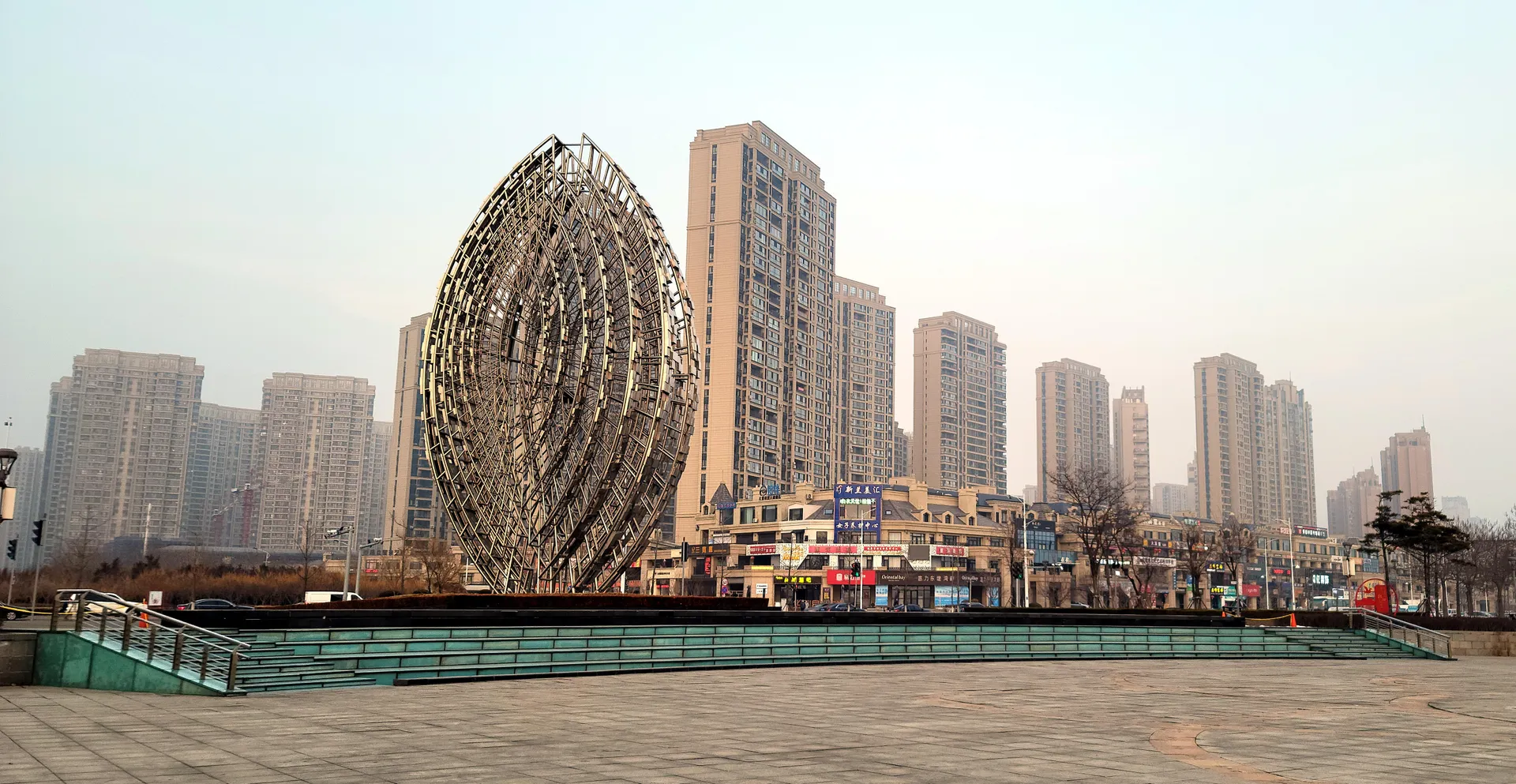
Perched on the southern tip of the Liaodong Peninsula, where the Yellow Sea meets the Bohai Gulf, Dalian is a city whose skyline tells the story of a century of contested ambitions. Russians built its first grand boulevards in 1898, naming it Dalny — "the distant" — and envisioning a jewel of the Far East to rival Shanghai. The Japanese, who seized the city in 1905, added their own layer of colonial architecture, including the imposing Yamato Hotel on Zhongshan Square. When the People's Republic reclaimed Dalian in 1955, it inherited one of China's most cosmopolitan cities — a legacy that continues to distinguish it from the country's more homogeneous metropolises.
Modern Dalian drapes itself across a series of dramatic headlands and bays, giving it an almost Mediterranean feel rare among Chinese coastal cities. Zhongshan Square, ringed by Romanesque and Japanese neo-classical buildings, remains the civic heart, while the upscale waterfront district of Xinghai extends along a curving promenade to Xinghai Bay Beach — a popular gathering spot where retirees practice tai chi at dawn and young couples stroll at dusk. The city's abundant green spaces, mild summers, and relative lack of industrial grit have earned it the moniker "Northern Hong Kong," a comparison that flatters both cities.
Dalian's culinary identity is anchored firmly in the sea. The city's signature dish is sea cucumber braised in brown sauce, a delicacy prized for its silky, gelatinous texture and subtle brininess. At the sprawling Zhongshan Road night market, skewers of grilled squid, garlic-roasted scallops still bubbling in their shells, and bowls of hand-pulled seafood noodles compete for attention. For a more refined experience, restaurants in the Donggang business district serve Dalian-style abalone and razor clams alongside excellent local craft beers from the city's growing microbrewery scene.
The surrounding Liaodong coast offers excursions of unexpected variety. Lushun (the former Port Arthur) lies just forty minutes southwest, its hilltop memorial and preserved Japanese-era fortifications bearing somber witness to the Russo-Japanese War of 1904-1905. In the opposite direction, Jinshitan — the Golden Pebble Beach — stretches for eight kilometers along sandstone cliffs sculpted by wind and tide into fantastical shapes, forming a natural sculpture park of rare beauty. Tiger Beach Ocean Park provides family-friendly entertainment, while hikers can tackle the coastal trails of Dahei Mountain for panoramic views across the Bohai Strait.
Most cruise ships berth at Dalian International Cruise Terminal in the Donggang district, a modern facility within easy reach of the city center by taxi or light rail. Dalian's climate is distinctly seasonal: summers (June to September) are warm and pleasantly breezy, making this the ideal window for cruise visits. English signage is improving but still limited outside tourist zones, so having a translation app or local guide enhances the experience considerably. With its unique blend of Russian, Japanese, and Chinese heritage, Dalian offers a cruise port call unlike any other in northeastern Asia.

