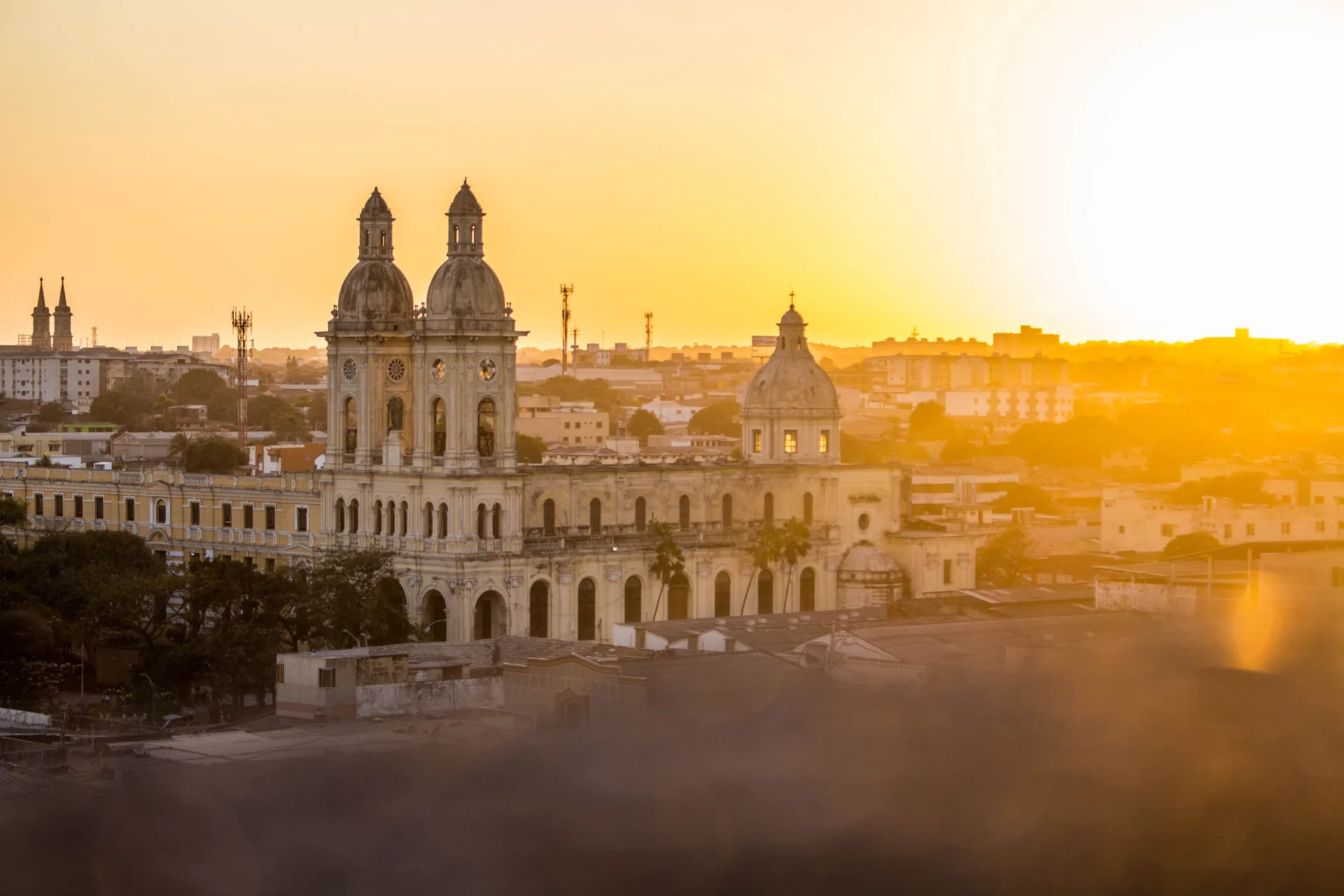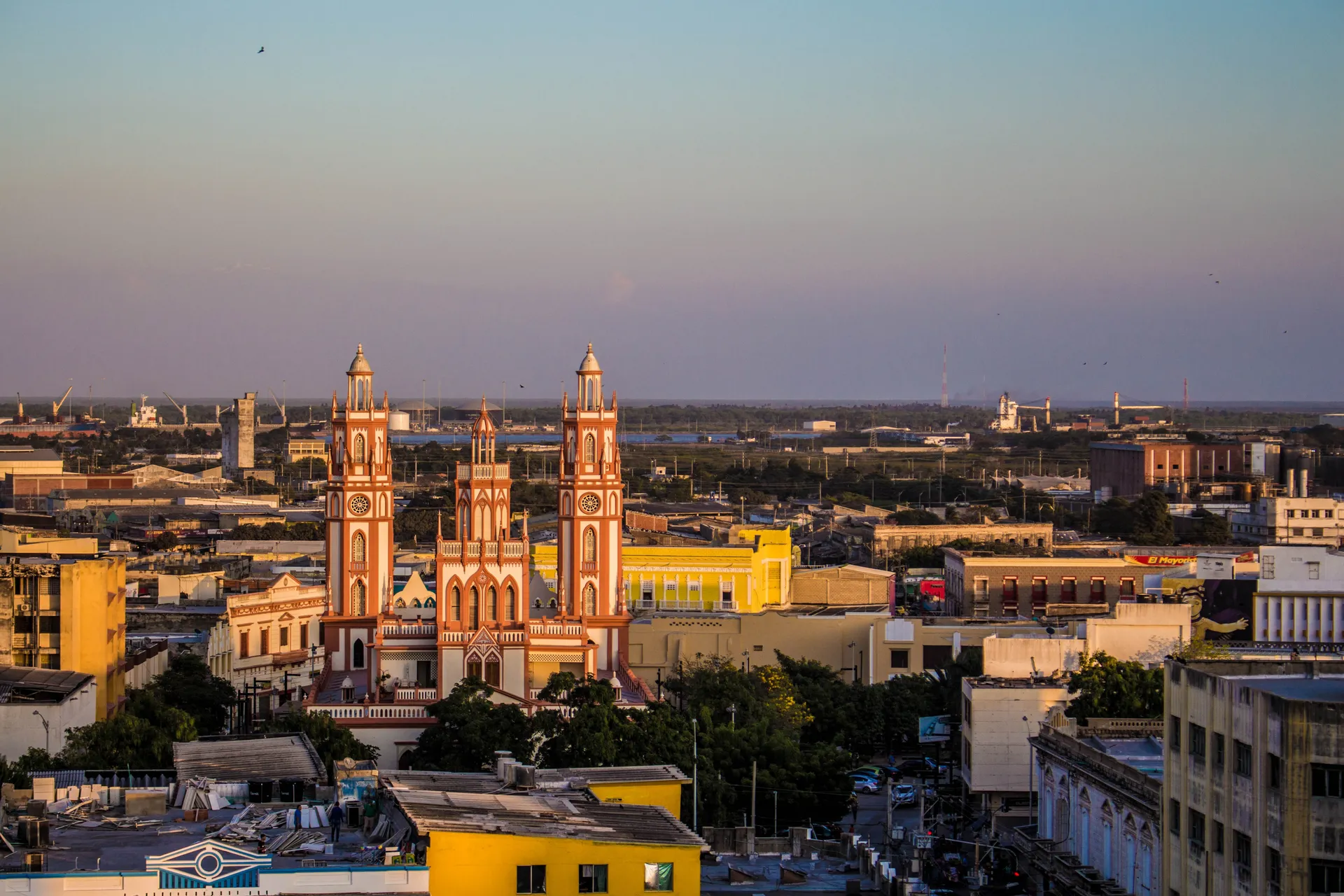
Where the Magdalena River surrenders its amber waters to the Caribbean Sea, Barranquilla has presided over Colombia's commercial destiny since the early nineteenth century. It was here, in 1919, that Avianca — the Western Hemisphere's second-oldest airline — took its inaugural flight, forever altering the trajectory of Latin American aviation. The city's golden age as Colombia's principal port of entry left an indelible architectural legacy: Art Deco facades along Paseo Bolívar, the neo-Moorish splendor of the old customs house, and grand republican-era mansions that whisper of an era when the world arrived by steamship.
Yet Barranquilla resists the stillness of a museum piece. This is a city that pulses with an irrepressible vitality, most spectacularly during its Carnival — a UNESCO-recognized Masterpiece of the Oral and Intangible Heritage of Humanity, and the second largest in the world after Rio de Janeiro. Even outside those fevered February days, the cumbia rhythms that were born along these riverbanks seep through every corner: from the elegant terrace bars of Alto Prado to the weathered cantinas of Barrio Abajo, where murals bloom across pastel walls and the scent of fried plantain mingles with salt air. The Museo del Caribe, a marvel of interactive storytelling, traces the cultural confluence — Indigenous Mocaná, African, Arab, and European — that forged this singular Caribbean identity.
The table in Barranquilla is a revelation for those who seek authenticity over refinement, though the city increasingly offers both. Begin with *butifarra*, the spiced pork sausage sold from street carts at dawn, paired with *bollo limpio*, a delicate steamed corn cake wrapped in plantain leaves. At lunch, *arroz de lisa* — mullet fish slow-cooked with coconut rice — embodies the river-meets-sea duality that defines the local palate, while *sancocho de guandú* delivers a hearty pigeon-pea stew that has nourished Magdalena families for generations. For the adventurous, *friche* — a goat dish of Wayúu origin, seasoned with its own offal and roasted to a caramelized intensity — offers a taste of the Guajira frontier. The city's new generation of chefs, many trained abroad, are reimagining these ancestral preparations in elegant tasting menus at restaurants tucked within restored republican houses.
Barranquilla's position as gateway to Colombia's Caribbean treasures makes it an ideal anchor for deeper exploration. Santa Marta, barely two hours east along the coastal highway, offers the snow-capped drama of the Sierra Nevada and the pristine coves of Tayrona National Park — one of South America's most breathtaking convergences of jungle and sea. Upriver, the languid colonial town of Magangué reveals the timeless rhythms of Magdalena River life, where fishermen cast circular nets at twilight as they have for centuries. For those with appetite for true wilderness, Bahía Solano on the Pacific coast — reachable by a short flight — presents humpback whale encounters from June through October and beaches so remote they feel primordial. And high in the coffee-scented mountains of the Zona Cafetera, the pastel village of Salento serves as a portal to the otherworldly wax palm forests of the Cocora Valley, offering a dramatic counterpoint to the Caribbean lowlands.
For discerning river cruise travelers, Barranquilla represents the crescendo — or the overture — of a Magdalena River journey unlike any other in the Americas. AmaWaterways has pioneered luxury exploration of this storied waterway, navigating Colombia's arterial river through landscapes that shift from tropical wetlands teeming with caimans and pink river dolphins to the emerald corridors of colonial history. Their intimate vessels bring the refined comforts of European river cruising to a frontier that remains gloriously undiscovered by the mainstream, with expert naturalists and cultural guides who unlock dimensions of this extraordinary region that no land-based itinerary could replicate. Arriving by river grants a perspective on Barranquilla that few visitors ever receive: the slow revelation of a great city materializing from the tropical haze, its skyline rising above the mangroves like a promise kept.