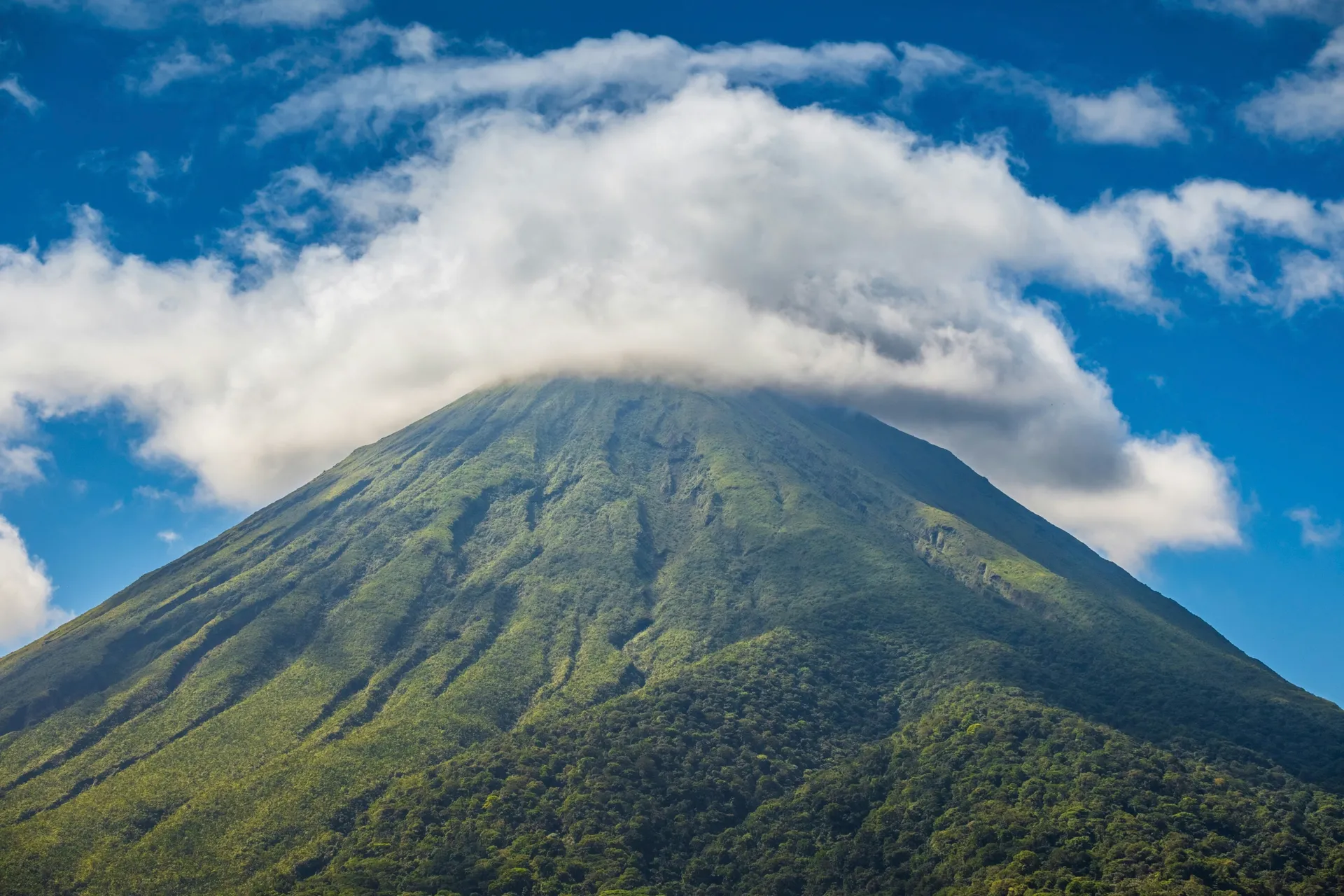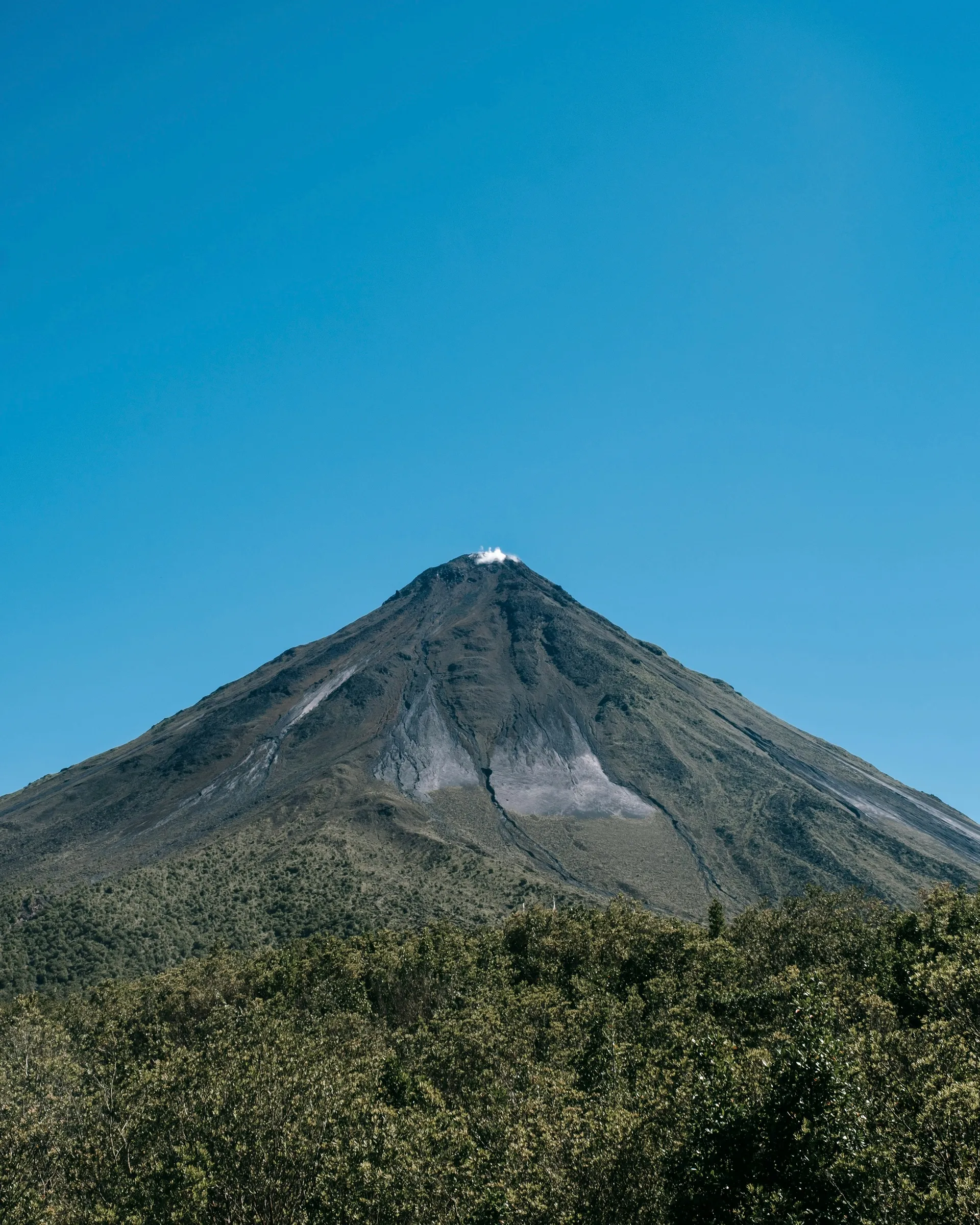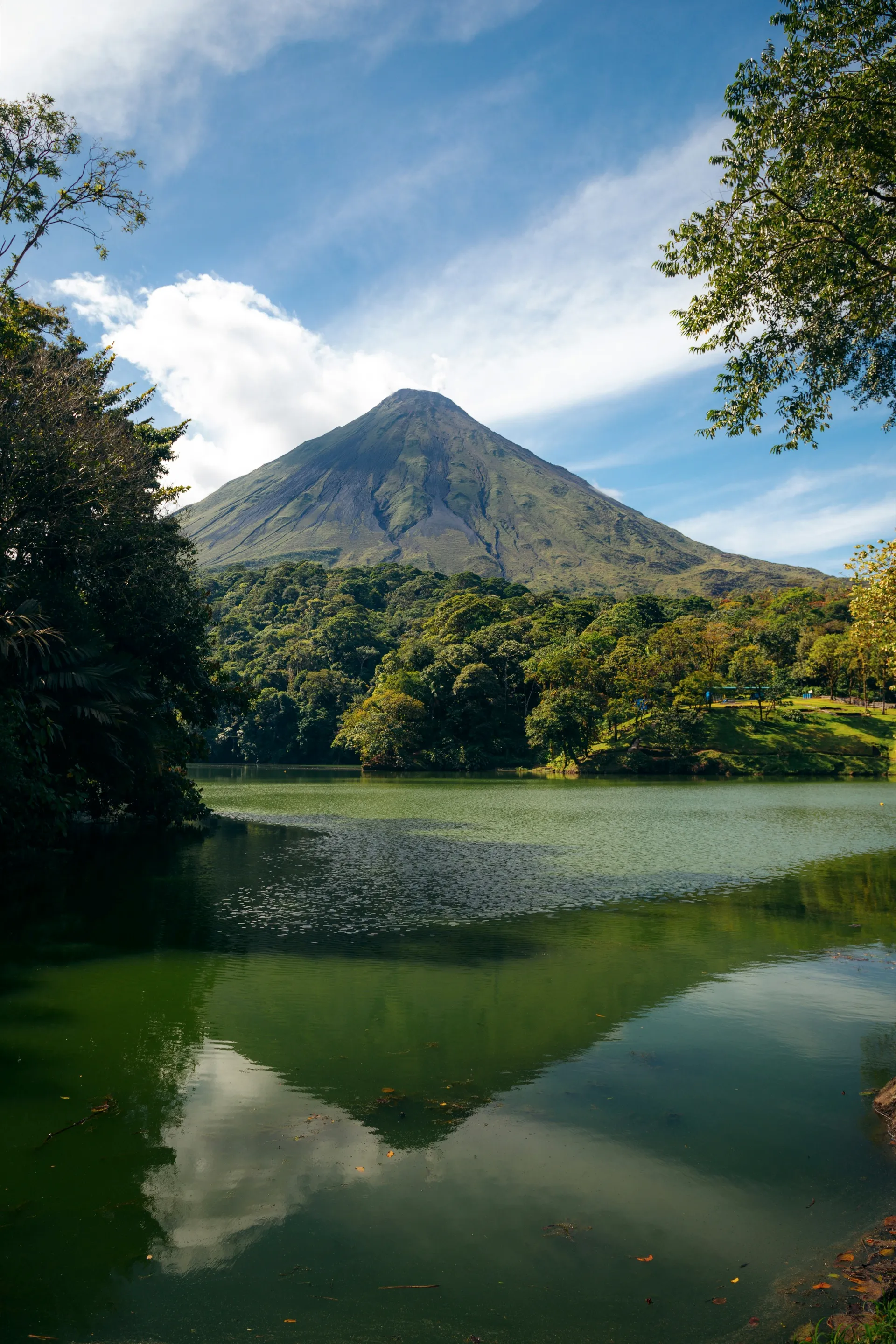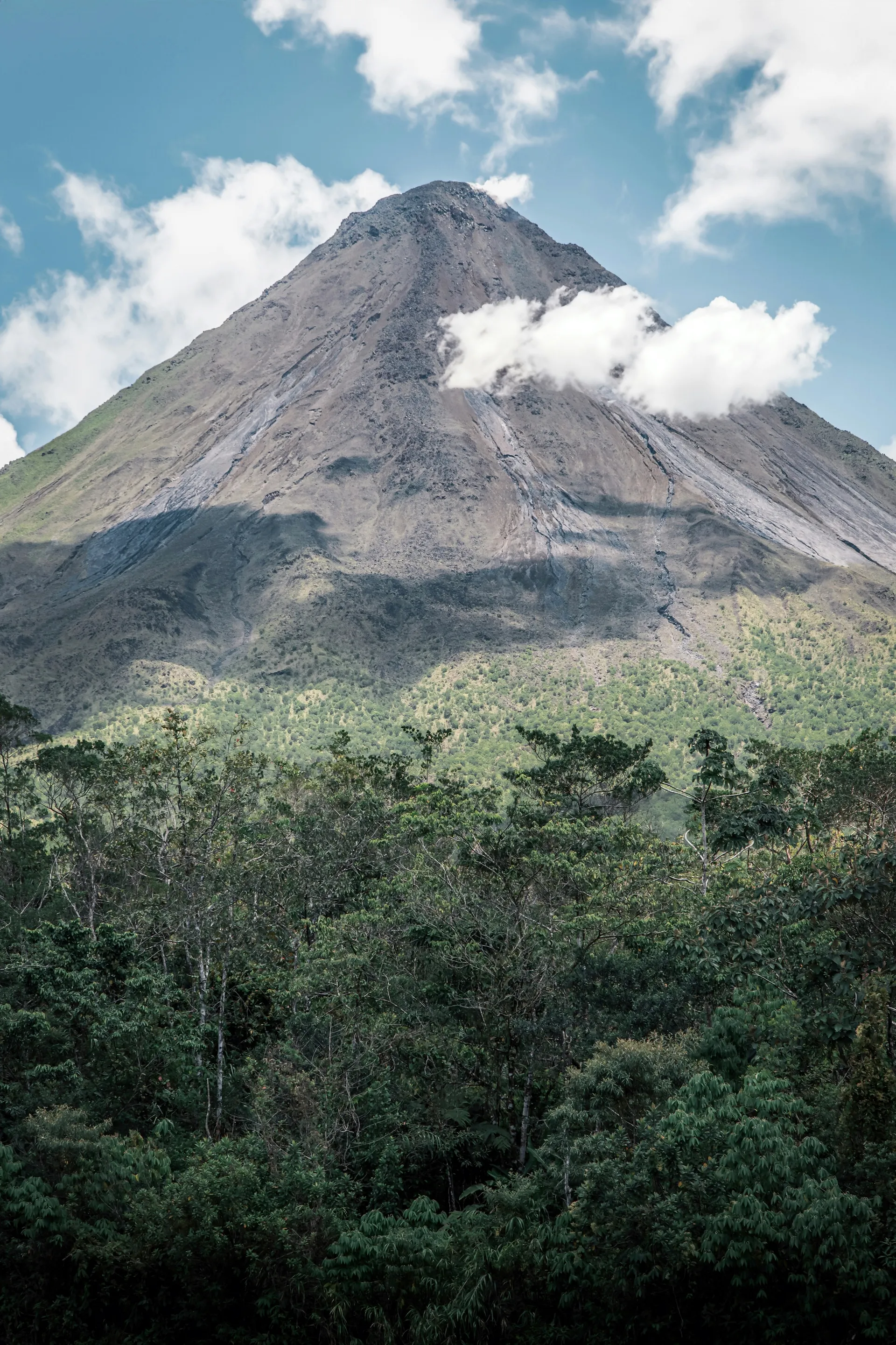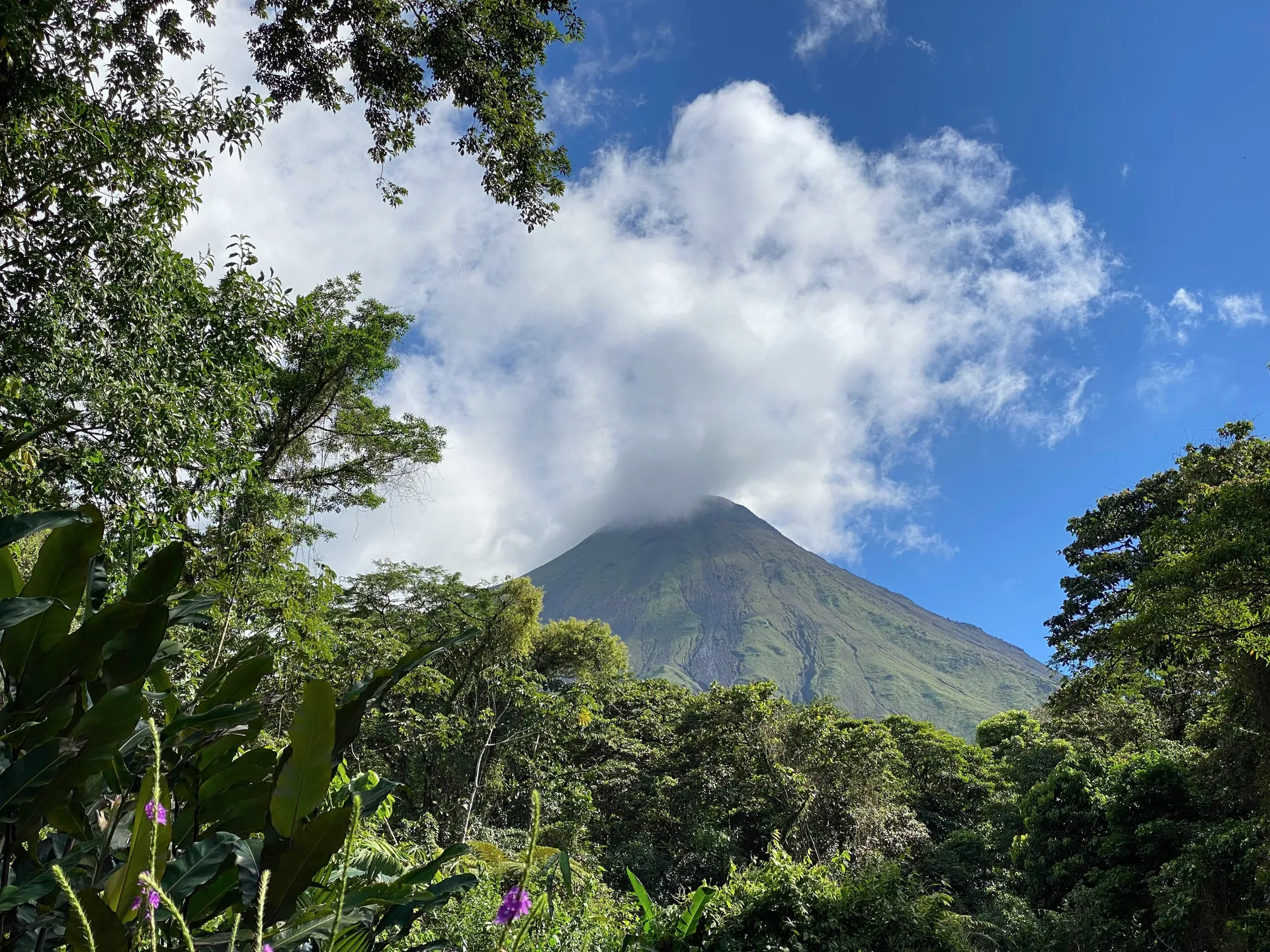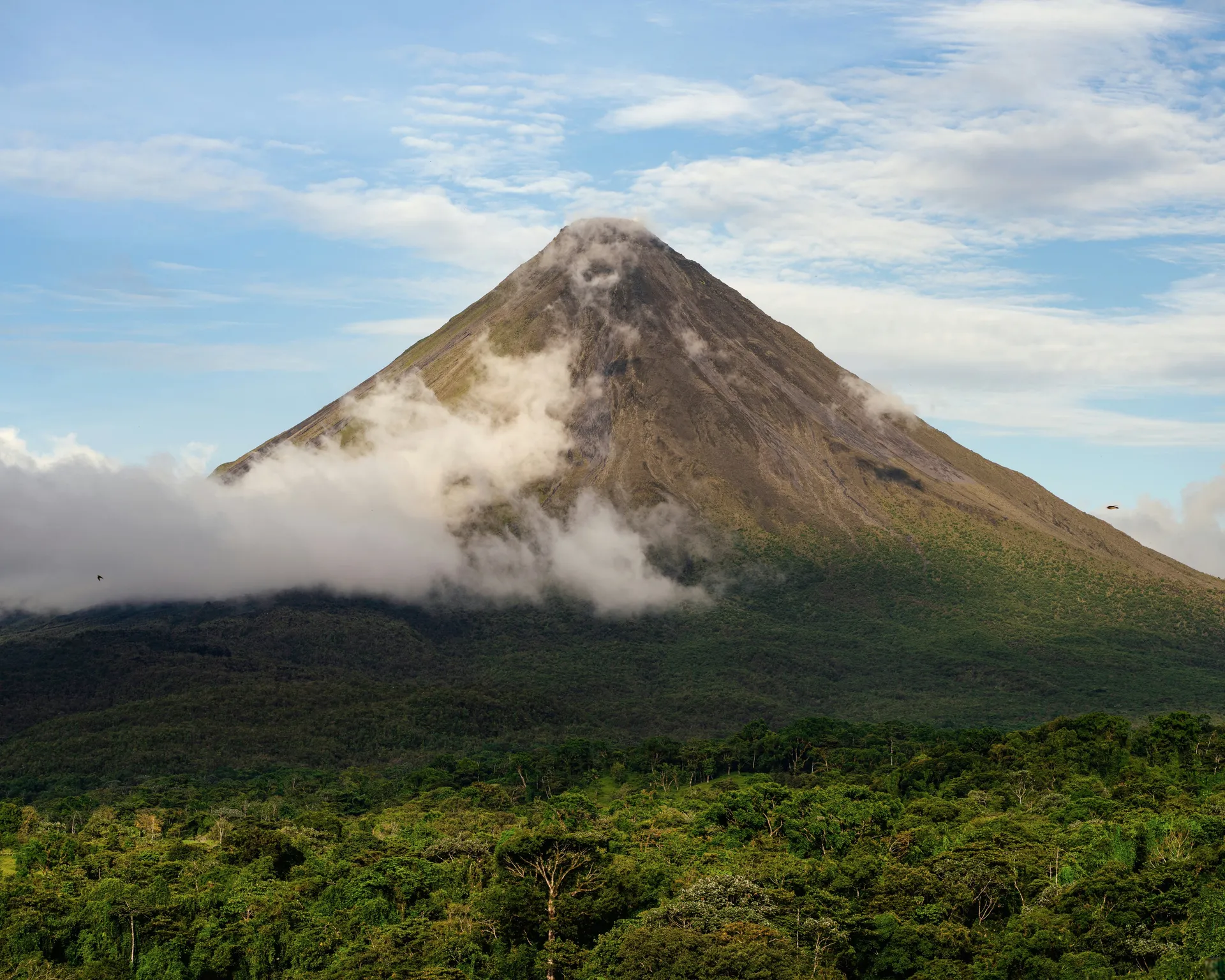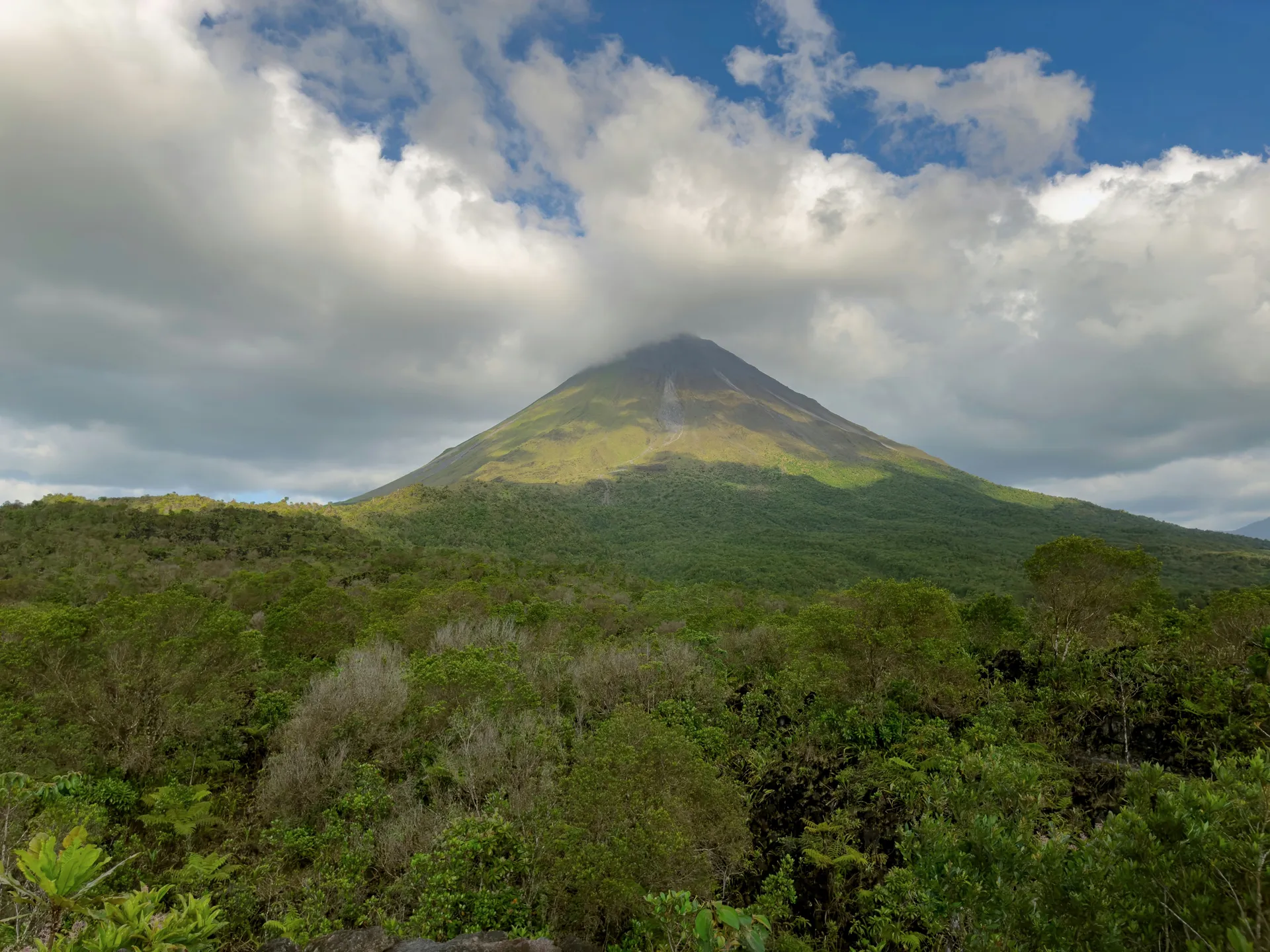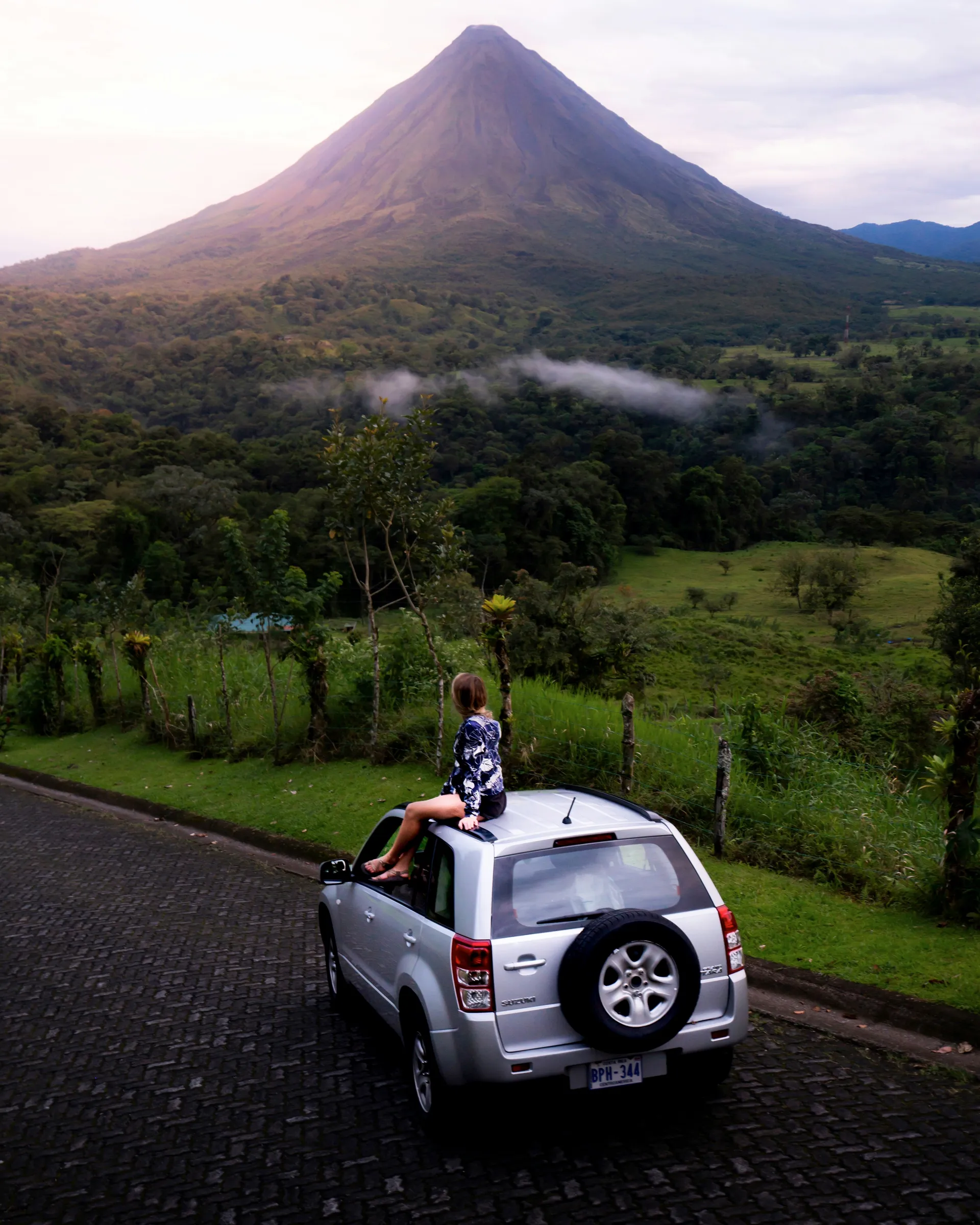
For nearly half a century, Arenal was the poster child of volcanic spectacle — a near-perfect cone rising 1,670 meters above the lowland rainforest of north-central Costa Rica, its summit trailing plumes of gas and its flanks periodically lit by rivers of incandescent lava visible for kilometers. Since entering a resting phase in 2010, Arenal has traded pyrotechnics for a quieter but equally compelling presence: a magnificent, cloud-wreathed mountain at the center of one of the most biologically rich and adventure-oriented regions in Central America.
The town of La Fortuna, sprawled at the volcano's eastern base, serves as the gateway to the Arenal region and has evolved from a sleepy agricultural settlement into one of Costa Rica's most vibrant tourist hubs. Despite this growth, the surrounding landscape retains its primal intensity: the Arenal Volcano National Park protects the volcano's slopes and the old lava flows of 1968 (which destroyed the village of Tabacon and killed 87 people), now colonized by pioneer vegetation that provides a living lesson in ecological succession. The park's trails wind through both primary rainforest and the eerily beautiful lava fields, offering perspectives on the volcano's bulk that shift from verdant to volcanic with each turn.
Costa Rican cuisine, while sometimes overshadowed by the country's natural attractions, shines in the Arenal region. Casado — the quintessential Costa Rican lunch plate of rice, black beans, plantain, salad, and a choice of meat or fish — achieves its most comforting expression in La Fortuna's sodas (family-run restaurants). The regional specialty is tilapia from the farms that dot the lowlands, served fried whole or in ceviche. The Monteverde cheese factory, established by American Quakers in the 1950s, produces excellent cheeses that appear on restaurant menus throughout the region. Coffee, grown on the volcanic slopes at ideal altitude and harvested by hand, reaches extraordinary quality here.
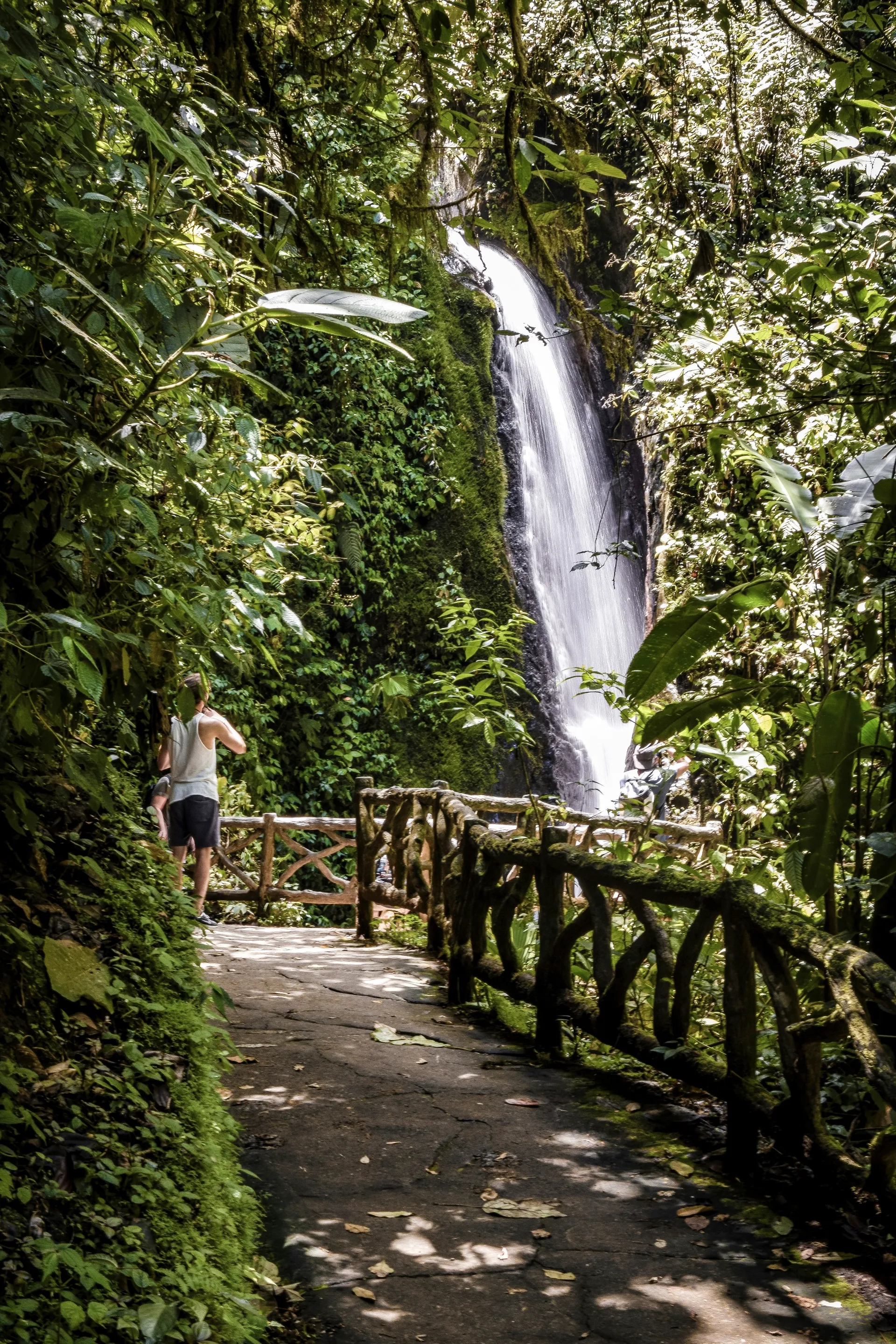
The Arenal region offers a concentration of adventure and nature experiences that few destinations can match. The hot springs — heated by the volcano's geothermal activity — range from luxury resort complexes to free, natural river pools where warm water mixes with cold in the forest. Hanging bridges and canopy zip-lines traverse the forest canopy at heights of up to 60 meters, offering aerial perspectives on the biodiversity below — toucans, howler monkeys, sloths, and the resplendent quetzal all inhabit these forests. Lake Arenal, a reservoir stretching 30 kilometers beneath the volcano, provides kayaking, stand-up paddleboarding, and world-class windsurfing conditions.
Arenal is approximately 3.5 hours by road from San Jose and is included on some Pacific Coast cruise itineraries as an overland excursion. The region has multiple airports and well-developed tourist infrastructure. The dry season (December to April) offers the best chance of clear volcano views, though the green season (May to November) brings lush vegetation, fewer crowds, and dramatic afternoon thunderstorms. Regardless of season, Arenal provides one of Central America's most complete natural experiences — a volcanic landscape of extraordinary beauty, wrapped in biodiversity, and sustained by the geothermal energy that still flows beneath the mountain's tranquil exterior.