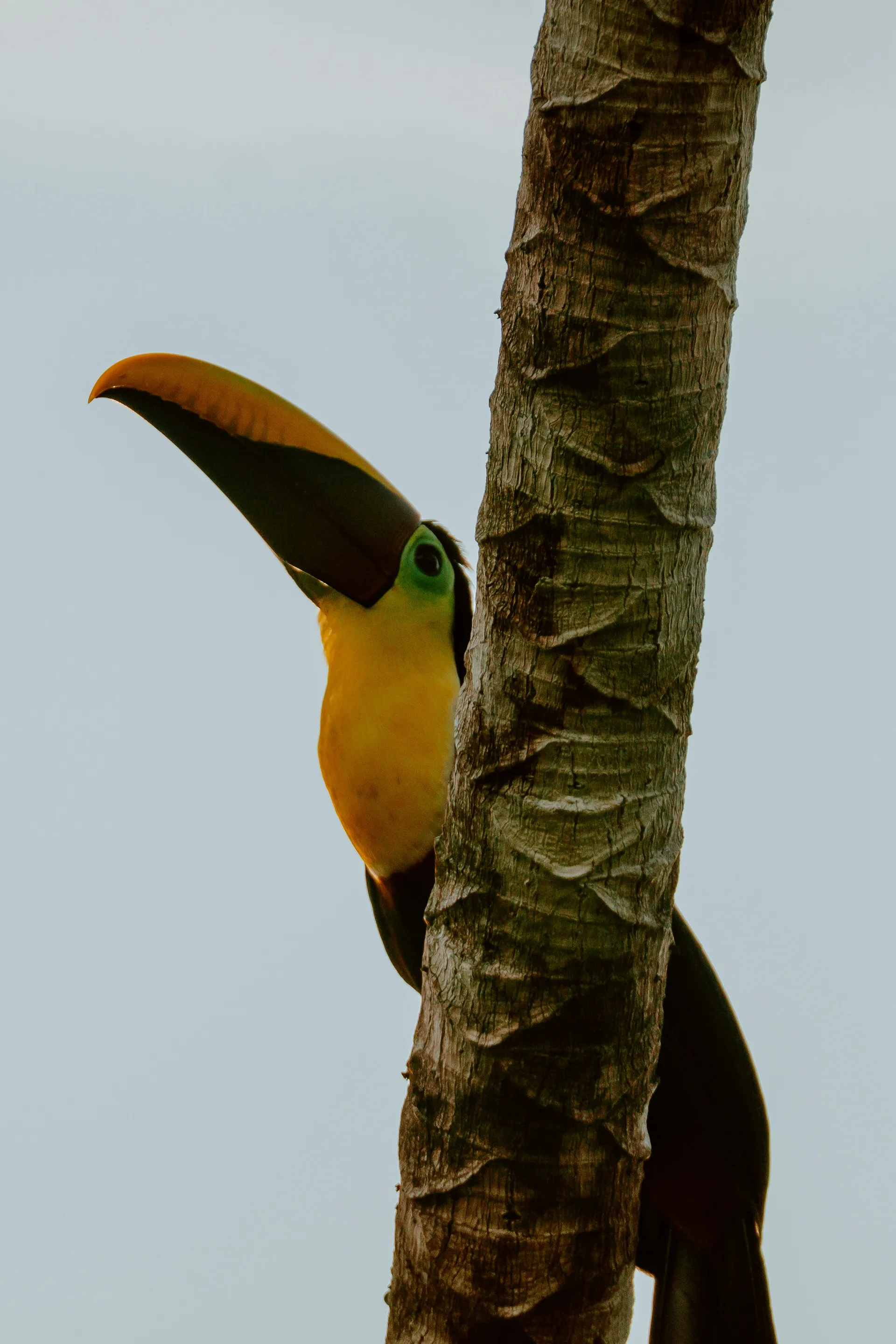
Bahía Drake—Drake Bay—occupies one of the most biologically intense corners of Costa Rica, a remote community on the Osa Peninsula's northern coast named for Sir Francis Drake, who is believed to have anchored here in 1579 during his circumnavigation of the globe. The bay curves beneath a headland of tropical forest so dense that the canopy forms a continuous green ceiling, and the waters offshore support some of the richest marine biodiversity in the eastern Pacific. Corcovado National Park, which National Geographic called "the most biologically intense place on Earth," is accessible by boat from Drake Bay, making this small settlement the gateway to one of the planet's last great wildernesses.
The character of Drake Bay is defined by its isolation—there are no paved roads connecting the town to the rest of Costa Rica (access is by boat from Sierpe or by small aircraft), and this remoteness has preserved both the natural environment and a pace of life that is quintessentially Costa Rican. The settlement consists of a few dozen eco-lodges, a handful of restaurants, and a primary school—all connected by dirt paths that wind through the jungle. Scarlet macaws fly overhead in pairs, white-faced capuchin monkeys swing through the trees, and at night, the chorus of frogs and insects creates a wall of sound that is the authentic voice of the tropical rainforest.
The cuisine at Drake Bay is simple, fresh, and driven by what the ocean and the forest provide. Fresh-caught tuna, wahoo, snapper, and lobster appear grilled at the lodge restaurants, accompanied by rice, beans, and the fried plantains that are the Costa Rican table's constant companion. Tropical fruits—mangoes, papayas, coconuts—grow everywhere, and the fresh juices (batidos) made from them are daily essentials. The lodges, most of which operate on an all-inclusive basis, serve family-style meals that bring guests together around communal tables—an arrangement that fosters the camaraderie that is one of Drake Bay's greatest social pleasures.
Corcovado National Park, covering over 42,000 hectares of the Osa Peninsula, protects the last significant area of Pacific lowland tropical rainforest in Central America. The park is home to all four Costa Rican monkey species, tapirs, peccaries, jaguars, pumas, scarlet macaws, and an estimated 2.5% of the world's total biodiversity. Boat trips from Drake Bay to the park's San Pedrillo ranger station provide access to trails that wind through primary forest of cathedral-like dimensions—trees reaching fifty meters, buttress roots spreading across the forest floor, and a diversity of life that makes every step a potential discovery. Caño Island Biological Reserve, offshore from Drake Bay, offers some of the finest snorkeling and diving in Costa Rica—the clear waters support reef sharks, manta rays, dolphins, and during the migration season (August–October and December–April), humpback whales.
Drake Bay is accessible by boat from Sierpe (ninety minutes through mangrove channels that are an experience in themselves) or by small aircraft from San José. The settlement is included in nature-focused expedition cruise itineraries along the Pacific coast of Central America. The best time to visit is December through April, the dry season, when rainfall is lower, trails are more accessible, and the ocean is calmest for diving. The green season (May–November) brings more rain but also lusher vegetation, fewer visitors, and the arrival of humpback whales from the Southern Hemisphere (August–October).

