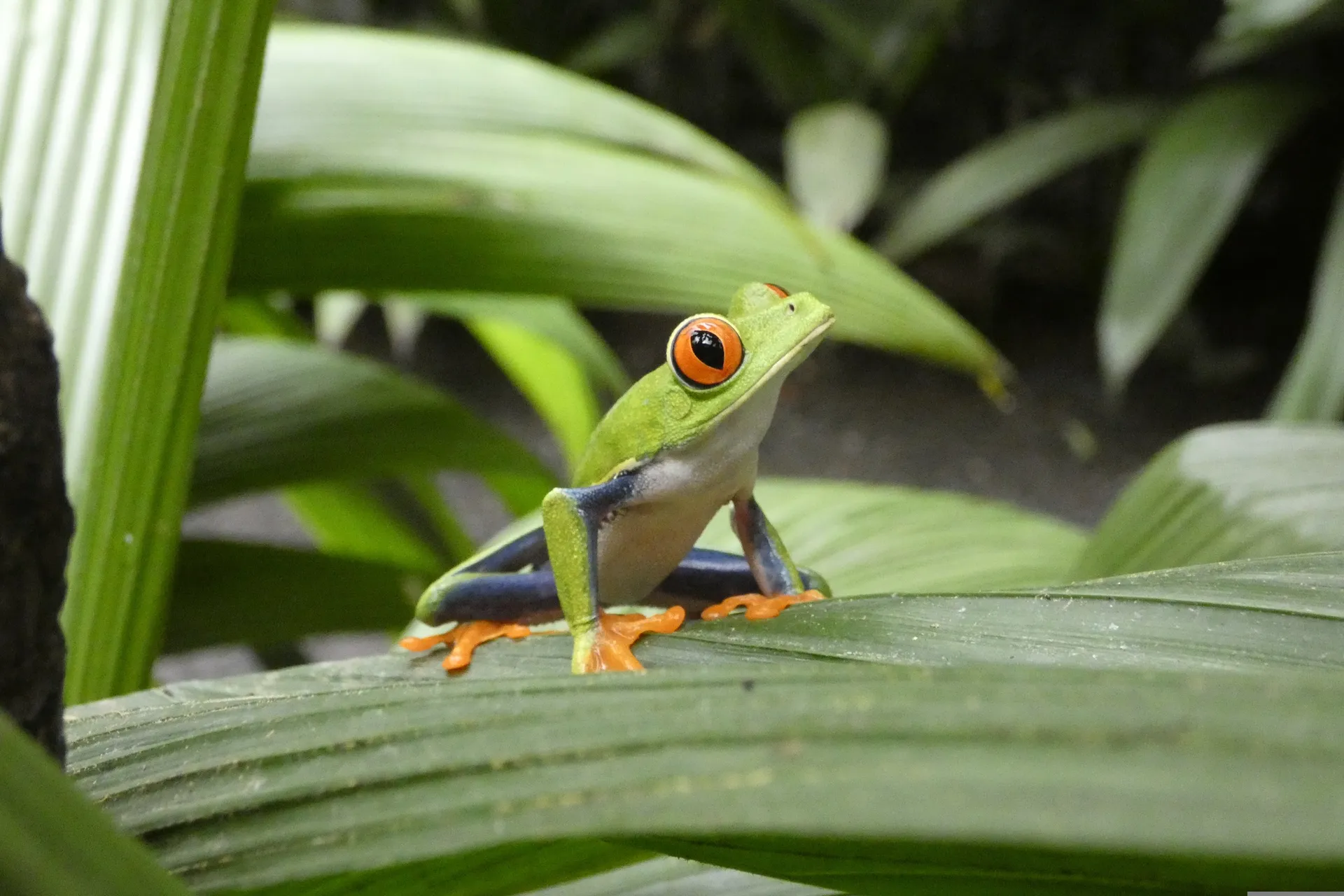
Puerto Caldera is Costa Rica's principal Pacific coast cruise port, situated on the Gulf of Nicoya in the Puntarenas province — the gateway to a country that has made conservation its national brand and ecotourism its economic engine. Costa Rica's remarkable commitment to environmental protection — over 25 percent of its territory is designated as national parks or reserves, more than any other country in the world proportional to its size — has preserved a biological diversity that is staggering for a nation roughly the size of West Virginia: over 500,000 species of flora and fauna, representing nearly five percent of all species on Earth.
The excursion possibilities from Puerto Caldera span the full range of Costa Rican ecosystems. Carara National Park, just 30 minutes from the port, sits at the transition zone between the dry tropical forests of the Pacific northwest and the wet forests of the south — a biological crossroads that supports an extraordinary diversity of birdlife, including the scarlet macaw, whose crimson-and-blue plumage flashing through the forest canopy is one of the signature wildlife images of Central America. The park's trails wind through primary and secondary forest along the Tarcoles River, where crocodiles bask on the banks in numbers that are both impressive and mildly alarming. The aerial tram through the forest canopy at Jaco provides a bird's-eye perspective of the rainforest layers that reveals the vertical complexity invisible from the ground.
Costa Rican cuisine, while less internationally celebrated than its Mexican or Peruvian neighbours, is honest, satisfying, and built on the foundation of gallo pinto — the rice-and-black-beans dish served at virtually every meal, whose apparently simple preparation conceals subtle variations of seasoning and technique that distinguish a good gallo pinto from a great one. Casado, the national lunch plate — rice, beans, plantain, salad, and a choice of meat or fish — represents the balanced, unpretentious approach to food that characterises Costa Rican daily life. The Pacific coast adds fresh ceviche, grilled whole red snapper, and the coconut-based Caribbean-influenced preparations that appear on menus throughout the Puntarenas province.
The Monteverde Cloud Forest Reserve, accessible on a full-day excursion from Puerto Caldera, is one of the most biologically intense ecosystems on the planet — a montane forest perpetually wreathed in mist, where every surface drips with moisture and every tree supports a vertical garden of orchids, bromeliads, and ferns. The reserve is one of the most reliable locations in Central America to spot the resplendent quetzal — the emerald-and-crimson bird that the Maya considered divine, whose metre-long tail feathers trail behind it in flight like a living banner. The hanging bridges and canopy walkways of the reserve provide access to the forest's upper stories, where howler monkeys, toucans, and the elusive three-toed sloth — moving so slowly that algae grows on its fur — inhabit a world entirely above the ground.
Puerto Caldera is served by Lindblad Expeditions and Windstar Cruises on Pacific coast itineraries, with ships docking at the commercial port. The dry season from December through April offers the most comfortable conditions for forest excursions, though the green season (May through November) brings lusher vegetation, fewer crowds, and the satisfaction of visiting a country whose very identity is built on the principle that nature is worth protecting.

