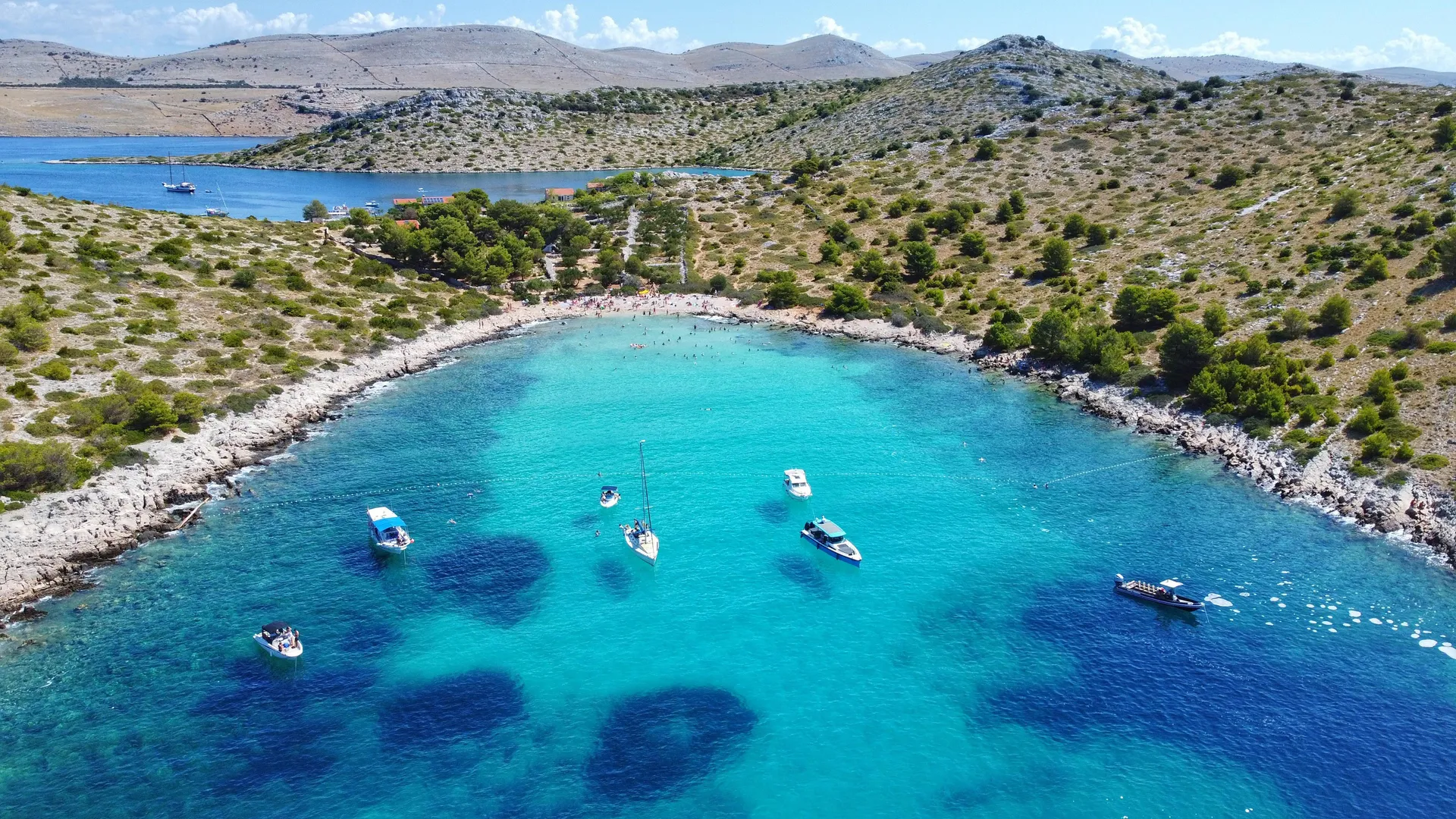
On the western shore of the island of Vis, where the central Adriatic stretches uninterrupted toward the Italian coast, the fishing village of Komiza has been hauling its nets since the medieval republic of Venice first recognized the strategic value of this distant Croatian outpost. For centuries, Komiza's sardine fleet was among the most productive in the Mediterranean, and the town's fortunes rose and fell with the silver flash of the catch. The Benedictine monastery perched above the harbour, founded in the 13th century, still watches over a waterfront where brightly painted wooden boats — the traditional falkusha, unique to Komiza — rest on stone slipways between voyages, their design virtually unchanged since the Renaissance.
Vis was Yugoslavia's primary naval base during the Cold War, closed entirely to foreign visitors until 1989. This enforced isolation proved an accidental blessing: while the Croatian mainland coast underwent rapid tourist development, Vis and its western settlement of Komiza remained frozen in a kind of Adriatic amber. The town unfolds in a crescent of stone houses with terracotta roofs, climbing from the harbour toward the slopes of Hum, the island's highest peak at 587 metres. Narrow lanes wind past Renaissance palaces and Baroque churches, opening suddenly onto terraces where the view sweeps across an indigo sea toward the uninhabited island of Bisevo and its legendary Blue Cave — a grotto where sunlight refracts through an underwater opening to fill the interior with an unearthly sapphire glow.
The gastronomy of Komiza is rooted in the sea and the dry-stone terraces that climb the hillsides above town. Komiza pogaca, a savoury bread stuffed with salted sardines, onions, and tomatoes, is the town's signature dish — baked in wood-fired ovens and best eaten warm from bakeries along the riva. The local wines, particularly the white Vugava grape found almost nowhere else on Earth, produce aromatic, mineral-driven bottles that pair exquisitely with grilled octopus and fresh anchovy. The restaurant scene, while intimate, punches well above its weight: waterfront konobas serve brodetto — the ancient fisherman's stew — in copper pots, accompanied by house-pressed olive oil and bread still warm from the hearth.
The waters around Komiza offer some of the finest diving and snorkelling in the Adriatic. The Blue Cave on Bisevo, accessible by small boat in about twenty minutes, is the headline attraction, but the submarine world extends to underwater caves at Ravnik island, coral-encrusted shipwrecks, and crystalline coves accessible only by sea. Ashore, hiking trails climb through Mediterranean maquis to Hum's summit, where the panorama encompasses the entire Dalmatian archipelago from Hvar to the distant peaks of the Dinaric Alps on the mainland. The nearby ports of Hvar, Trogir, and the ancient Roman ruins at Solin are all within easy sailing distance.
Komiza is visited by Ponant and Windstar Cruises on their Adriatic and Dalmatian island-hopping itineraries. The ideal season runs from May through October, with June and September offering the perfect balance of warm seas, manageable crowds, and golden Mediterranean light that transforms the stone harbour into a scene worthy of a Renaissance painting.

