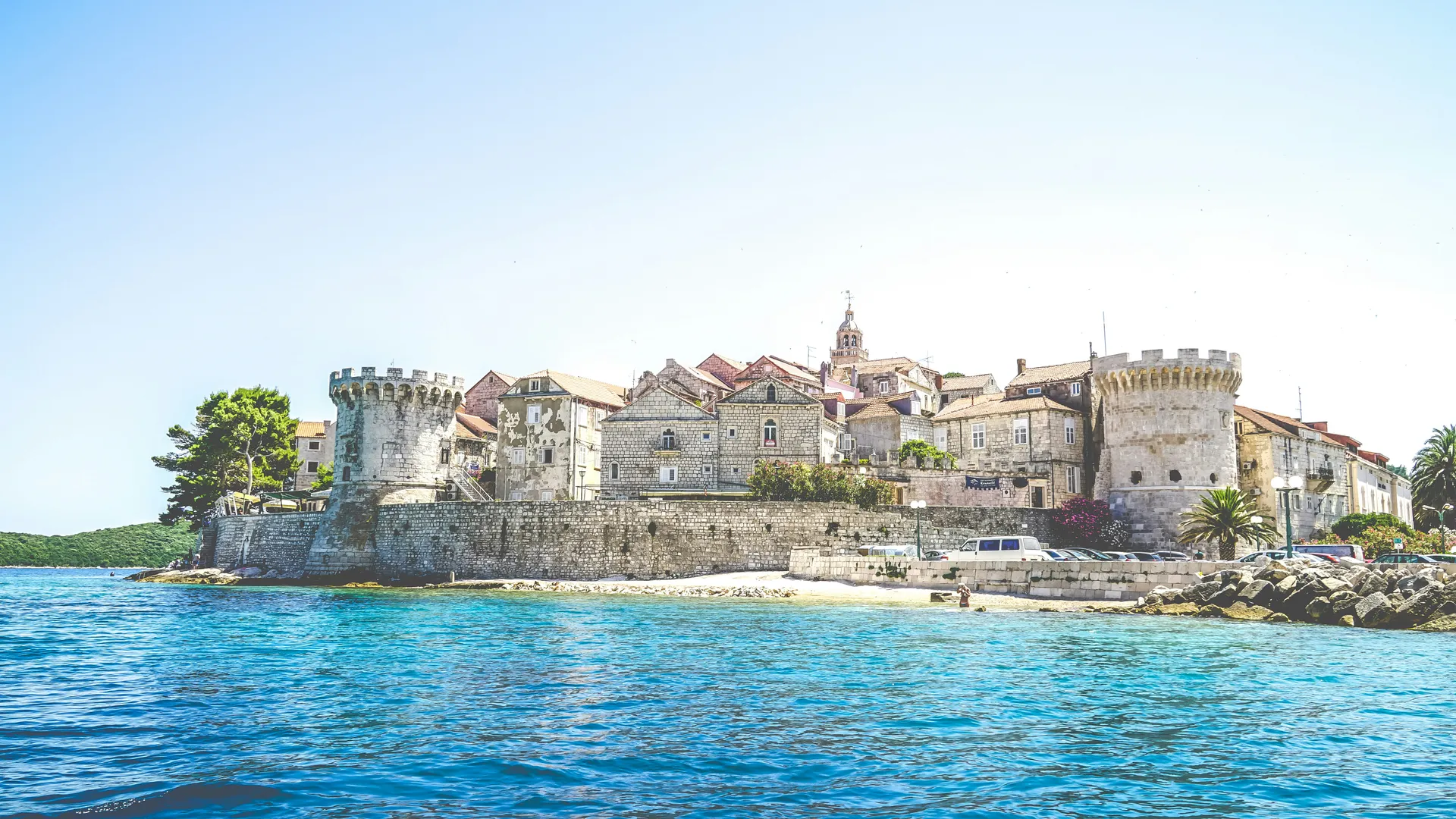
On the sun-drenched shores of the Adriatic, where the Venetian lion once kept vigilant watch, Korčula rises from the sea like a compact citadel of honeyed stone. This fortified island town — birthplace, by local tradition, of Marco Polo himself — has traded in silk, wine, and maritime ambition since the fourth century BCE, when Greek colonists from Corcyra Nigra first planted vines on its wooded hillsides. Its medieval street plan, laid out in a herringbone pattern to channel cooling breezes while deflecting harsh winter winds, remains one of the most ingeniously designed urban grids in the Mediterranean, a testament to the pragmatic brilliance of its fifteenth-century Venetian architects.
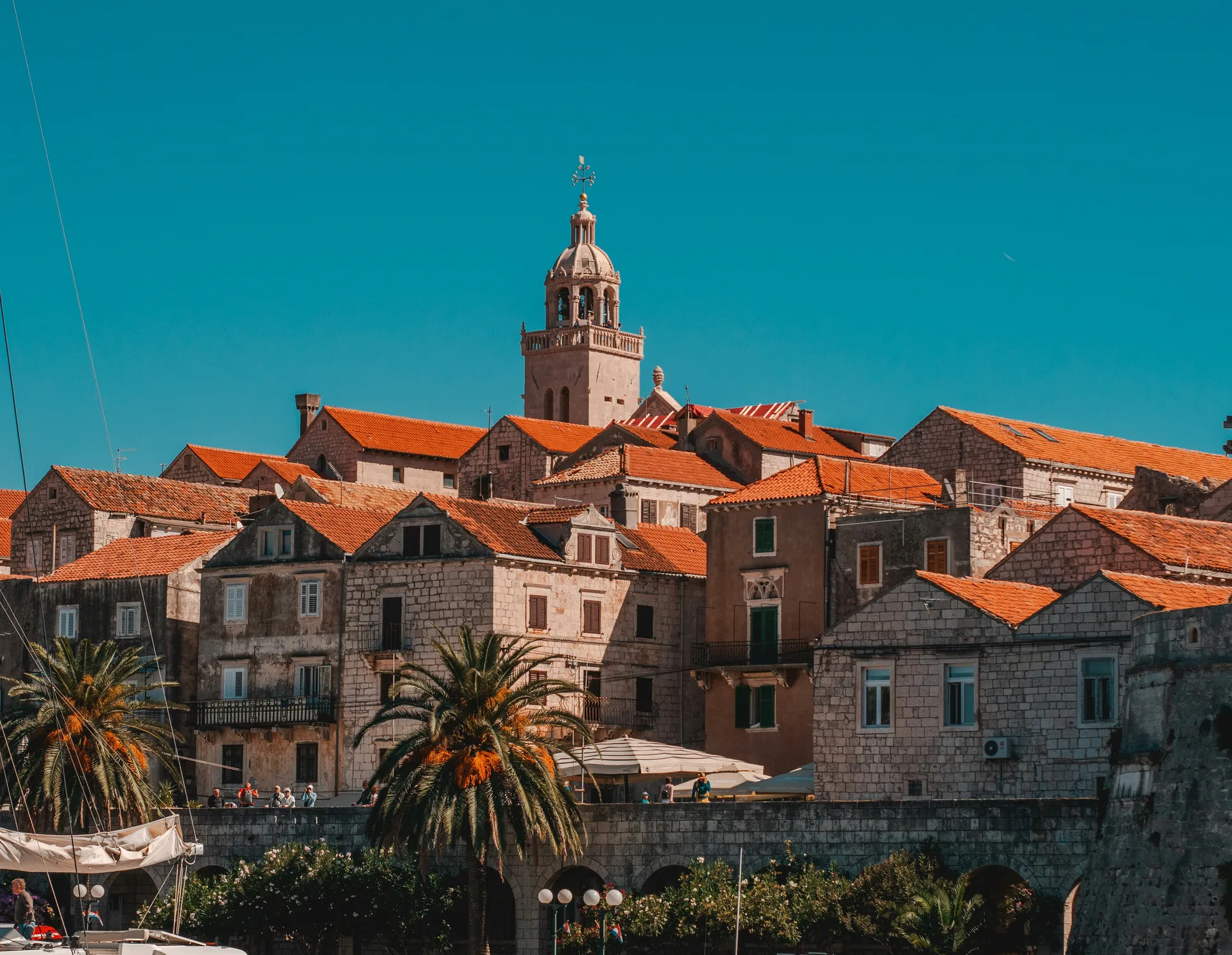
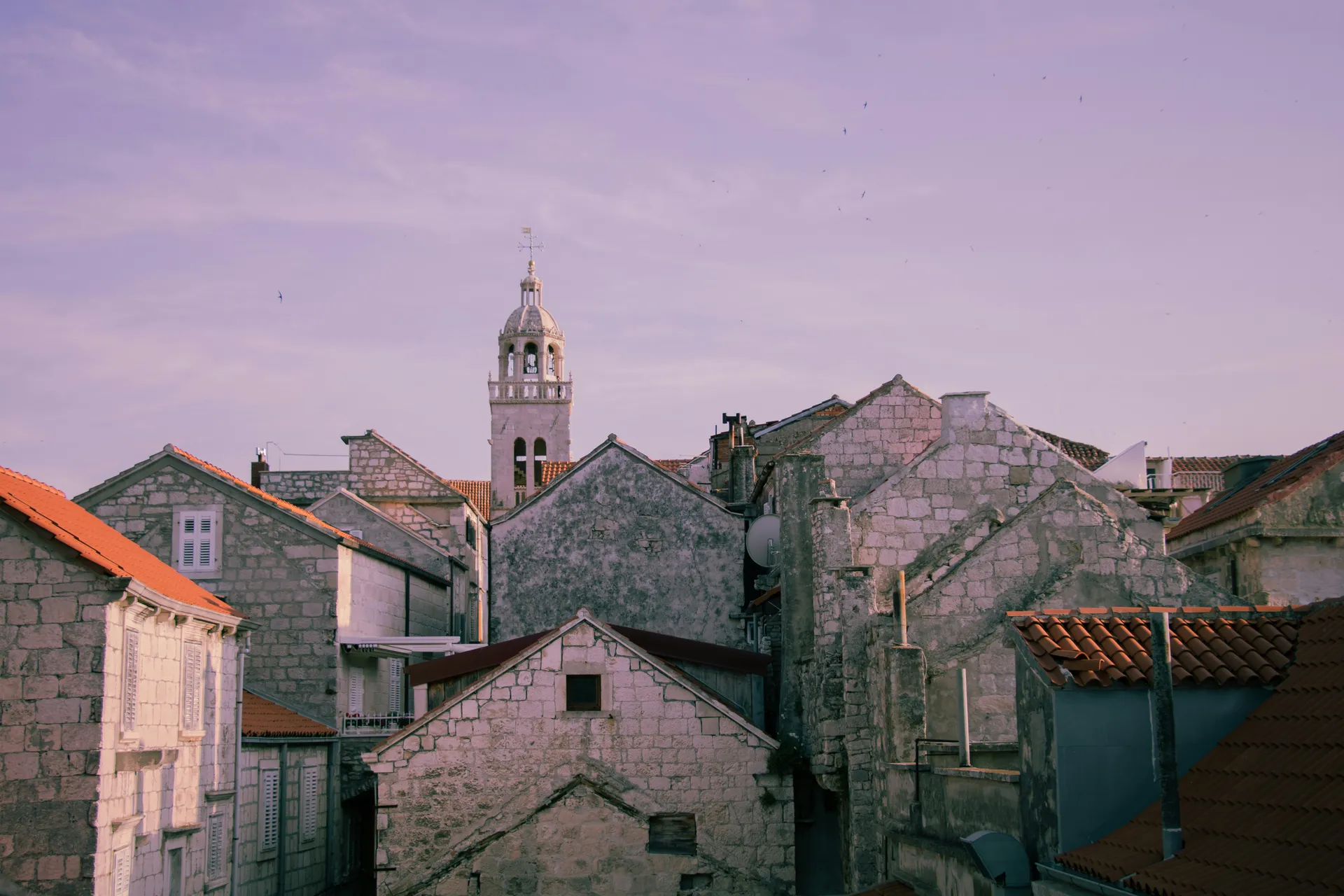
To arrive by sea is to understand why painters and poets have long surrendered to Korčula's spell. The old town occupies a small peninsula, its terracotta rooftops and slender bell towers emerging from dense clusters of stone as if the architecture grew organically from the island's limestone bones. Narrow calles open without warning onto tiny piazzas where bougainvillea spills over wrought-iron balconies, and the scent of wild rosemary drifts from the surrounding macchia. In the golden hour before dusk, when the last ferries have departed and the day-trippers with them, the town belongs once again to the cicadas, the fishermen mending nets along the Riva, and the unhurried clinking of glasses in candlelit konobas.
The table is where Korčula reveals its deepest character. Begin with pašticada — beef braised for hours in a reduction of prošek dessert wine, dried figs, and aromatic spices, served over hand-rolled njoki so tender they dissolve on the tongue. Follow with the island's celebrated white wines: Grk, a grape so particular it grows almost exclusively in the sandy vineyards of nearby Lumbarda, and Pošip, whose minerality carries the faintest echo of sea salt and wild sage. At the waterfront, order brodet, the fisherman's stew of scorpionfish and eel simmered with tomatoes and polenta, or simply grilled orada dressed in nothing more than Korčulan olive oil and a squeeze of lemon. For dessert, seek out cukarini, delicate almond biscuits dusted with sugar that have been baked on the island for centuries.
The surrounding Dalmatian coast unfolds like a curated itinerary of civilisations. A short sail south brings you to Hvar, that fragrant island of lavender fields and Renaissance squares whose Stari Grad Plain has been cultivated continuously since the Greeks arrived in 384 BCE. Northward, the UNESCO-listed town of Trogir compresses two thousand years of architecture — Romanesque, Gothic, Renaissance, Baroque — onto a single tiny island connected to the mainland by a stone bridge. Further along the coast, the ruins of ancient Salona at Solin reveal the birthplace of Emperor Diocletian, whose retirement palace would become the living heart of nearby Split. And for those with time to venture to the northern Adriatic, the island of Rab offers its own medieval silhouette of four bell towers rising above pristine crescents of sand.
Korčula's intimate harbour and deep-water approaches have made it a favoured calling point for the world's most discerning cruise lines. The sleek expedition yachts of Ponant and the elegant sailing vessels of Windstar Cruises can nose directly into the old town's waterfront, offering passengers the rare luxury of stepping from deck to medieval piazza in moments. Seabourn and Azamara bring their signature blend of understated refinement, while Celebrity Cruises and AIDA open these storied waters to a broader audience without sacrificing comfort. Boutique operators such as Emerald Yacht Cruises, Scenic Ocean Cruises, and Tauck craft immersive itineraries that pair Korčula with the quieter islands and hidden coves that larger vessels cannot reach, transforming each port call into something closer to private discovery than conventional tourism.