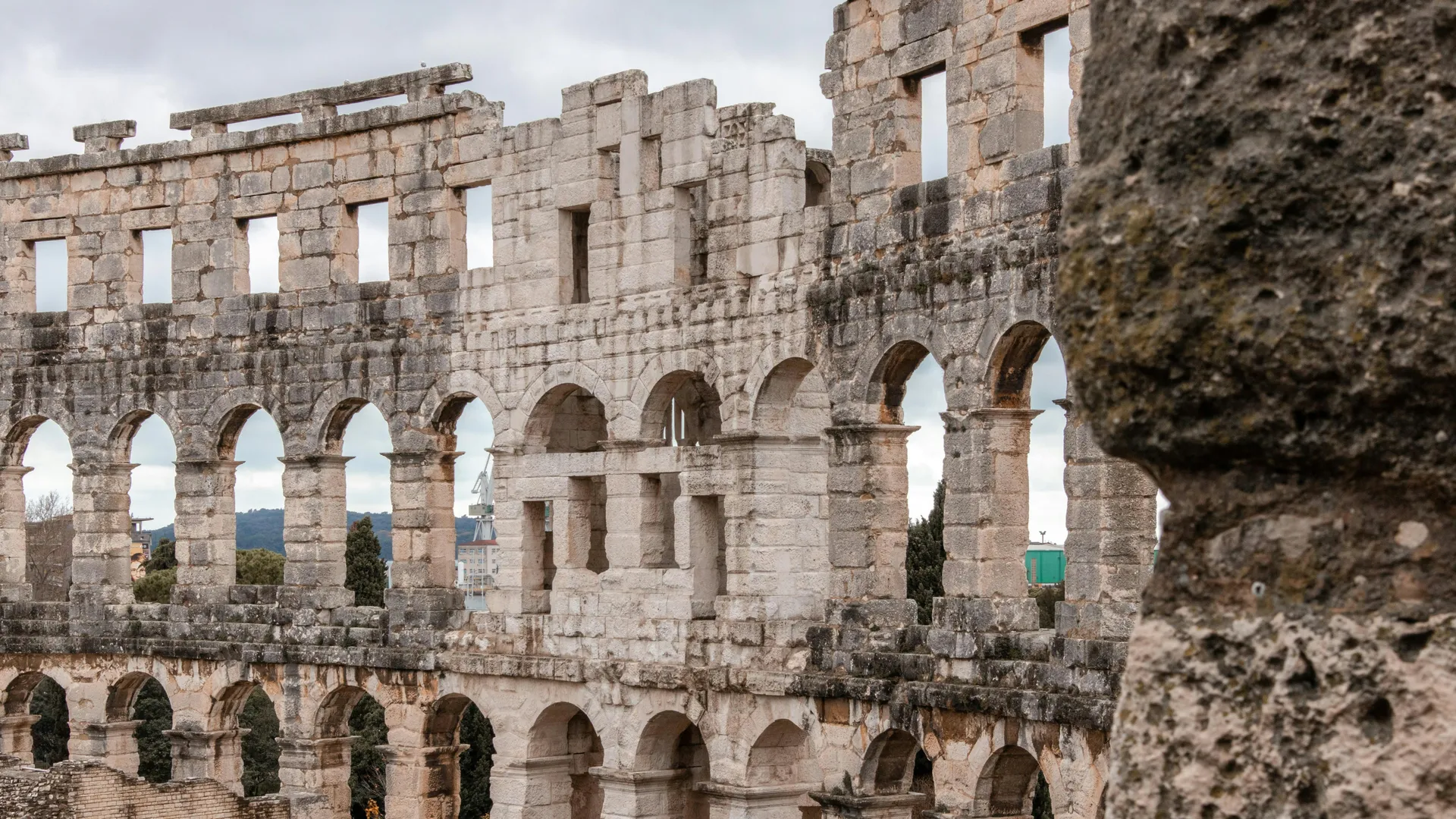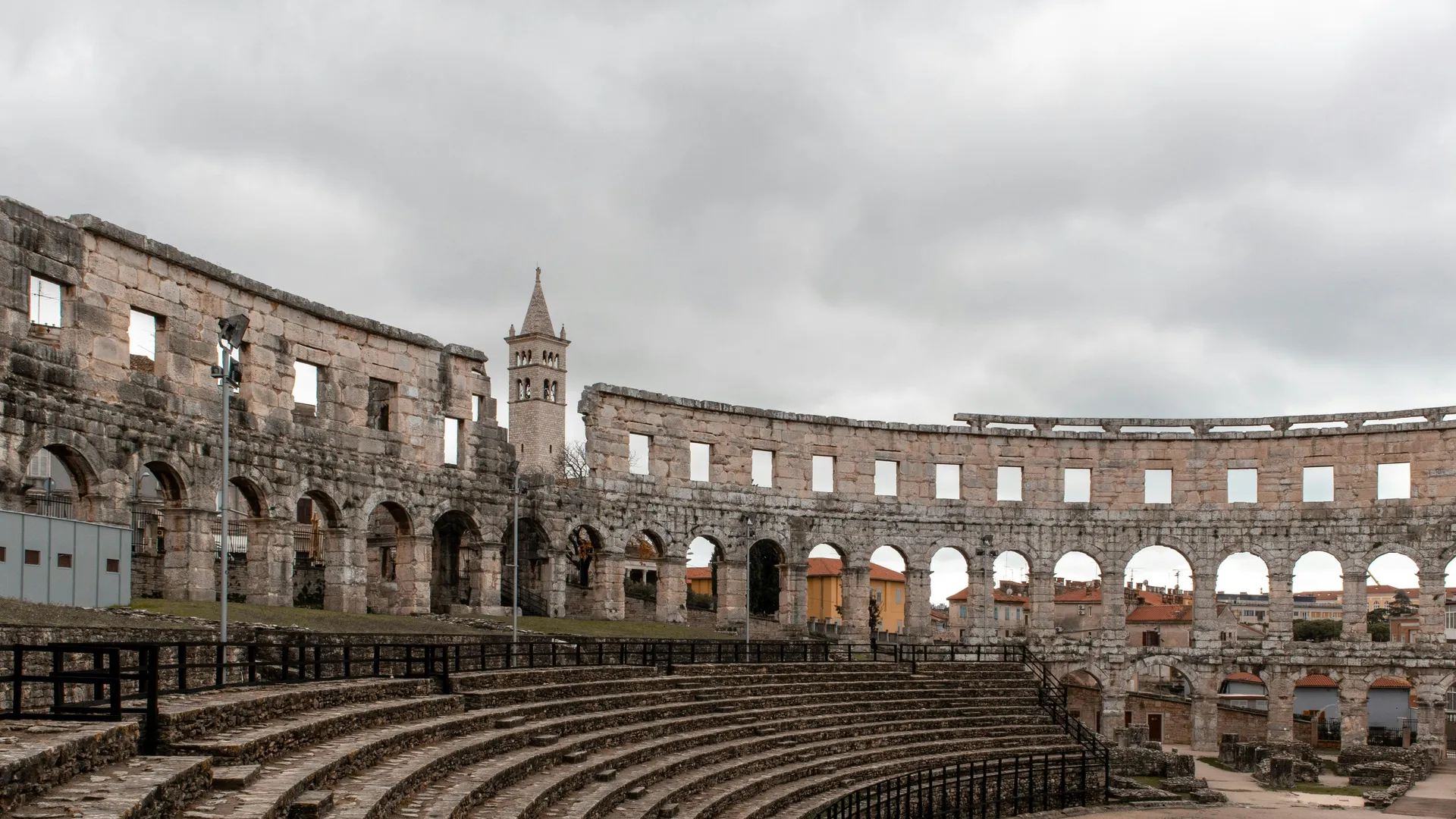
The Roman amphitheater of Pula — the sixth largest ever built — still dominates the city's waterfront with an authority that nearly two millennia have done nothing to diminish. When it was completed in the first century AD, under Emperor Vespasian (the same ruler who commissioned Rome's Colosseum), Pula was already an established colony of Roman citizens drawn to this sheltered harbor at the southern tip of the Istrian peninsula. The arena could seat 20,000 spectators for gladiatorial combat; today, it hosts summer concerts and film festivals, its limestone arches glowing honey-gold against the deep blue of the Adriatic — a building that has found, in entertainment, a purpose not so different from its original one.
Pula layers its history with the unselfconscious ease of a city that has never needed to manufacture charm. Below the amphitheater, the Temple of Augustus stands in the Forum, its Corinthian columns as crisp as the day they were carved. The Byzantine Chapel of St. Mary of Formosa preserves sixth-century mosaics of radiant beauty, while the Venetian fortress on the hilltop — the Kastel — offers panoramic views over the city's terracotta rooftops, the island-studded bay, and the Brijuni archipelago shimmering on the western horizon. The Austro-Hungarian shipyard at Uljanik, where the first electrically lit ship was built in 1903, adds yet another layer to this palimpsest of maritime history.
Istrian cuisine, of which Pula is the gateway, is one of Europe's great undiscovered gastronomic traditions. The region's white truffles rival those of Alba; its olive oils regularly sweep international awards; and its malvazija and teran wines are finally receiving the recognition they deserve. In Pula's konobas — traditional tavernas — you might begin with a plate of prsut (air-dried ham) and sheep's cheese from the Istrian interior, follow with fuzi pasta in truffle sauce or a bowl of minestra (Istrian vegetable stew), and finish with fritule — tiny doughnuts scented with rakija and lemon zest. The city's Central Market, housed in a striking iron-and-glass Art Nouveau hall, is the best place to assemble a picnic of local specialties.
The waters and islands surrounding Pula are among the northern Adriatic's greatest treasures. The Brijuni Islands, just offshore, served as Yugoslav President Tito's private retreat and now form a national park of manicured parkland, Roman ruins, and exotic animals gifted by world leaders. Closer to the city, the rocky coastline south of Pula — particularly the stretch around Premantura and Cape Kamenjak — offers wild swimming, cliff jumping, and snorkeling in water so clear you can count the sea urchins on the seabed ten meters below. Kayaking along the coast at sunset, with the amphitheater visible in the distance, is one of Istria's most memorable experiences.
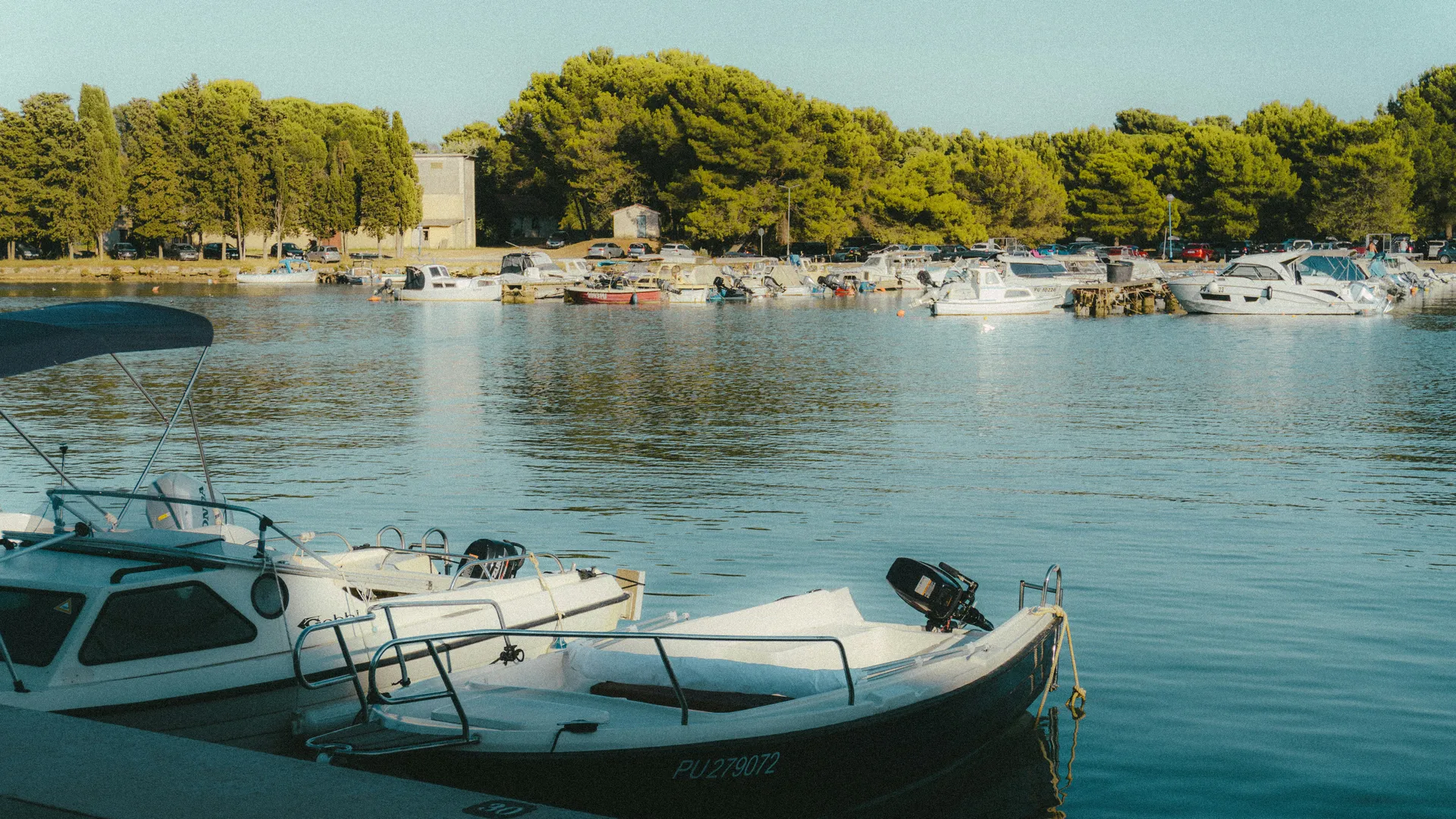
Pula's port is well-equipped for cruise ships, with berths close to the city center allowing passengers to walk directly into town. The amphitheater is literally minutes from the quayside. Pula enjoys a Mediterranean climate, with warm, dry summers from June to September being ideal for visits — July and August bring the Pula Film Festival and outdoor concerts in the arena, adding cultural richness to the sun-soaked days. For cruise travellers, Pula offers that rare combination of world-class Roman heritage, outstanding food and wine, and crystalline Adriatic waters, all within a compact, walkable city that feels refreshingly authentic compared to the more tourist-saturated ports along the Croatian coast.