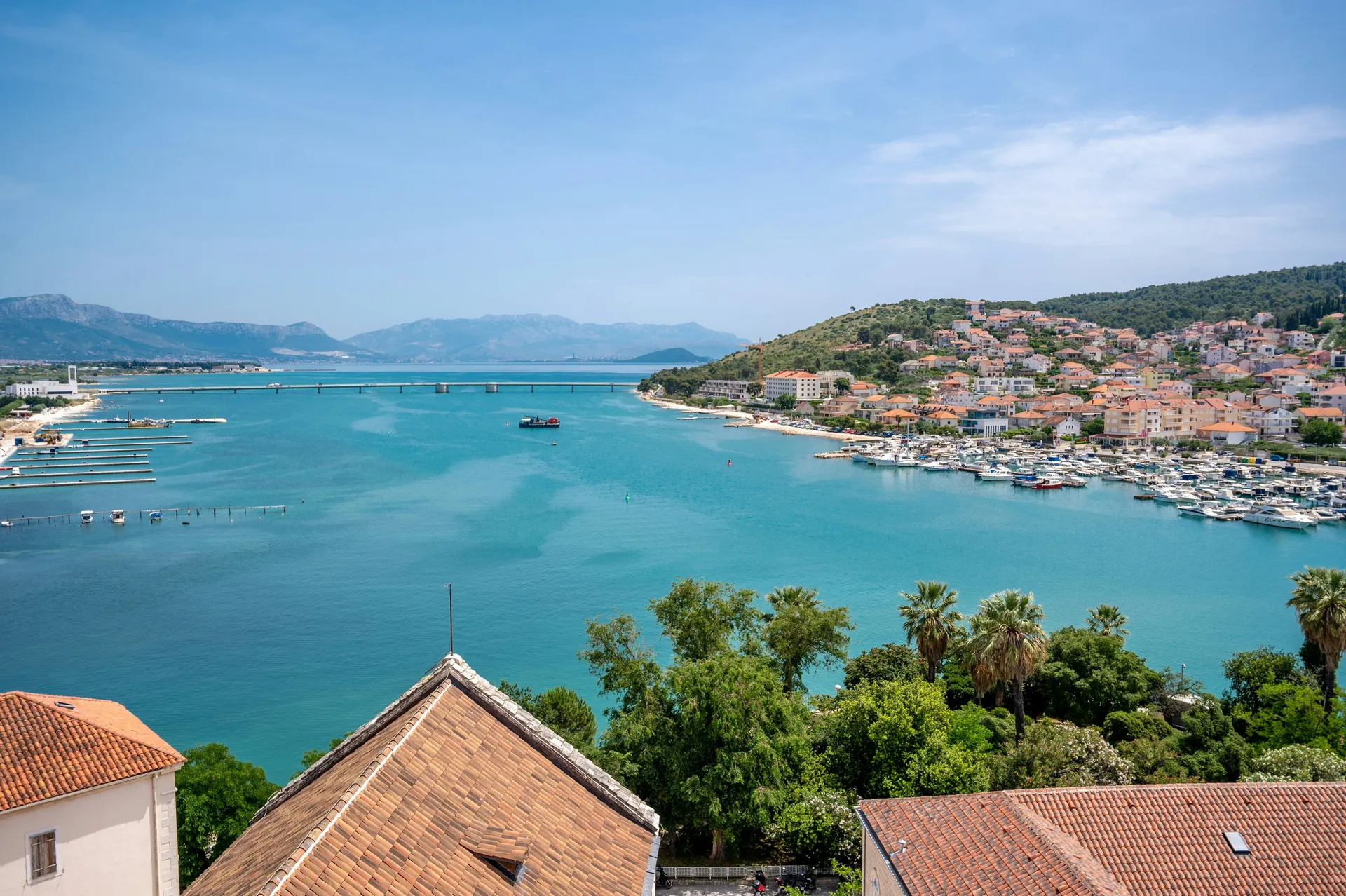
Floating just off the Dalmatian coast like a miniature Venice carved from Adriatic limestone, Trogir is one of the best-preserved medieval towns in all of Europe — a distinction earned not through careful restoration but through the simple continuity of a community that has occupied this small island for over two thousand three hundred years. Founded as Tragurion by Greek colonists from Vis in the third century BC, the town grew through Roman, Byzantine, Hungarian, Venetian, and Habsburg periods, each era adding architectural layers to an urban fabric so rich that UNESCO designated the entire historic center a World Heritage Site in 1997. All of this is compressed onto an island barely three hundred meters long, connected to the mainland and the larger island of Čiovo by stone bridges that frame some of Croatia's most photogenic views.
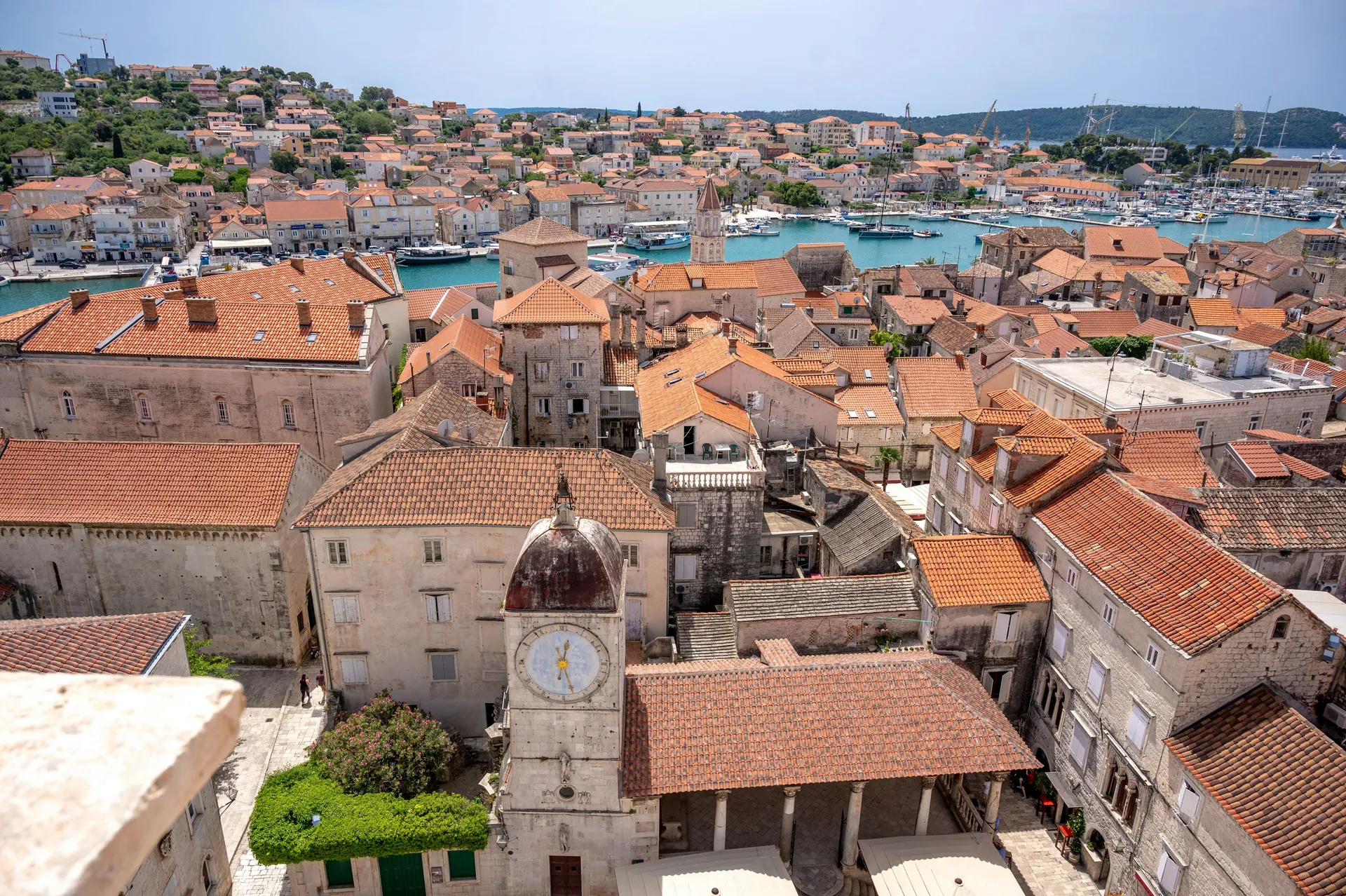
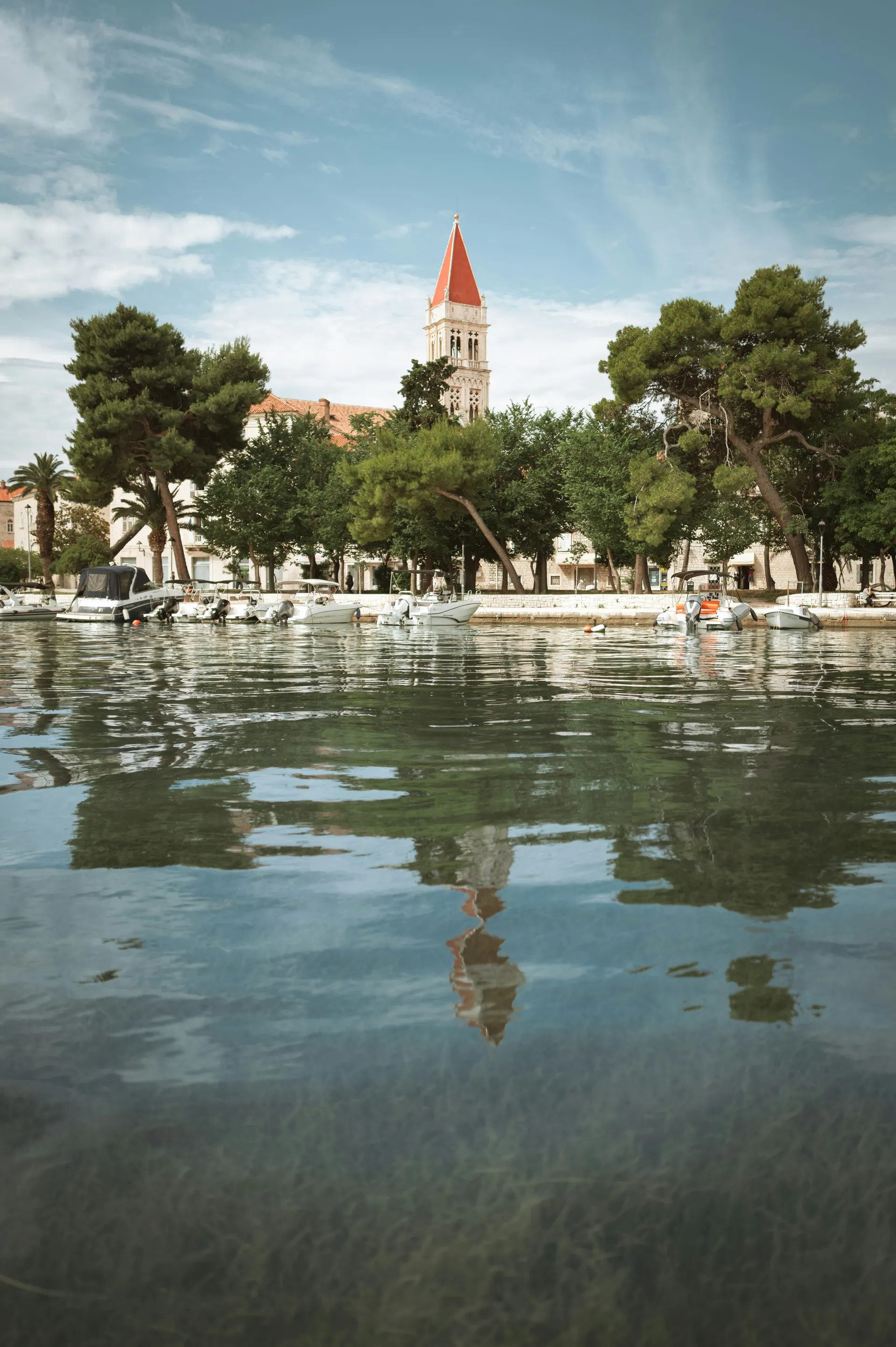
The Cathedral of St. Lawrence, whose construction spanned from the thirteenth to the seventeenth century, represents Trogir's masterpiece and one of the finest religious buildings on the Adriatic. Its western portal, carved by the master sculptor Radovan in 1240, presents a virtuosic display of Romanesque sculpture — lions, apostles, and scenes from daily medieval life rendered with a naturalism and energy that mark it as one of the great works of European medieval art. The cathedral's bell tower, added in stages over three centuries, can be climbed for views across the terracotta roofscape that reveal the town's extraordinary density — churches, palaces, and houses packed together with the beautiful efficiency of a coral reef.
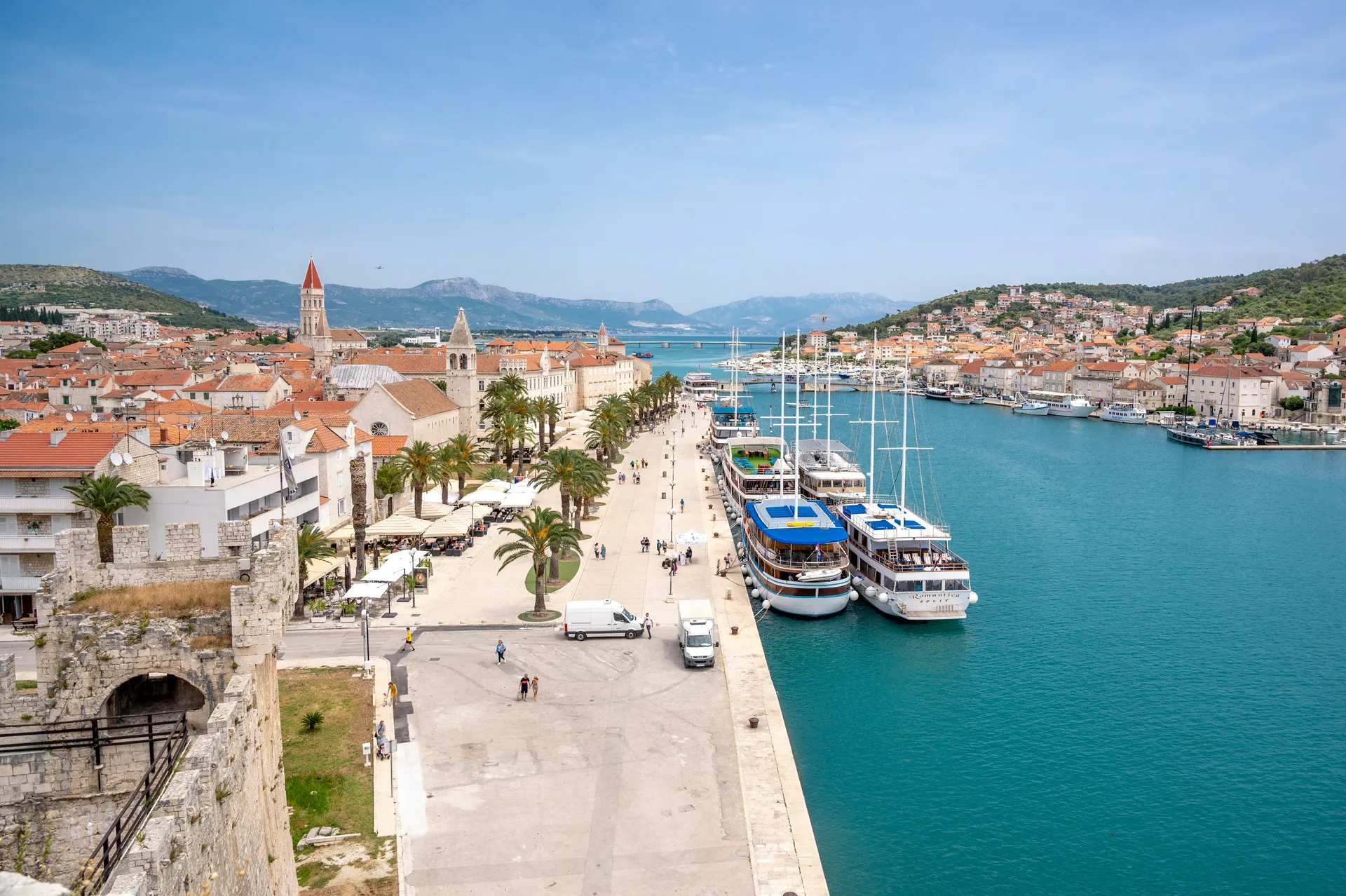
The Kamerlengo Fortress, built by the Venetians in the fifteenth century to defend the western approach, provides the most dramatic architectural counterpoint to the cathedral's spiritual refinement. Its massive walls, rising directly from the sea, now host summer cinema screenings and concerts that take advantage of the fortress's natural amphitheatre and its spectacular sunset backdrop. Between these two poles, the narrow streets of the old town thread past Romanesque churches, Gothic palaces, and Renaissance loggias in a concentration of architectural quality that seems almost impossible for so small a settlement. The Riva, the waterfront promenade, provides breathing space and café terraces where the Adriatic light and the gentle clink of masts create an atmosphere of unhurried Mediterranean contentment.
Trogir's culinary scene reflects its maritime heritage with an emphasis on fresh seafood prepared with Dalmatian simplicity. Grilled fish, octopus salad, and black risotto appear on every menu, accompanied by local wines from the Kaštela vineyards and the olive oil pressed from the ancient groves of Čiovo. The green market operates daily on the mainland side of the bridge, its stalls overflowing with the fruits, vegetables, and herbs that define Croatian coastal cooking. The town's restaurants, many occupying medieval ground floors with stone walls and vaulted ceilings, offer dining experiences that feel simultaneously contemporary and ancient.
Emerald Yacht Cruises, Ponant, and Windstar Cruises include Trogir in their Adriatic itineraries, with vessels typically mooring in the channel between the island and Čiovo or anchoring in the bay. The compact size of the historic center means that the entire town can be explored on foot in half a day, though its pleasures reward a longer stay. The season runs from April through October, with May, June, and September offering the most pleasant conditions — warm enough for swimming in the crystal-clear waters off Čiovo's beaches, uncrowded enough to appreciate the architectural details that make Trogir a UNESCO jewel. Nearby Solin, with its Roman ruins of Salona, and the islands of Rab and Hvar provide further dimensions of Dalmatian exploration.