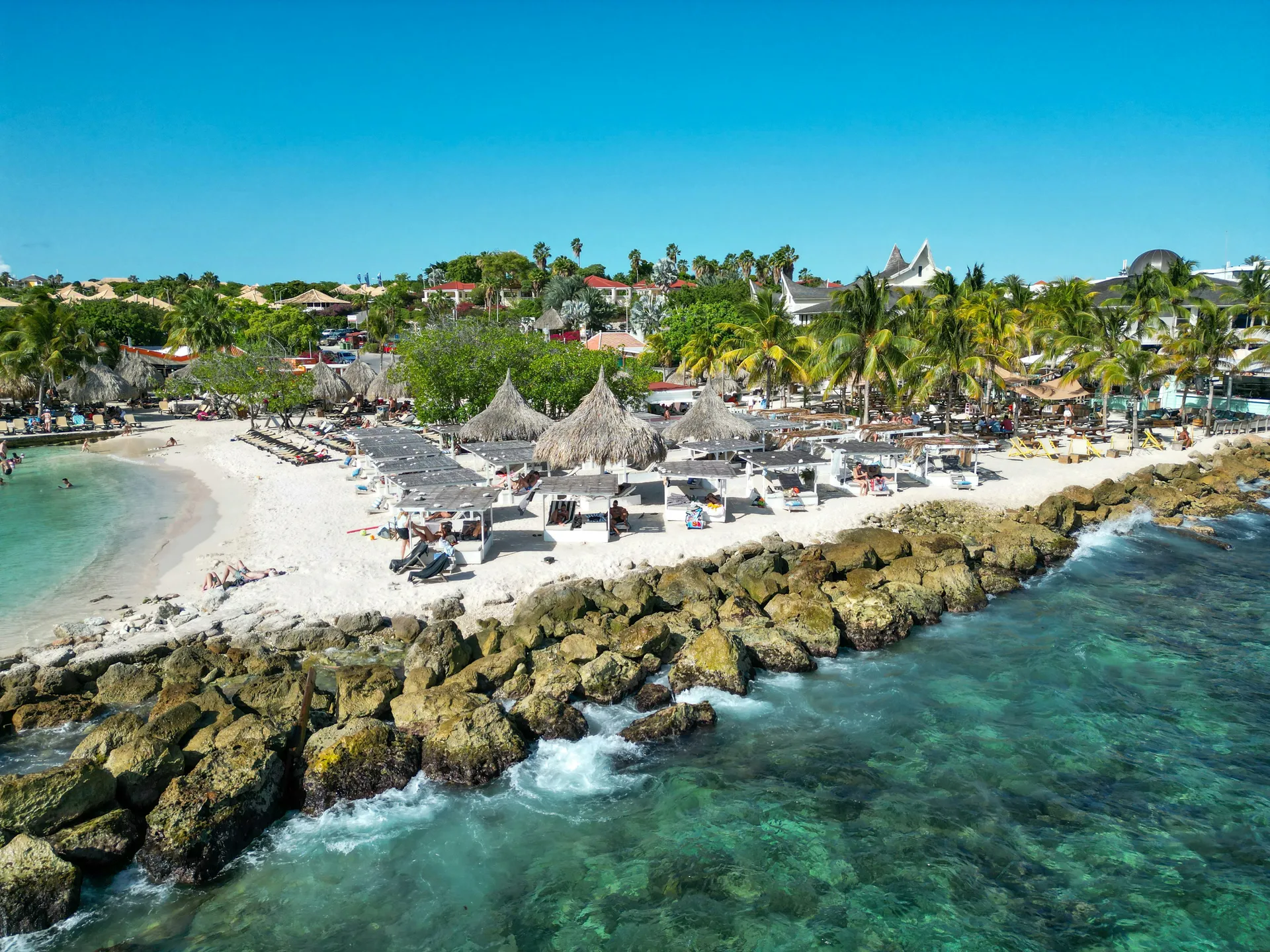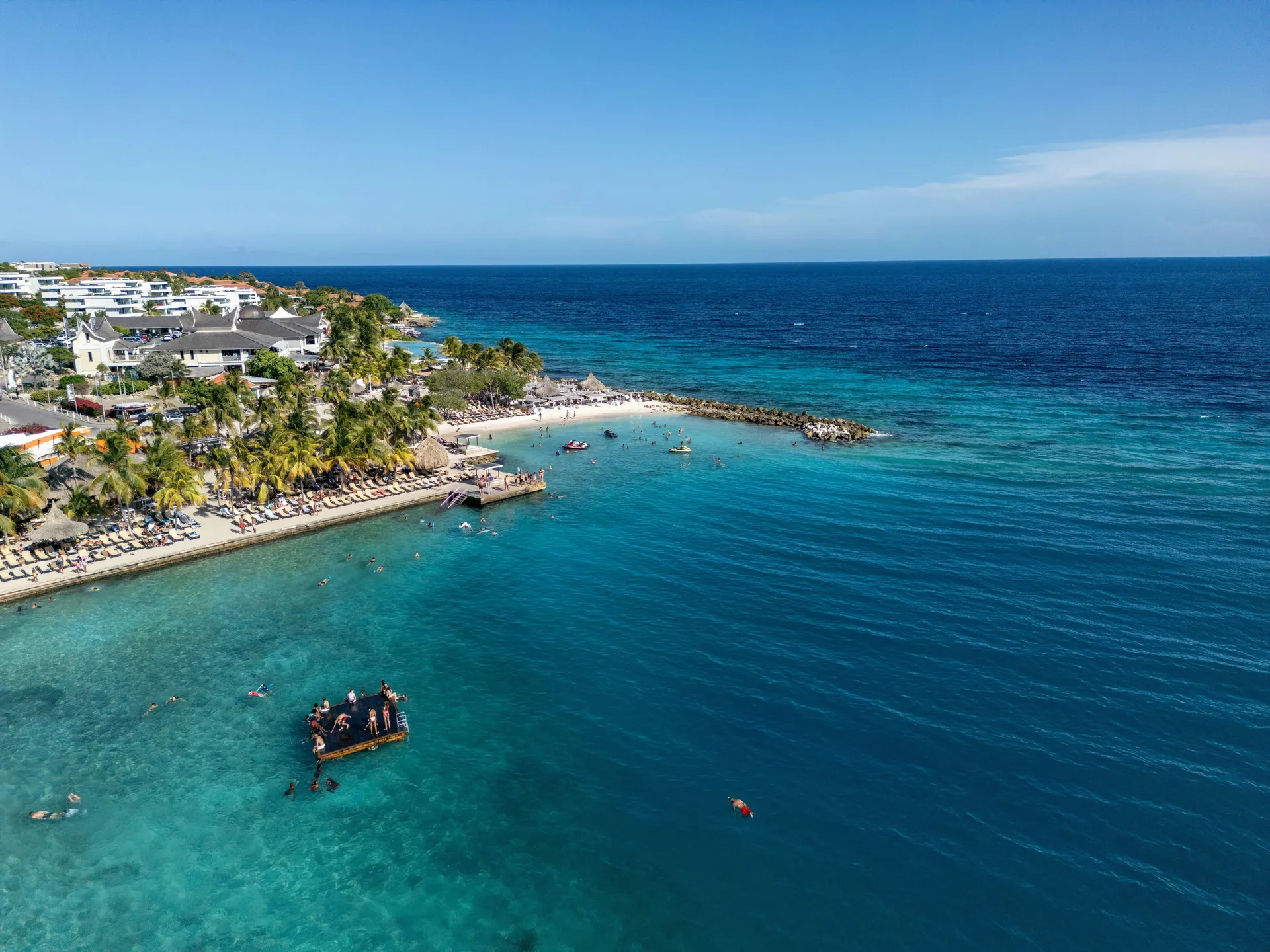
Curaçao floats in the southern Caribbean just sixty-five kilometers off the coast of Venezuela, its arid landscape, Dutch colonial architecture, and multicultural population creating an island experience that defies the typical Caribbean template. This is not a palm-and-sand paradise in the conventional sense—though it has excellent beaches—but something more complex and more interesting: a place where African, Dutch, Portuguese, and Spanish influences have fused over four centuries into a culture expressed through a unique Creole language (Papiamentu), a distinctive cuisine, and some of the most photogenic urban architecture in the Western Hemisphere.
Willemstad, the capital, is a UNESCO World Heritage Site whose colorful waterfront is among the most recognizable cityscapes in the Caribbean. The Handelskade—a row of eighteenth-century Dutch colonial trading houses painted in an electric palette of yellow, turquoise, pink, and orange—reflects in the still waters of the Sint Annabaai channel, creating a scene that appears hand-tinted and too perfect to be real. The Queen Emma pontoon bridge, a floating pedestrian bridge that swings open to admit ships into the harbor, connects the Punda and Otrobanda districts and has been doing so since 1888, adding kinetic charm to an already theatrical waterfront.
Beyond the postcard facade, Willemstad rewards deeper exploration. The Kura Hulanda Museum, housed in a restored Dutch colonial courtyard, provides one of the Caribbean's most powerful examinations of the transatlantic slave trade—an unflinching narrative that connects Africa, the Middle Passage, and the plantation economy to Curaçao's present-day demographics and culture. The Mikvé Israel-Emanuel Synagogue, the oldest synagogue in continuous use in the Americas (consecrated in 1732), features a sand floor traditionally interpreted as a reminder of the Israelites' desert wandering and testifies to Curaçao's historic Jewish community, which played a significant role in the island's commercial development.
The cuisine of Curaçao reflects its cultural crossroads. Keshi yená—a baked shell of Gouda cheese stuffed with spiced meat, olives, and raisins—is the island's signature dish, a literal encasement of Dutch dairy tradition around a filling of African and Spanish influences. Stobá, a slow-cooked stew, and funchi, a cornmeal side dish related to Italian polenta, anchor most traditional meals. The island's namesake liqueur—Curaçao, made from the dried peels of the local lahara citrus fruit—has been produced by the Genuine Curaçao Liqueur distillery at Landhuis Chobolobo since 1896 and is available for tasting in its natural amber color as well as the famous blue.
Cruise ships dock at the Mega Pier adjacent to Willemstad's Renaissance district, placing passengers within a ten-minute walk of the Handelskade and the heart of the UNESCO zone. The terminal's proximity to the city center is a significant advantage—Curaçao is one of the few Caribbean ports where the best attractions are genuinely walkable from the ship. The island lies below the hurricane belt, making it a reliable year-round destination, though January through September offers the driest conditions. Temperatures hold steady near 28°C throughout the year, moderated by the persistent trade winds that keep humidity manageable and provide the constant breeze that has been described as Curaçao's natural air conditioning.