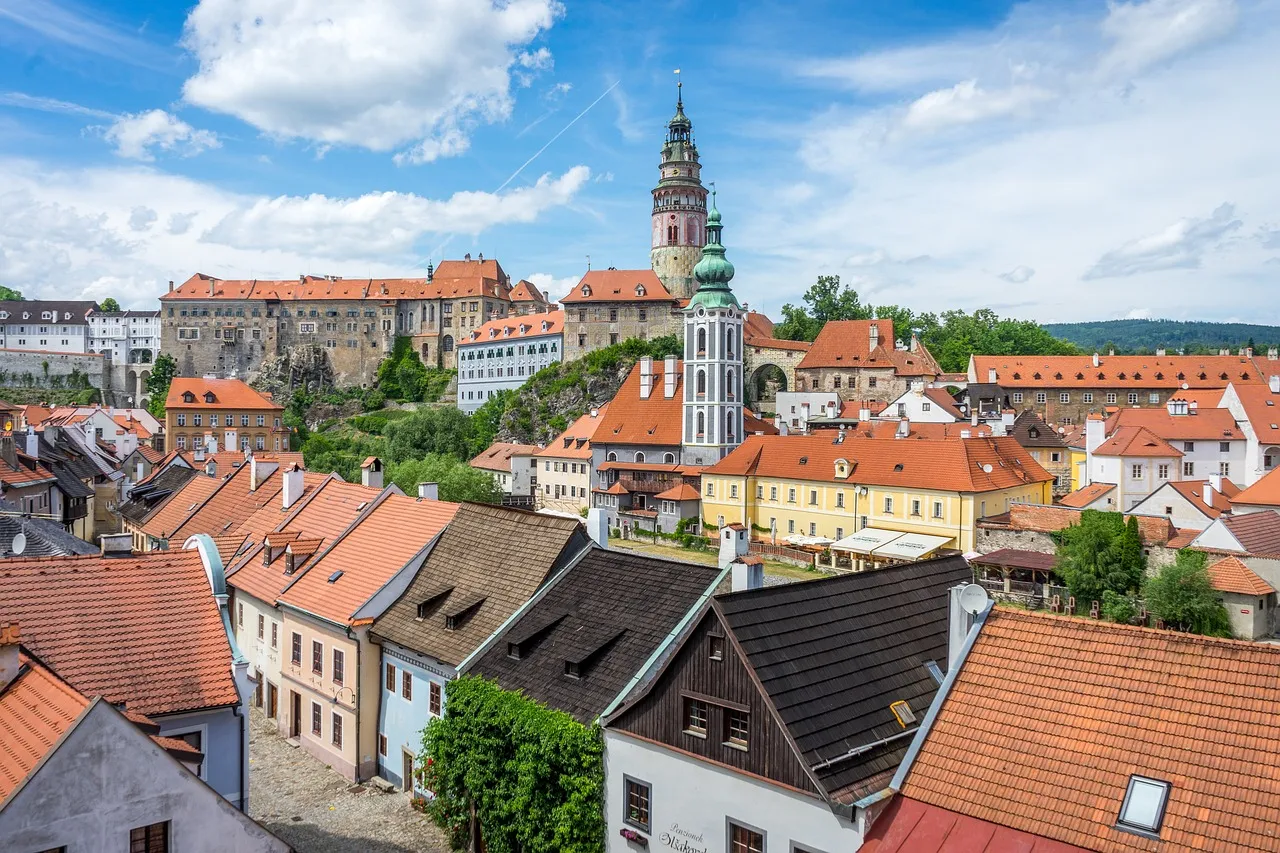
Český Krumlov is a medieval fantasy made real—a small South Bohemian town wrapped in a dramatic horseshoe bend of the Vltava River, its skyline dominated by a castle complex so vast it is second only to Prague Castle in the Czech Republic. The town's extraordinary concentration of Gothic, Renaissance, and Baroque architecture survived the twentieth century essentially intact, earning UNESCO World Heritage status in 1992 and establishing Český Krumlov as one of the most visually complete medieval townscapes in all of Europe.
The castle, perched on a rocky promontory above the river, reveals five centuries of aristocratic ambition in its five courtyards. The thirteenth-century Gothic tower, painted with trompe l'oeil decoration, provides panoramic views across the town's red-tiled roofs and the forested hills of the Šumava Mountains beyond. The Baroque theater—one of the best-preserved court theaters in Europe, with its original stage machinery, sets, and costumes still intact—offers a tangible connection to the entertainment culture of the eighteenth-century aristocracy. The castle gardens, descending in terraces toward the Vltava, provide formal beauty and quiet retreat.
The old town below the castle is a labyrinth of narrow lanes, tiny squares, and buildings whose painted facades reveal decorative ambitions ranging from Renaissance sgraffito to Baroque frescoes. The central Náměstí Svornosti square, surrounded by arcaded burghers' houses and anchored by a plague column and Renaissance fountain, serves as the town's social heart. The Egon Schiele Art Centrum celebrates the Viennese Expressionist who lived and worked in Český Krumlov—his mother's birthplace—before being driven out by scandalized townspeople who objected to his use of local girls as models.
The Vltava River, here a youthful stream still near its source in the Šumava Mountains, provides a perspective on the town that no street-level walk can match. Canoe and rafting trips through the town—the river drops through a series of gentle rapids—offer views of the castle and old town from below, with the buildings rising dramatically from the riverbanks in a scene that seems designed for postcards. The surrounding countryside of the Šumava (Bohemian Forest) provides hiking, cycling, and nature experiences in one of Central Europe's last remaining wilderness areas.
Český Krumlov is visited on Danube and Vltava river cruise itineraries, typically as a day excursion from the Austrian or Czech ports. The town is also accessible by road from Passau (approximately two hours) and Prague (approximately three hours). The compact old town is entirely pedestrian and can be explored on foot in a few hours, though a full day allows time for the castle interior, the Schiele museum, and a river experience. May through September offers the warmest weather, with June and September providing the best balance between pleasant conditions and manageable crowds. The town's Christmas market, set in the medieval square in December, creates one of Central Europe's most atmospheric winter experiences.

