Rønne: Gateway to Bornholm, Denmark's Baltic Sunshine Island
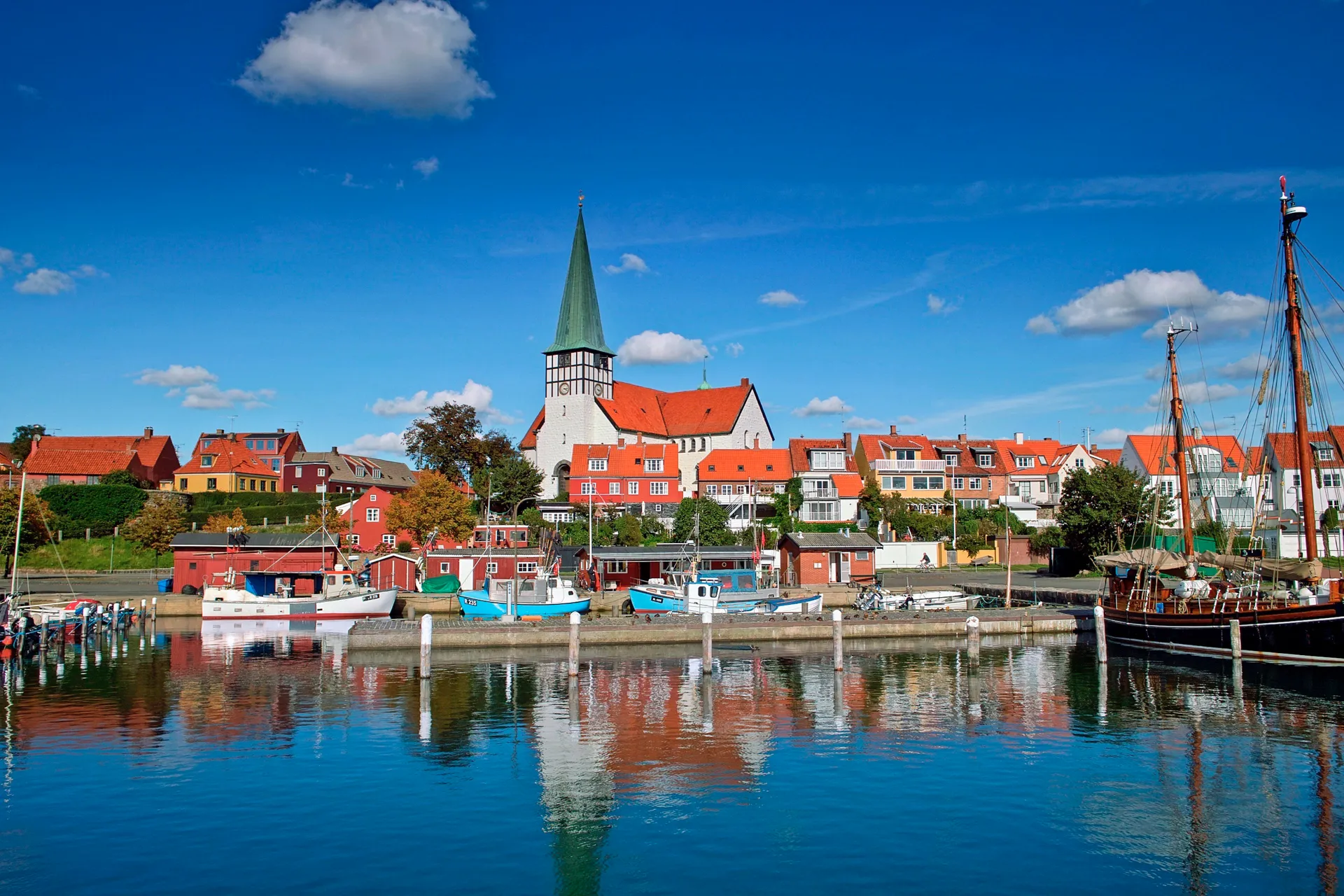
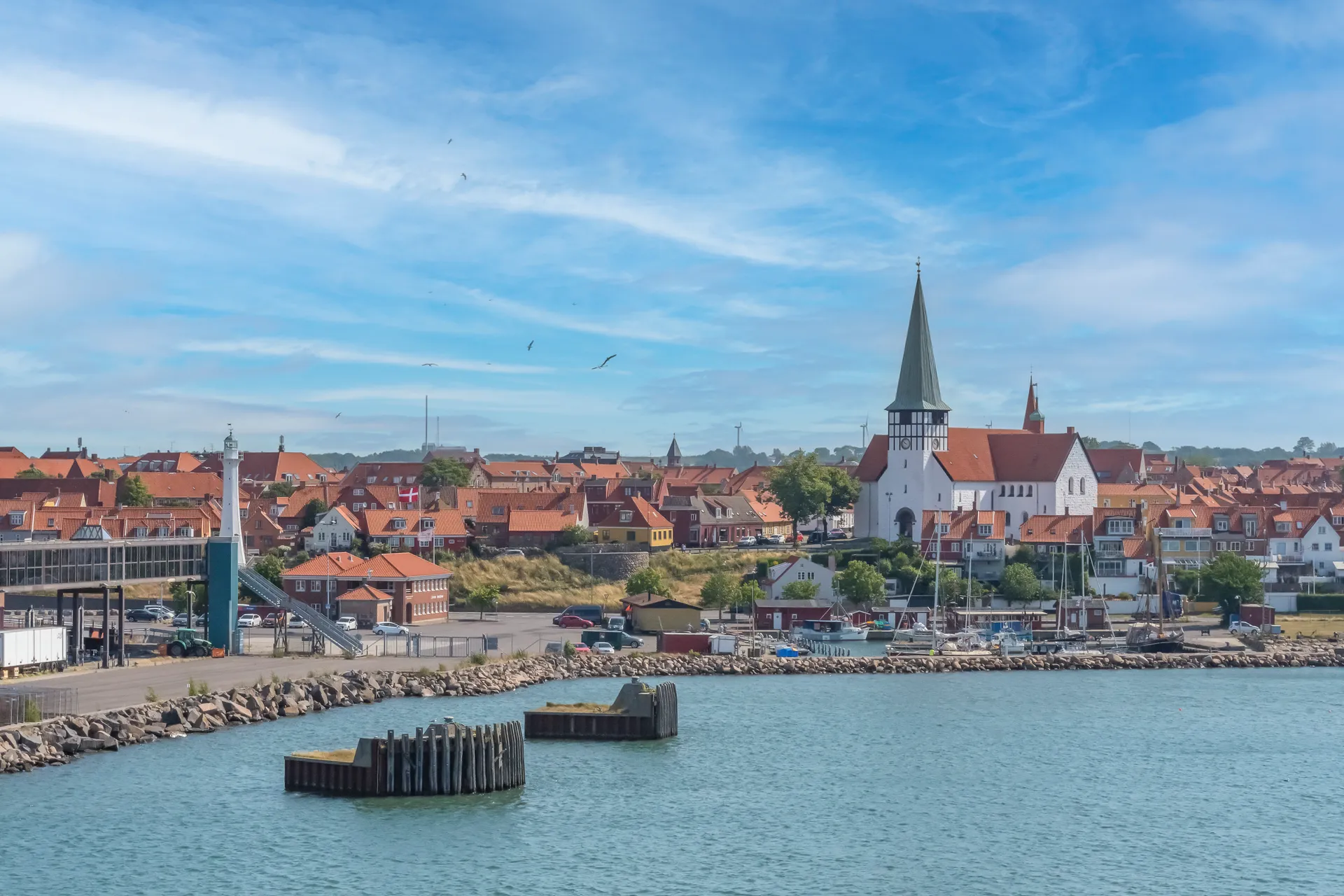
Rønne is the principal port and largest town on Bornholm, a Danish island of singular character situated in the Baltic Sea closer to Sweden and Poland than to Copenhagen. The island's history stretches back to the Stone Age, but its most dramatic chapter came in 1658, when Bornholm's inhabitants rose against Swedish occupation and presented their island to the Danish king — a fiercely independent act that Bornholmers still celebrate with pride. Rønne itself bears visible scars of more recent history: Soviet bombing in May 1945 destroyed much of the town centre, and the half-timbered houses that line the harbour today are a mix of survivors and careful reconstructions. The round churches that dot the island — fortress-churches built in the twelfth century to defend against Baltic pirates — remain Bornholm's most distinctive architectural legacy.
The character of Rønne and broader Bornholm is unlike anywhere else in Denmark. Where mainland Denmark is flat, Bornholm is granite — its northern coast a dramatic run of sea cliffs, castle ruins, and ancient rock formations. Where Copenhagen moves at a metropolitan pace, Bornholm operates on island time, its rhythms set by the fishing boats, the seasonal smokehouse fires, and the extraordinary quality of light that has drawn artists to the island since the nineteenth century. The Bornholm Art Museum, designed by architects who understood the landscape intimately, sits above the Helligdomsklipperne (Sanctuary Cliffs) in a building that seems to grow from the rock itself. Rønne's old town, with its cobblestone lanes and garden courtyards, retains a quiet charm that larger Danish cities have long sacrificed to progress.
Bornholm's culinary reputation has exploded in recent years. The island is now recognised as one of Scandinavia's finest food destinations, with a concentration of artisan producers that would be remarkable for a place ten times its size. The smokehouses — røgerier — are the headline act: herring, salmon, and mackerel smoked over alder wood in buildings where the process has remained unchanged for generations. Hasle, a small fishing village north of Rønne, has some of the best. But the island also produces exceptional ceramics-aged cheese at Bornholms Ost, handcrafted caramels at Karamelleriet, and wines at Lille Gadegård — Denmark's only commercial vineyard. Kadeau, the island's Michelin-starred restaurant, serves a multi-course exploration of Bornholm's terroir that draws food pilgrims from across Europe.
Beyond Rønne, the island invites circumnavigation. Hammershus, the largest castle ruin in Northern Europe, stands on a headland in the northwest, its massive walls commanding views across to Sweden. Dueodde Beach in the south offers fine white sand that was once exported for use in hourglasses. The fishing village of Gudhjem — its name means "God's Home" — tumbles picturesquely down to a harbour where you can eat Sol over Gudhjem (sun over Gudhjem), an open-faced sandwich of smoked herring, raw egg yolk, radish, and chives that is the island's signature dish. The tiny island of Christiansø, an hour's boat ride from Gudhjem, is a former naval fortress where time seems genuinely to have stopped.
Azamara, Holland America Line, Norwegian Cruise Line, Oceania Cruises, Regent Seven Seas Cruises, Seabourn, Silversea, and Viking all include Rønne on their Baltic itineraries. The port is well-equipped and centrally located, with the old town immediately accessible on foot. For travellers who have experienced Copenhagen and the standard Baltic capitals, Bornholm offers something refreshingly different — a place where Scandinavian design sensibility meets artisan food culture on an island of granite cliffs, medieval round churches, and the kind of Baltic light that makes every photograph look like a painting. June through August is peak season, with July offering the longest days and warmest waters for swimming.