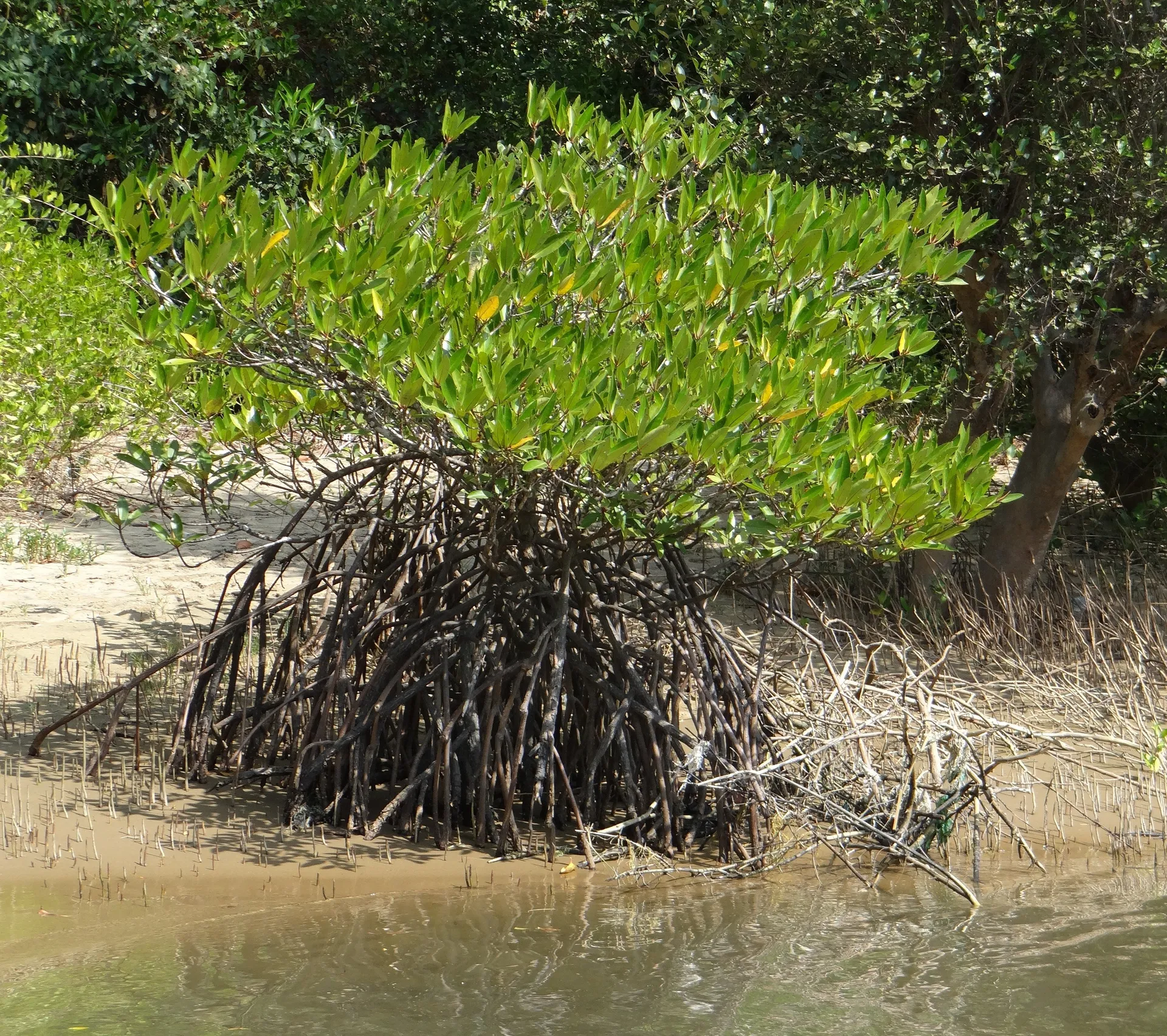
In a mangrove-fringed inlet on the northern coast of Santa Cruz Island, Black Turtle Cove offers one of the Galapagos Islands' most intimate and mesmerizing wildlife encounters. This shallow, sheltered lagoon — accessible only by panga (small motorized dinghy) with engines cut, gliding silently through channels of glassy water — is a nursery and mating ground for some of the archipelago's most iconic species. Here, the Galapagos reveals itself not through dramatic volcanic landscapes but through the quiet magic of mangrove-filtered light, mirror-calm water, and wildlife so unafraid of humans that the boundary between observer and observed effectively dissolves.
The cove's brackish waters, warmed by shallow depths and enriched by the productive upwellings of the equatorial Pacific, create ideal conditions for marine species in their most vulnerable life stages. Young blacktip and whitetip reef sharks patrol the mangrove roots in search of prey, their sleek forms visible in the crystal-clear shallows. Green sea turtles — the "black turtles" that give the cove its name, their shells darkened by algae — congregate here to mate, and the sight of pairs of these ancient creatures swimming in synchronized spirals just beneath the surface is one of the most unforgettable spectacles in the Galapagos.
The mangrove ecosystem itself is a wonder. Four species of mangrove — red, black, white, and button — create a dense, interlocking canopy over the waterways, their root systems providing shelter for juvenile fish, rays, and crustaceans. Great blue herons stand motionless on exposed roots, hunting with prehistoric patience. Brown pelicans roost in the canopy overhead, their weight bending the mangrove branches. Golden rays and spotted eagle rays glide beneath the panga in silent formation, their winglike fins stirring the sandy bottom into small clouds with each graceful undulation.
Santa Cruz Island itself, the most populated in the Galapagos, offers numerous complementary experiences. The Charles Darwin Research Station in Puerto Ayora is the headquarters of the giant tortoise breeding program that has pulled several subspecies back from the brink of extinction. The highlands of Santa Cruz — reached by a scenic drive through the island's distinct vegetation zones — harbor wild giant tortoises grazing in misty meadows, a sight that connects directly to the evolutionary observations that made these islands famous. Tortuga Bay, a pristine beach of white coral sand accessible via a paved trail from Puerto Ayora, offers swimming, surfing, and encounters with marine iguanas basking on the rocks.
Black Turtle Cove is visited exclusively by panga from cruise ships anchored nearby — no landing is permitted, and the experience is entirely water-based. Visits are regulated by the Galapagos National Park, and a certified naturalist guide accompanies every group. The cove can be visited year-round, though the warm season (January to June) brings clearer waters and the highest concentration of mating sea turtles. The cooler garua season (July to December) offers excellent birdwatching and calmer seas. No visit to the Galapagos is complete without this serene, almost meditative encounter — a reminder that the islands' greatest wonders often reveal themselves not in spectacle but in stillness.

