Champion Island is a tiny volcanic jewel in the Galápagos archipelago—barely a half-kilometer across, its eroded crater forming a natural amphitheater of dark rock that descends into some of the most pristine snorkeling waters in the Pacific. This uninhabited islet off the coast of Floreana Island has no trails, no infrastructure, and no permanent human presence, yet it offers an underwater experience that ranks among the finest in the Galápagos.
The island's main attraction lies beneath the surface. The submerged crater wall creates a sheltered cove where the water clarity routinely exceeds thirty meters, revealing a submarine landscape of volcanic rock formations draped in coral and patrolled by an astonishing density of marine life. Green sea turtles glide through the blue with effortless grace, while playful Galápagos sea lions spiral around snorkelers with the curiosity and confidence of animals that have never learned to fear humans. Schools of king angelfish, yellowtail surgeonfish, and Moorish idols create shifting curtains of color against the dark volcanic substrate.
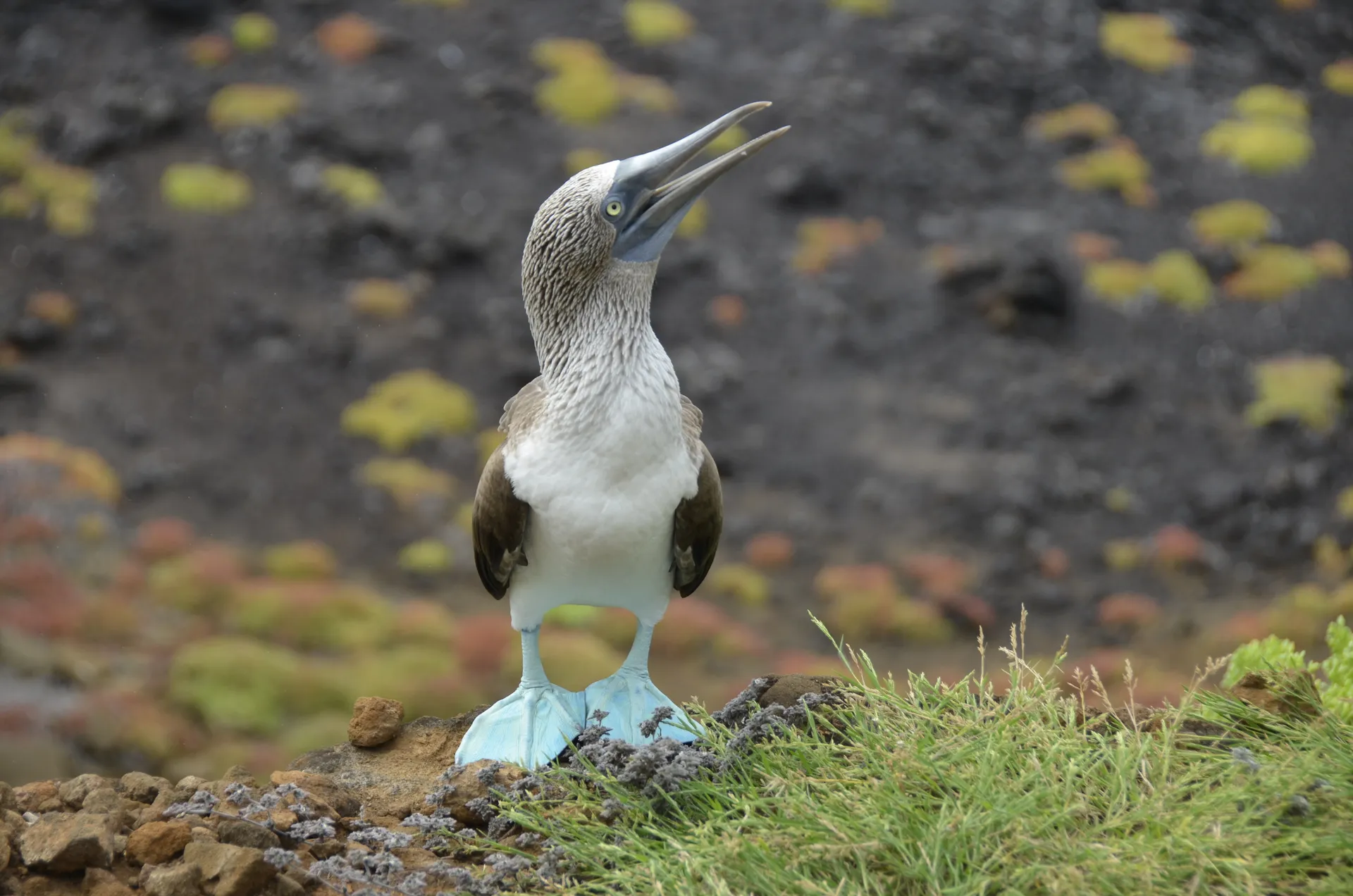
Above the waterline, Champion Island serves as one of the last refuges of the critically endangered Floreana mockingbird, a species that went extinct on its namesake island and now survives only on this islet and nearby Gardner. Charles Darwin himself studied these mockingbirds during his 1835 visit, and their subtle variations between islands helped spark his revolutionary thinking about natural selection. Birdwatchers may also spot blue-footed boobies performing their iconic courtship dance on the rocky ledges, Nazca boobies nesting on precarious cliff faces, and red-billed tropicbirds trailing their elegant tail streamers as they soar on thermal currents.
The waters surrounding Champion are part of the Galápagos Marine Reserve, one of the largest and most biologically diverse marine protected areas on Earth. Hammerhead sharks, white-tipped reef sharks, and spotted eagle rays patrol the deeper waters beyond the crater, while octopuses and moray eels inhabit the crevices closer to shore. During the cool season from June to November, the Humboldt Current brings nutrient-rich waters that support even greater concentrations of marine life, occasionally attracting whale sharks and manta rays to the area.
Visits to Champion Island are conducted exclusively by panga (small boat) circumnavigation and snorkeling—no land access is permitted to protect the fragile mockingbird habitat. Expedition vessels anchor offshore, and naturalist guides lead small groups through the snorkeling circuit. The warm season from December to May offers calmer seas and warmer water temperatures, while the cool season brings enhanced marine biodiversity. Regardless of season, the combination of geological drama, evolutionary significance, and underwater splendor makes Champion Island one of the Galápagos' most rewarding stops.

