Genovesa Island — also known as Tower Island — is the Galápagos archipelago's most remote and ornithologically extraordinary destination, a horseshoe-shaped volcanic caldera in the archipelago's northeastern corner where seabird populations achieve densities that defy belief and human visitors remain uncommon enough to be ignored by the wildlife entirely.
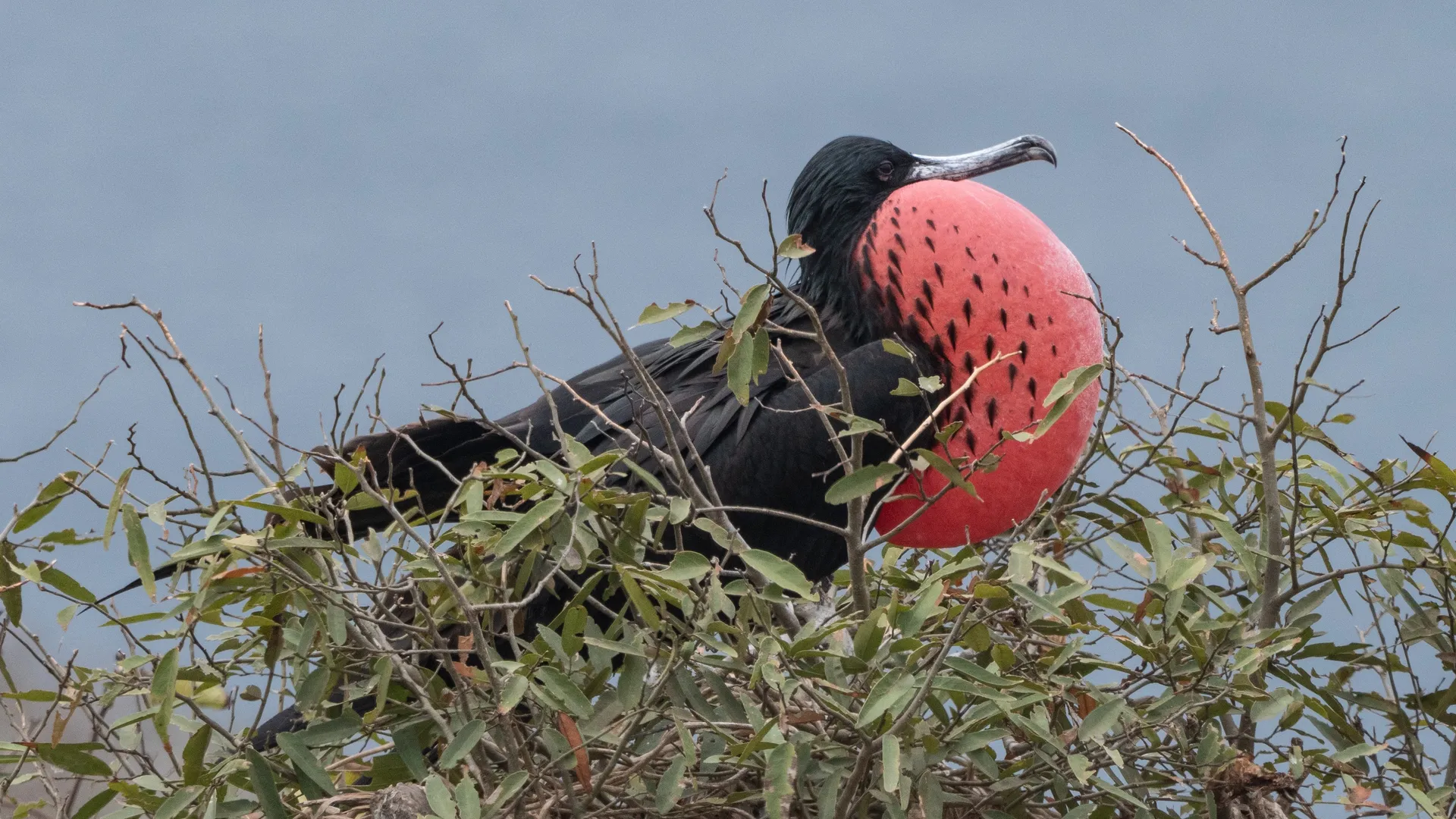
The island is often called 'Bird Island,' and the name is no exaggeration. The caldera's inner cliffs host the world's largest colony of red-footed boobies — tens of thousands of birds nesting in the palo santo trees that cling to the volcanic slopes. Great frigatebirds display their inflated red throat pouches with theatrical commitment, while Nazca boobies perform their elaborate courtship dances on the rocky ground with the focused intensity of performers who know their audience is guaranteed. Storm petrels flutter through lava tubes with the nervous energy of their species, and the short-eared owl — one of the Galápagos' most remarkable predators — hunts in broad daylight, a behavioral adaptation made possible by the absence of hawks on Genovesa.
Two visitor sites provide access to this avian spectacle. Darwin Bay Beach, within the flooded caldera, offers a coral sand beach where red-footed boobies nest in mangroves at eye level and marine iguanas bask on lava rocks within touching distance — though Galápagos National Park rules properly prohibit any contact. Prince Philip's Steps, a steep trail ascending the caldera wall, leads to a plateau where the storm petrel colonies and hunting owls create one of the most extraordinary wildlife dramas in the islands.
Tauck includes Genovesa on premium Galápagos itineraries, with the island's remote location requiring dedicated navigation that limits visitor numbers and enhances the exclusivity of the experience. The surrounding waters provide excellent snorkeling, with hammerhead sharks, manta rays, and the endemic Galápagos fur seal making regular appearances.
The Galápagos are visitable year-round, with December through May offering warmer water and calmer seas, and June through November providing cooler temperatures and nutrient-rich waters that attract larger marine species. Genovesa Island represents the Galápagos at their most concentrated and extraordinary — a place where evolution's experiments with island ecology have produced communities of such fearless abundance that the visitor, for once, is the least interesting species present.

