Where the Pacific's cold Cromwell Current wells up against the youngest island in the Galápagos archipelago, a shallow inlet fringed by red mangroves has quietly sustained one of the most pristine marine nurseries on Earth. Mangle Point — named for the manglar, the Spanish word for mangrove — sits on Fernandina Island's eastern shore, a landmass that emerged from volcanic fire barely seven hundred thousand years ago and remains the most volcanically active island in the chain. La Cumbre, Fernandina's shield volcano, last erupted in 2024, a reminder that the ground here is still being written by magma and time.
Unlike the bustling port towns scattered across the inhabited islands, Mangle Point offers no dock, no village, no souvenir stall — only a panga ride through crystalline shallows where the silence is broken by the exhalations of sea turtles surfacing between mangrove roots. Galápagos penguins — the only penguin species found north of the equator — perch on black lava ledges, seemingly indifferent to the zodiac gliding past. Flightless cormorants spread their vestigial wings to dry in the equatorial sun, an evolutionary signature found nowhere else on the planet. The atmosphere is one of radical stillness, as though the modern world simply forgot to arrive.
Fernandina itself is uninhabited, so there are no restaurants or market stalls along its shores — but the culinary traditions of the Galápagos archipelago are deeply woven into any expedition here. Aboard your vessel or on nearby Santa Cruz, look for encocado de pescado, fresh-caught grouper simmered in coconut milk with achiote and green plantain, or ceviche de canchalagua, a local delicacy featuring tiny black clams marinated in lime, red onion, and cilantro that tastes of the cold upwelling itself. Bolón de verde — fried green plantain dumplings stuffed with cheese or chicharrón — accompany nearly every meal, while the islands' lobster season (September through December) yields sweet, tender langosta served simply grilled with garlic butter and a squeeze of limón sutil. These are not refined dishes; they are honest, luminous expressions of an ocean that gives generously.
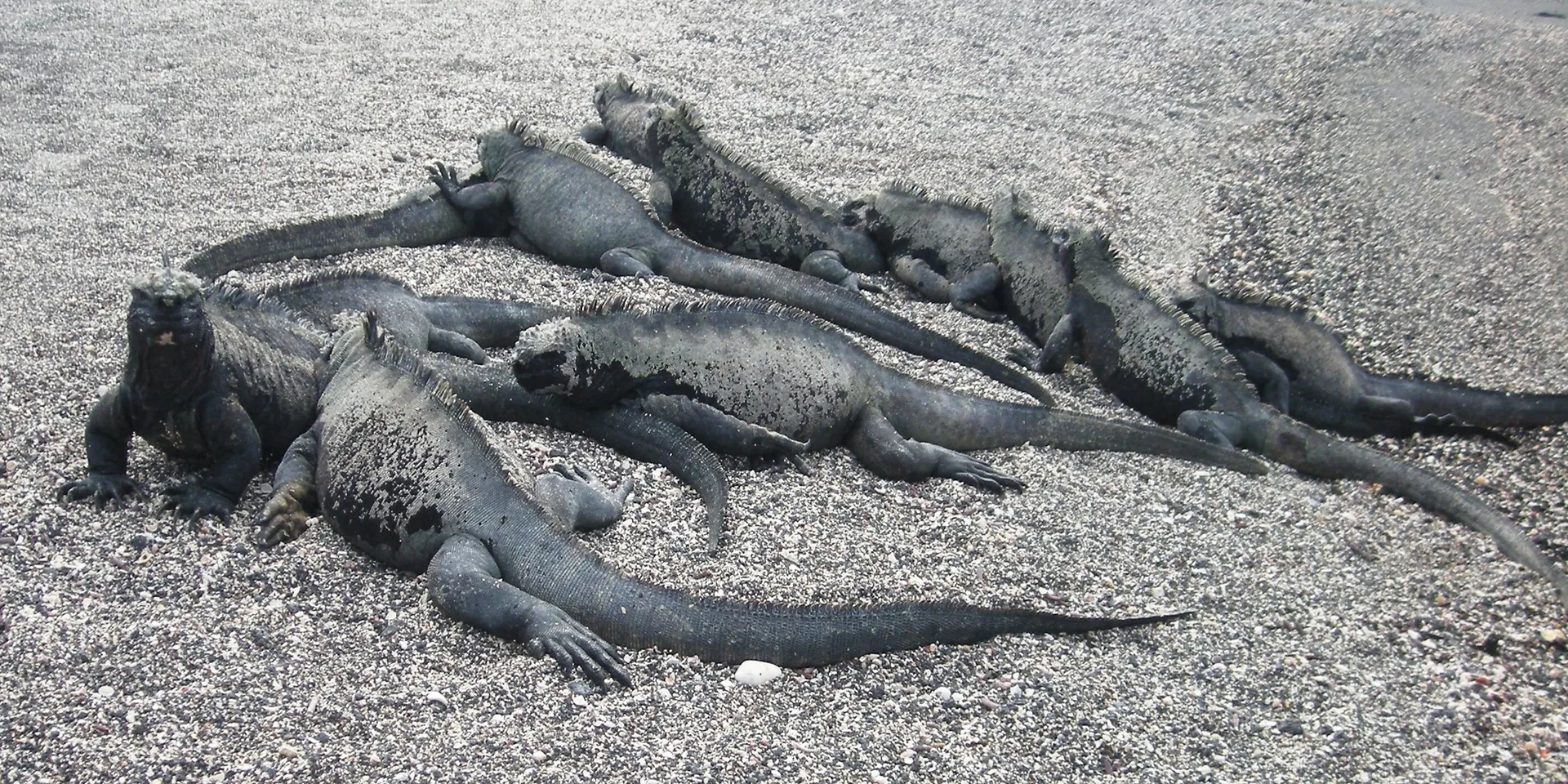
A visit to Mangle Point is invariably part of a broader exploration of Fernandina and its celebrated neighbour, Isabela Island, the largest in the archipelago and home to six shield volcanoes, including the magnificent Sierra Negra with its ten-kilometre-wide caldera. Just across the Bolívar Channel from Mangle Point lies Punta Vicente Roca, where Nazca boobies nest on sheer cliffs and marine iguanas graze on submerged algae. Further afield, Las Tintoreras Islet off Isabela's southern coast offers a lava-channelled sanctuary for white-tipped reef sharks and resting sea lions, while Puerto Baquerizo Moreno on San Cristóbal — the administrative capital — provides a charming counterpoint with its waterfront malecón and the Galápagos National Park interpretation centre. For those extending their journey to mainland Ecuador, Cajas National Park in the highlands above Cuenca presents a startling change of register: two hundred glacial lakes set among páramo grasslands at nearly four thousand metres.
Mangle Point is accessible exclusively by expedition cruise, and two of the world's most discerning operators include it on their western Galápagos itineraries. Silversea's Silver Origin — purpose-built for the archipelago with a team of certified naturalists and a complement of sea kayaks and zodiacs — threads through the Bolívar Channel to deliver guests into Mangle Point's mangrove labyrinth, typically on seven- to ten-day voyages that weave between the major islands. Tauck pairs its Galápagos sailings with pre- and post-cruise programmes on the Ecuadorian mainland, wrapping the archipelago experience within a broader narrative of Andean culture and cloud-forest biodiversity. Both operators hold the coveted Galápagos National Park permits that limit visitor numbers, ensuring that your panga glides through Mangle Point's channels with no more than a dozen fellow travellers — an intimacy that transforms observation into something closer to communion.
What lingers after Mangle Point is not a photograph or a species checklist but a feeling: of having stood at the edge of geological youth, where evolution is still visibly at work and the boundary between water and land, between animal indifference and human wonder, dissolves entirely beneath a mangrove canopy older than any human claim upon it.

