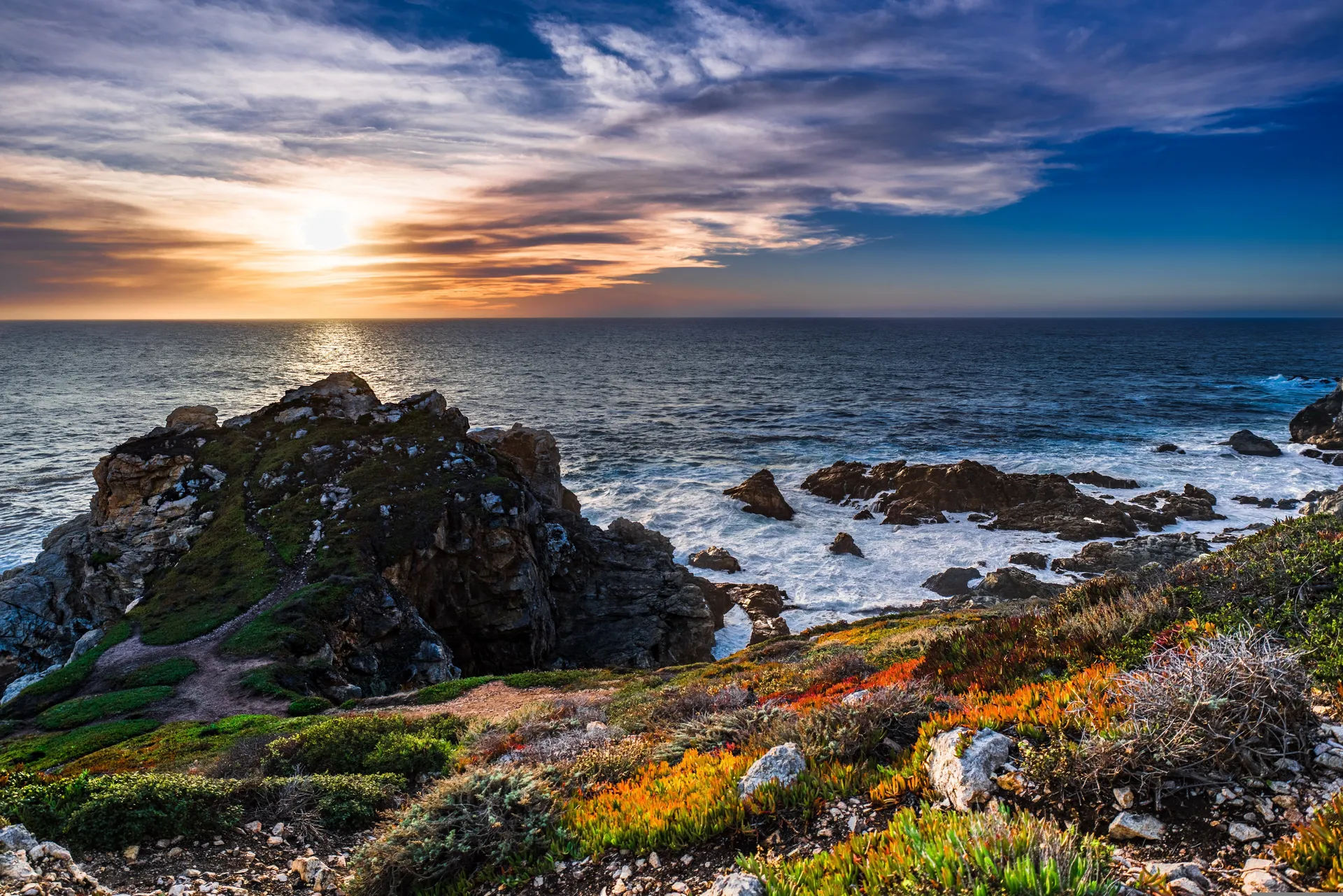
When HMS Cormorant patrolled the waters off Floreana Island in the 1840s, the British corvette lent its name to a volcanic headland that would become one of the Galápagos archipelago's most quietly spellbinding landfalls. Punta Cormorant sits at Floreana's northern reach, a place where olivine crystals lend the wet-landing beach an otherworldly green-gold shimmer — a geological calling card found almost nowhere else on Earth. Charles Darwin himself walked Floreana's shores in 1835, and the island's layered history of pirates, whalers, and early settlers still whispers through its wind-sculpted landscapes.
Beyond the crystalline landing beach, a trail no longer than four hundred metres crosses a low scrubland and opens onto a shallow brackish lagoon where the air turns pink. Greater flamingos — sometimes a dozen, sometimes just a solitary pair — feed in the mineral-rich shallows, their coral plumage reflected so precisely in the still water that the horizon dissolves into colour. White-cheeked pintails paddle at the margins, and the occasional great blue heron stands motionless among the mangroves. The atmosphere is one of elemental stillness, the kind of silence that expensive wellness retreats attempt to manufacture but that here simply exists, undisturbed, as it has for millennia. Continue past the lagoon and you reach Flour Beach, a crescent of powdery white coral sand where Pacific green sea turtles haul themselves ashore to nest between December and May, their tracks scoring the sand like calligraphy.
The Galápagos are not a culinary destination in the conventional sense, yet the food that does arrive at your plate carries the honest savour of the Pacific. On nearby Santa Cruz, the ceviches de canchalagua — tiny local clams marinated in lime, red onion, and cilantro — are revelatory in their simplicity. Encebollado, Ecuador's beloved tuna and yuca stew perfumed with pickled onion and cumin, appears at dockside comedores and deserves its reputation as the national hangover cure elevated to art. Freshly grilled langostinos, plantain chips called chifles, and viche — a coconut-milk seafood chowder from the mainland coast — round out a cuisine that prizes the integrity of its ingredients over ostentation.
Punta Cormorant serves as a natural gateway to the wider Galápagos mosaic. Isabela Island, the archipelago's largest, lies to the northwest, its volcanic silhouette sheltering the sheltered coves of Las Tintoreras Islet, where white-tipped reef sharks glide through turquoise channels carved into the lava. Puerto Baquerizo Moreno on San Cristóbal — the provincial capital — offers a different rhythm: sea lions dozing on park benches, a waterfront malecón, and the Galápagos Interpretation Centre, which contextualises the islands' ecological fragility with uncommon clarity. For travellers extending their journey to the Ecuadorian highlands, Cajas National Park near Cuenca presents a startling counterpoint — over two hundred glacial lakes set among páramo grasslands at nearly four thousand metres, a landscape as lunar and silent as the Galápagos themselves.
Arriving at Punta Cormorant by expedition vessel is the only way to experience it, and two of the world's most discerning cruise lines make the call. Silversea's Silver Origin, purpose-built for these islands and carrying just one hundred guests, deploys its fleet of Zodiacs for the wet landing with the polished efficiency one expects of the brand — naturalist guides outnumber passengers in every panga. Tauck brings its signature all-inclusive philosophy to the archipelago aboard chartered expedition ships, weaving Punta Cormorant into meticulously curated itineraries that pair wildlife encounters with onboard lectures by resident Galápagos National Park naturalists. Both operators time their visits for the early morning, when the flamingos feed most actively and the equatorial light rakes low across the lagoon, turning the water to hammered bronze. It is, quite simply, one of those mornings that recalibrates your understanding of what travel can be.

