Punta Pitt occupies the easternmost tip of San Cristóbal Island—and by extension, the easternmost point of the entire Galápagos archipelago—a dramatic volcanic headland that is the only site in the islands where all three species of booby can be observed nesting in the same location. This distinction alone makes Punta Pitt one of the most sought-after landing sites for serious birdwatchers and wildlife photographers.
The wet landing on the olivine beach sets the tone: the sand, darkened by volcanic minerals, gives way to a steep trail that climbs through a landscape of increasing geological drama. The path ascends through tuff formations—consolidated volcanic ash sculpted by wind and rain into ridges, pinnacles, and amphitheater-shaped erosion features—whose layers of color reflect different eruption events and mineral compositions. At the higher elevations, the trail opens onto clifftop viewpoints where the three booby species can be observed in their distinct habitat preferences: blue-footed boobies on the lower slopes, Nazca boobies on the cliff edges, and red-footed boobies in the sparse vegetation of the upper slopes.
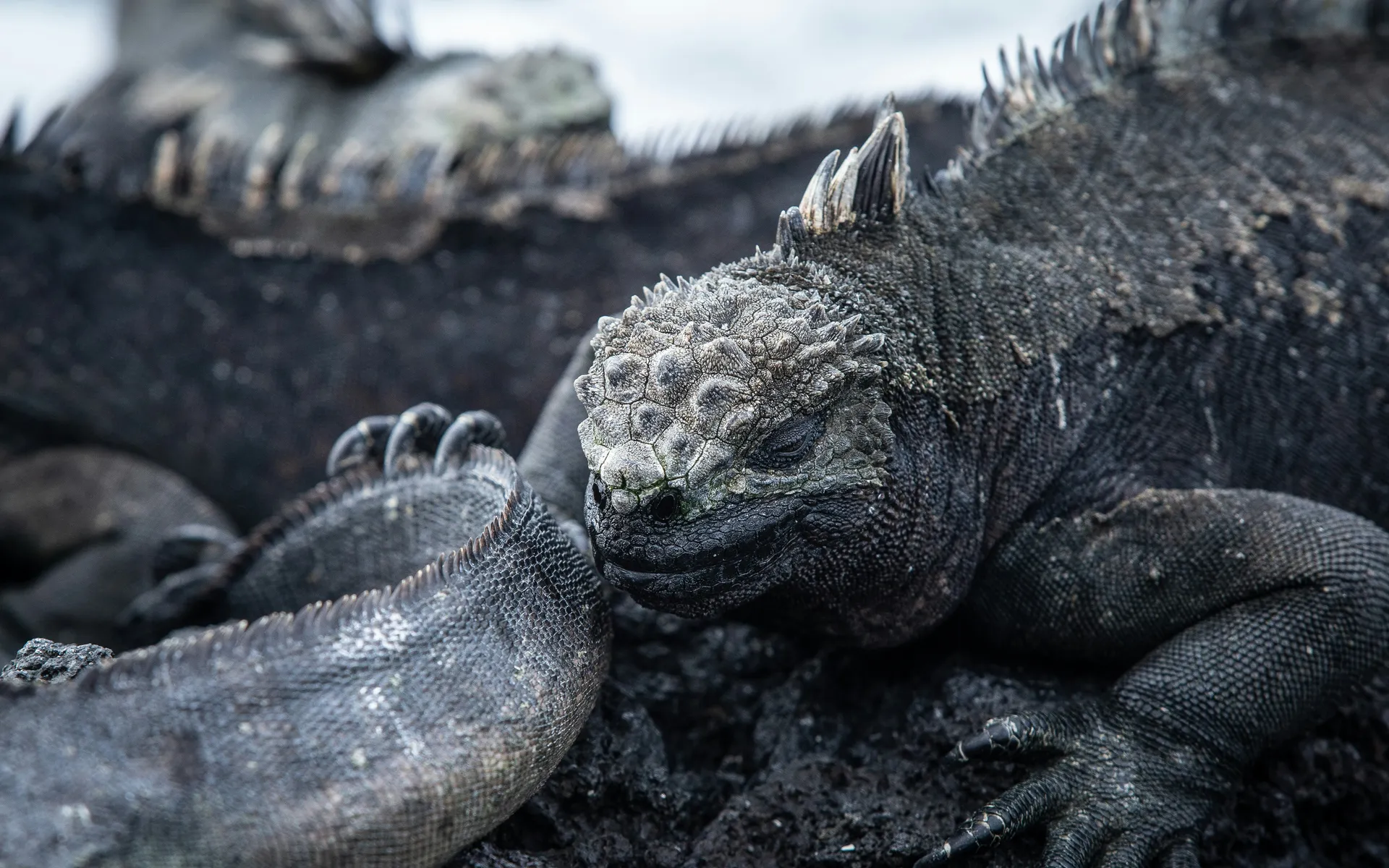
The marine environment around Punta Pitt is shaped by its exposed eastern position, where the Humboldt Current from the south and the warm Panama Current from the north create a mixing zone of exceptional biological productivity. Sea lions patrol the beach and surrounding rocks. Marine iguanas—the only seagoing lizard on Earth—bask on the dark rocks in dense aggregations. Frigatebirds soar overhead, occasionally harassing returning boobies into dropping their catch in the aerial piracy behavior that has earned them the nickname "pirate birds."
The hiking trail at Punta Pitt is one of the more demanding in the Galápagos—approximately 2.5 kilometers round-trip with significant elevation gain and exposed sections where shade is absent and the equatorial sun is intense. The effort is rewarded with panoramic views of San Cristóbal's rugged northeastern coast, the open Pacific stretching to the east, and—on clear days—the distant silhouettes of Española and Santa Cruz islands. The geological formations at the summit tell the island's volcanic story in vivid chromatic layers.
Celebrity Cruises and Tauck include Punta Pitt on their Galápagos expedition itineraries, with Zodiac landings on the beach and guided walks up the trail. The warm season (January–May) brings nesting activity for many seabirds and warmer conditions. The cool season (June–December) offers more active marine wildlife, cooler hiking temperatures, and the garúa mist. Punta Pitt is not the easiest landing in the Galápagos—the trail demands fitness and the terrain demands attention—but for those willing to climb, it delivers an experience that no other site in the archipelago can match: all three boobies, in one place, against a backdrop of volcanic art that nature has been composing for millions of years.

