Punta Suárez, on the windswept eastern tip of Española, is where the Galápagos reveals its most theatrical side. This is the oldest island in the archipelago — roughly four million years of volcanic weathering have carved its coastline into dramatic cliffs, blowholes, and rock arches that frame the Pacific in compositions so perfect they seem designed by a landscape architect with a flair for the sublime. It is also the only place on earth where the waved albatross breeds, and watching these magnificent birds — with wingspans exceeding two metres — perform their extraordinary courtship rituals is one of the great privileges of natural history travel.
The waved albatross arrives on Española around April and departs by December, and during the breeding season, the flat, scrubby plateau behind the cliffs becomes a nursery of astonishing intimacy. Pairs face each other and engage in an elaborate dance of bill-circling, sky-pointing, and clacking that can last for minutes, a ritual so precisely choreographed it appears almost comically formal. These birds mate for life and can live for over forty years, returning to Española season after season to raise a single chick in a shallow depression on the bare ground. Outside albatross season, the island still delivers extraordinary encounters: blue-footed boobies perform their own high-stepping courtship dance, Nazca boobies tend their nests along the cliff edges, and swallow-tailed gulls — the world's only nocturnal gull species — regard visitors with their enormous, red-ringed eyes.
The trail at Punta Suárez leads along the cliff tops to El Soplador, a natural blowhole where incoming waves are compressed through a narrow lava tube and expelled in towering geysers that can reach thirty metres. On a day of heavy swell, the spectacle is genuinely awe-inspiring, the spray hanging in the air long enough to conjure fleeting rainbows against the cobalt sky. Marine iguanas — the Española subspecies is particularly colourful, nicknamed "Christmas iguanas" for their red-and-green mottling — bask on the rocks below, while lava lizards do push-ups on sun-warmed boulders and Galápagos hawks circle overhead with the predatory confidence of an island apex species.
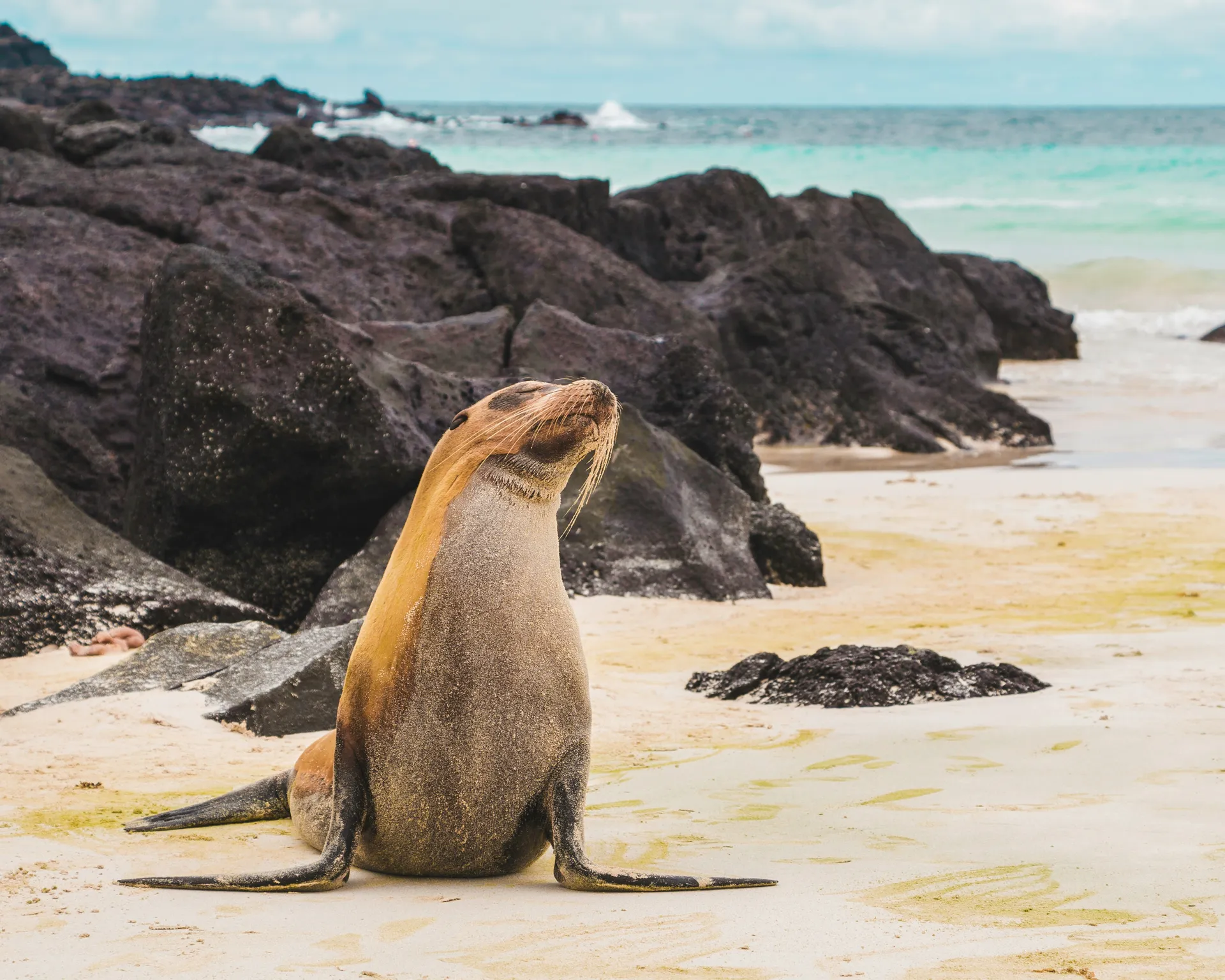
The snorkelling off Española is among the finest in the Galápagos. Gardner Bay, on the island's northeast coast, is a crescent of powdery white sand that dissolves into turquoise water alive with sea turtles, rays, and playful sea lions that barrel-roll around snorkellers with gleeful abandon. The underwater topography off Punta Suárez itself is rockier and more dramatic, with arches and swim-throughs where white-tip reef sharks rest on the sandy bottom and schools of king angelfish shimmer in the filtered light. For those with strong sea legs, the channel between Española and the islet of Gardner offers open-water encounters with hammerhead sharks, manta rays, and occasionally even whale sharks.
Punta Suárez is a highlight of Galápagos itineraries offered by Silversea and Tauck, whose expedition vessels carry certified naturalist guides and operate under strict Galápagos National Park regulations. Landing is a wet disembarkation onto a rocky shore, and the trail — while well-marked — traverses uneven terrain that requires sturdy footwear. The prime visiting window for the waved albatross is April through December, with peak courtship displays in April and May. For sheer wildlife density and dramatic scenery compressed into a single landing site, Punta Suárez is without rival in the Galápagos — and very possibly in the world.

