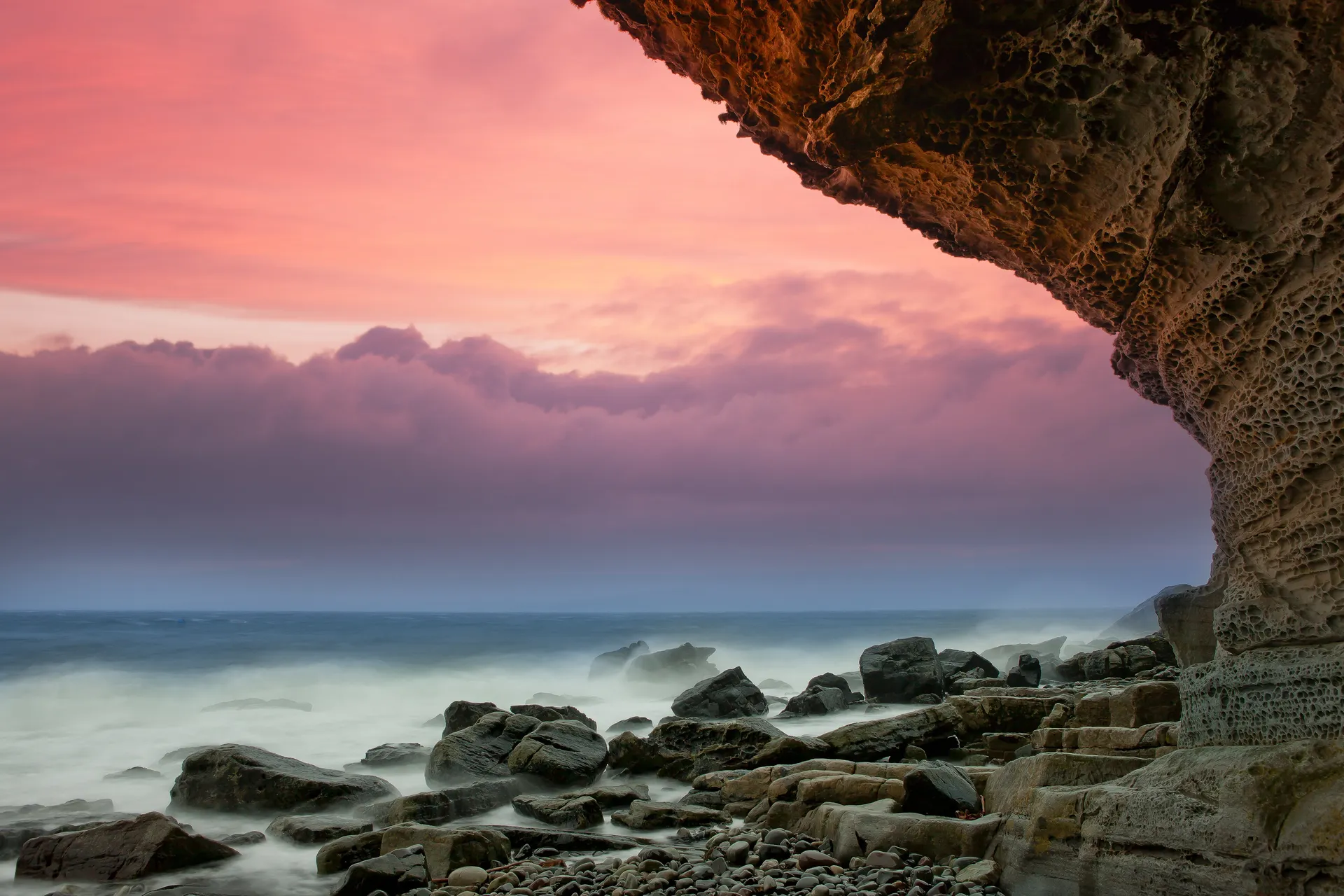
Rábida Island is the Galápagos in its most intensely chromatic form—a small volcanic island whose dark red beaches, created by oxidized iron-rich lava and eroded volcanic cinders, glow against the turquoise water and green palo santo forest like a landscape painted in primary colors. This uninhabited island, also known as Jervis Island, sits in the geographic center of the archipelago and provides one of the most visually dramatic landings in the Galápagos experience. The red sand beach, the only one of its kind in the islands, serves as a hauling-out spot for Galápagos sea lions whose tawny fur blends remarkably with the rust-colored sand.
The island's interior is dominated by a salt lagoon that periodically hosts greater flamingos—tall, pink wading birds that seem almost impossibly elegant against the volcanic landscape. A trail from the beach leads through a forest of palo santo trees, which lose their leaves during the dry season and create a ghostly, silver-grey woodland, then burst into green with the first rains. Brown pelicans nest in the palo santo trees here, one of the few places in the Galápagos where they can be observed on their nests at close range.
The snorkeling at Rábida is outstanding, particularly along the rocky shoreline. The underwater landscape mirrors the volcanic drama above the surface: dark lava formations encrusted with coral create a habitat for parrotfish, surgeonfish, damselfish, and the Galápagos' endemic king angelfish. Sea lions frequently join snorkelers in the water, their underwater agility a humbling contrast to their clumsy shore-bound locomotion. White-tipped reef sharks rest in sandy patches between the rocks, and sea turtles glide through the marine algae.
The geological story of Rábida is written in its iron-rich volcanic formations. The island's distinctive coloring results from the high iron content of its lava, which oxidizes upon exposure to air and water, producing the deep red hues that distinguish Rábida from the more commonly grey and black volcanic landscapes of its neighbors. Spatter cones and lava flows of various ages create a terrain of modest hills and shallow valleys. The island's small size and limited elevation mean that it does not capture the orographic rainfall found on larger islands—resulting in the arid, cactus-and-palo-santo landscape that dominates.
HX Expeditions includes Rábida on its Galápagos itineraries, with visitors arriving by Zodiac for a wet landing on the red sand beach. The visit typically combines a guided walk through the palo santo forest and salt lagoon area with snorkeling from the beach. National park regulations limit group sizes and visiting hours. The warm season (January–May) brings warmer water and the best conditions for snorkeling, while the cool season (June–December) offers more active marine wildlife and cooler hiking conditions. Rábida Island is a reminder that in the Galápagos, some of the most profound experiences come from the small, intensely beautiful islands where every element—earth, water, wildlife, and light—conspires to create something unforgettable.

