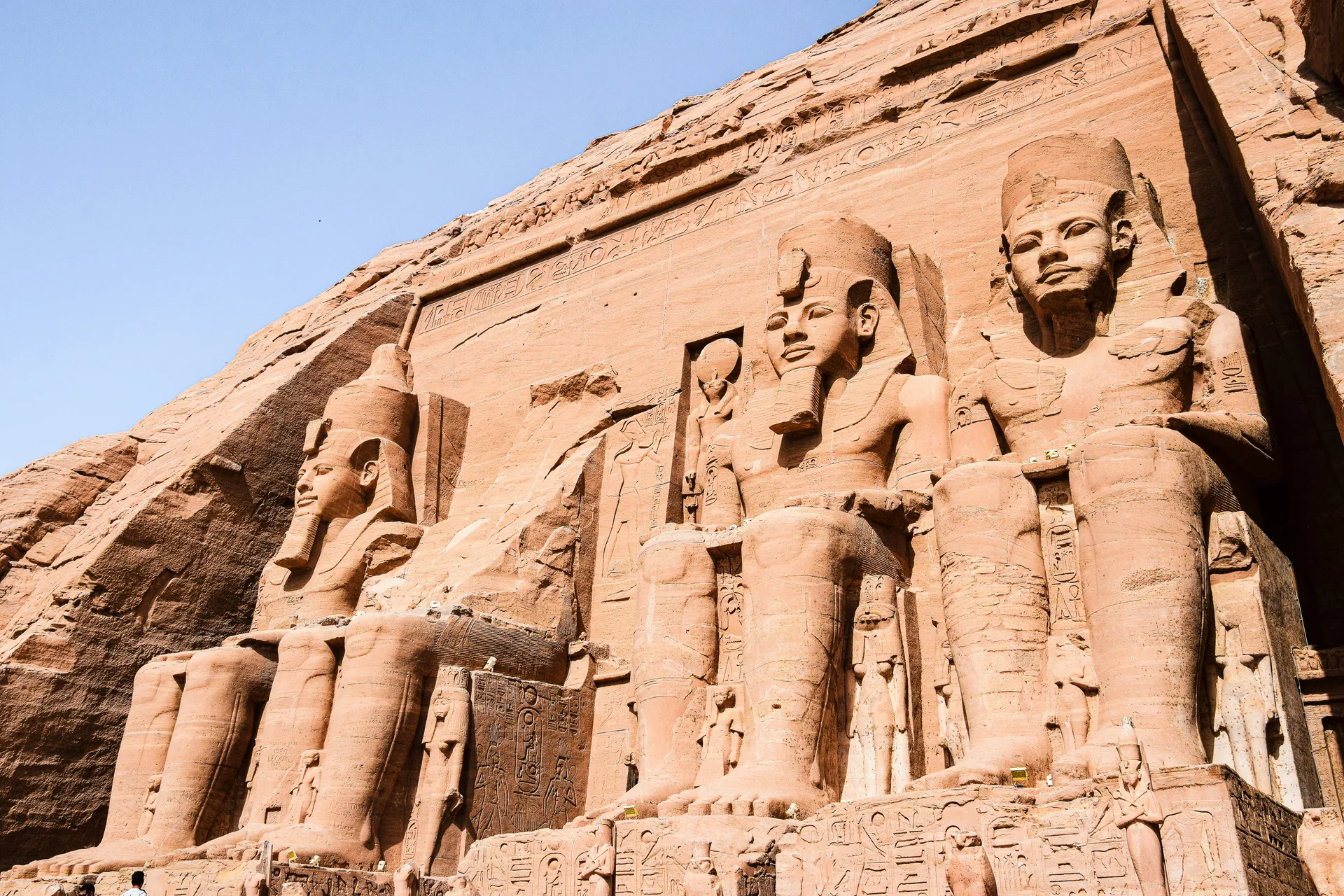
Carved into a sandstone cliff on the western bank of Lake Nasser, the twin temples of Abu Simbel represent ancient Egypt at the peak of its power and ambition. Commissioned by Ramesses II in the thirteenth century BCE, these colossal monuments — with their four twenty-meter-high seated figures of the pharaoh flanking the entrance to the Great Temple — were designed to awe Egypt's southern neighbors and assert dominion over the conquered lands of Nubia. Three thousand years later, they still achieve precisely that effect.
The temples' modern history is almost as remarkable as their ancient origins. When the construction of the Aswan High Dam in the 1960s threatened to submerge Abu Simbel beneath the rising waters of Lake Nasser, an unprecedented international rescue effort — coordinated by UNESCO and involving engineers from over fifty countries — cut the entire complex into precisely numbered blocks, each weighing up to thirty tons, and reassembled them on artificial cliffs sixty-five meters higher and two hundred meters further from the river. The operation took four years and remains one of the greatest feats of archaeological engineering ever accomplished.
The interior of the Great Temple penetrates fifty-five meters into the cliff face, its halls lined with pillars carved as Osiris-form figures of Ramesses and its walls covered in reliefs depicting the pharaoh's military campaigns, most prominently the Battle of Kadesh against the Hittites. The engineering precision of the original builders is demonstrated twice each year, on February 22 and October 22, when the rising sun penetrates the entire length of the temple to illuminate three of the four statues in the innermost sanctuary — a solar alignment achieved with remarkable accuracy over three millennia ago.
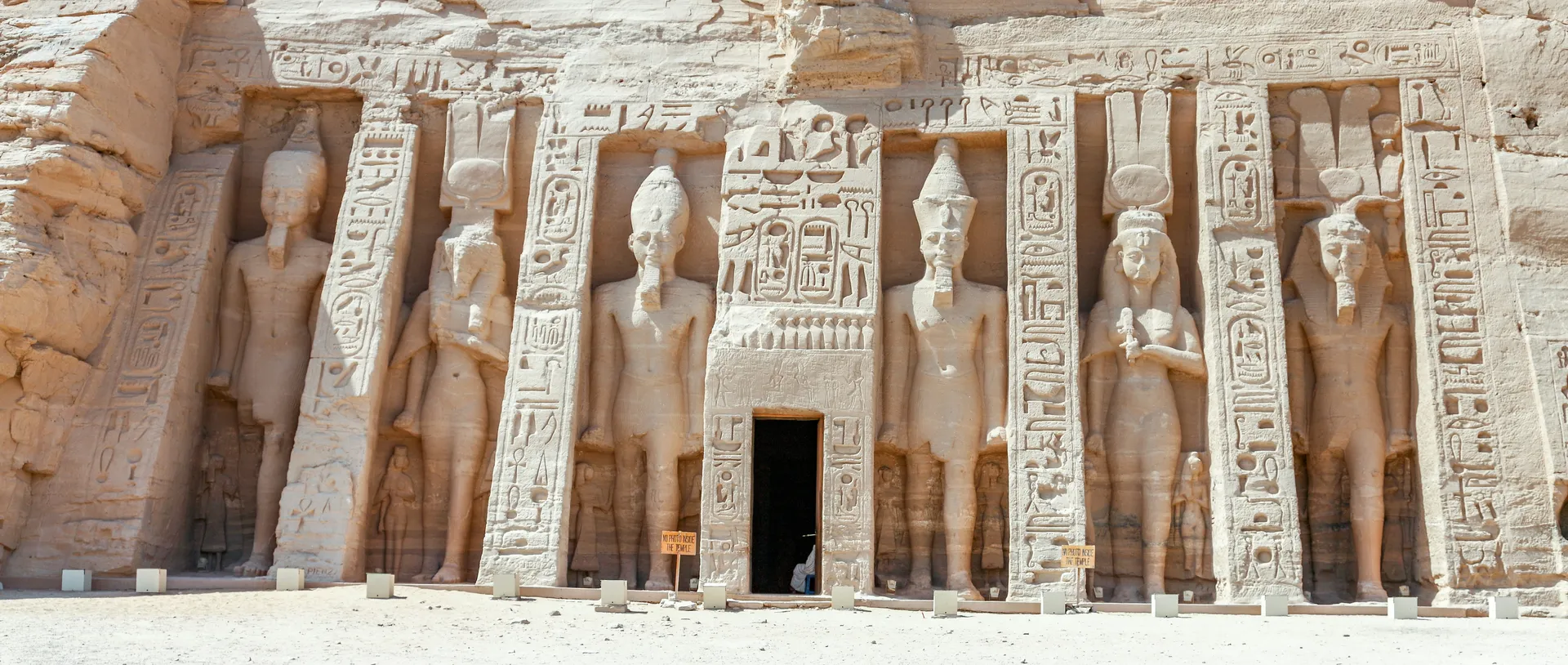
The smaller Temple of Hathor, dedicated to Ramesses' favorite wife Nefertari, stands alongside the Great Temple and is itself a masterwork. "She for whom the sun shines," reads the inscription — a rare gesture of royal devotion in the ancient world. The temple's facade features six colossal standing figures, and its interior chambers contain some of the most beautiful and well-preserved painted reliefs in all of Egypt, their colors still vivid despite the passage of millennia.
Abu Simbel lies approximately 280 kilometers south of Aswan, accessible by air (a forty-five-minute flight), by road convoy across the desert, or by Lake Nasser cruise ship. Lake Nasser cruises typically include Abu Simbel as their highlight, with ships mooring within walking distance of the temples. The site is open year-round, but the solar alignment dates in February and October draw the largest crowds. The desert climate means scorching summers; October through March offers the most comfortable visiting conditions, with clear skies and temperatures that allow unhurried exploration of these extraordinary monuments.