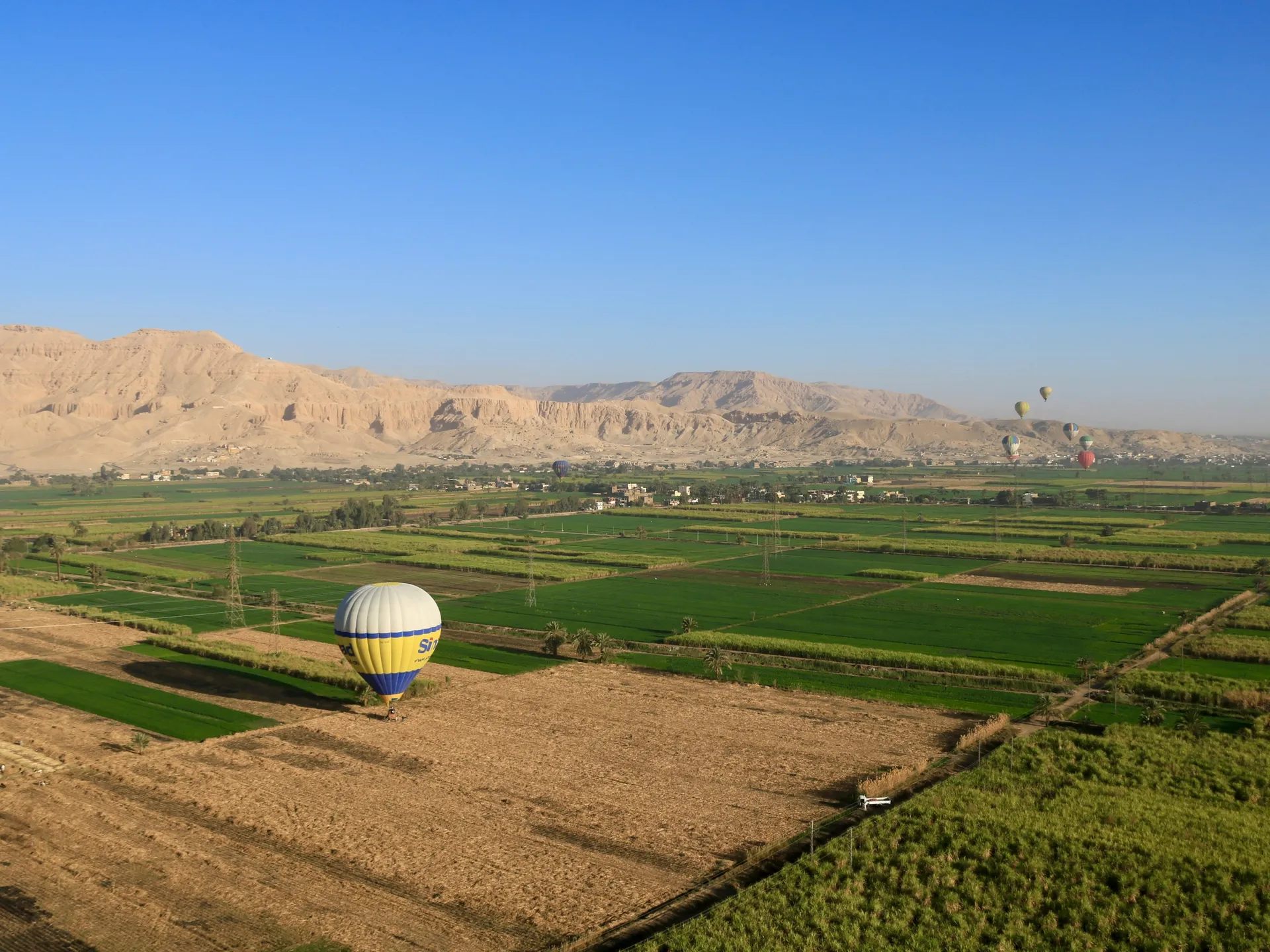
The Temple of Khnum at Esna, its hypostyle hall sunk several metres below the level of the modern town, stands as one of the last great religious buildings of ancient Egypt — its ceiling, still bearing vivid astronomical paintings of the zodiac and sacred boats, was decorated as late as the third century AD under Roman rule, making it a remarkably late addition to the pharaonic tradition. Esna sits on the west bank of the Nile approximately fifty-five kilometres south of Luxor, and its strategic position at a natural narrowing of the river has made it a crossing point and market town since antiquity. The Esna Lock, built in 1906 to regulate navigation on the Nile, remains one of the journey's most memorable moments for river cruise passengers — vessels queue to pass through the chamber as vendors in small boats hawk scarves, tablecloths, and souvenirs to passengers watching from their decks.
The town of Esna retains an authentic Egyptian character largely untouched by mass tourism. The souk, stretching from the riverside toward the temple, is a genuine working market where locals shop for spices, textiles, fresh produce, and household goods — far removed from the tourist bazaars of Luxor and Aswan. Narrow alleys lined with Ottoman-era houses reveal carved wooden mashrabiya screens and faded but beautiful geometric tile work. The Sidi Abdel Rahim mosque and the nineteenth-century Coptic Orthodox church reflect the town's long tradition of Muslim-Christian coexistence. Donkey carts still navigate the streets, and the atmosphere at dusk, when families gather along the corniche and the call to prayer echoes from multiple minarets, feels timeless.
Upper Egyptian cuisine is simple, earthy, and profoundly satisfying. Ful medames — slow-cooked fava beans dressed with olive oil, cumin, lemon, and garlic — is the breakfast staple of the Nile Valley. Ta'amiya (Egyptian falafel), made from fava beans rather than chickpeas, is lighter and greener than its Levantine cousin. Molokhia, a viscous soup of finely chopped jute leaves simmered with garlic and coriander, often served over rice with rabbit or chicken, is considered the quintessential Egyptian comfort food. Grilled kofta (spiced minced meat) and kebab are evening favourites. For dessert, basbousa — a semolina cake soaked in rosewater syrup — offers sweetness balanced by a scattering of almonds.
Esna's position between Luxor and Aswan places it at the heart of ancient Egypt's most concentrated archaeological corridor. The Temple of Horus at Edfu, the best-preserved temple in Egypt, lies just fifty kilometres south and is typically visited on the same cruise itinerary. Upstream, Kom Ombo's double temple dedicated to Sobek the crocodile god and Haroeris commands a dramatic bluff overlooking the Nile. Luxor itself — with the Temples of Karnak and Luxor on the east bank, and the Valley of the Kings, Hatshepsut's temple, and the Colossi of Memnon on the west — represents the single greatest concentration of ancient monuments in the world.
Esna is a standard stop on Nile river cruises between Luxor and Aswan, with AmaWaterways, APT Cruising, Holland America Line, Lindblad Expeditions, Uniworld River Cruises, and Viking all navigating this stretch. Nearby ports include Edfu, Kom Ombo, and Aswan. The Nile cruising season runs year-round, though October through April offers the most comfortable temperatures for temple visits, with December through February being the peak period when the desert sun is warm rather than fierce.

