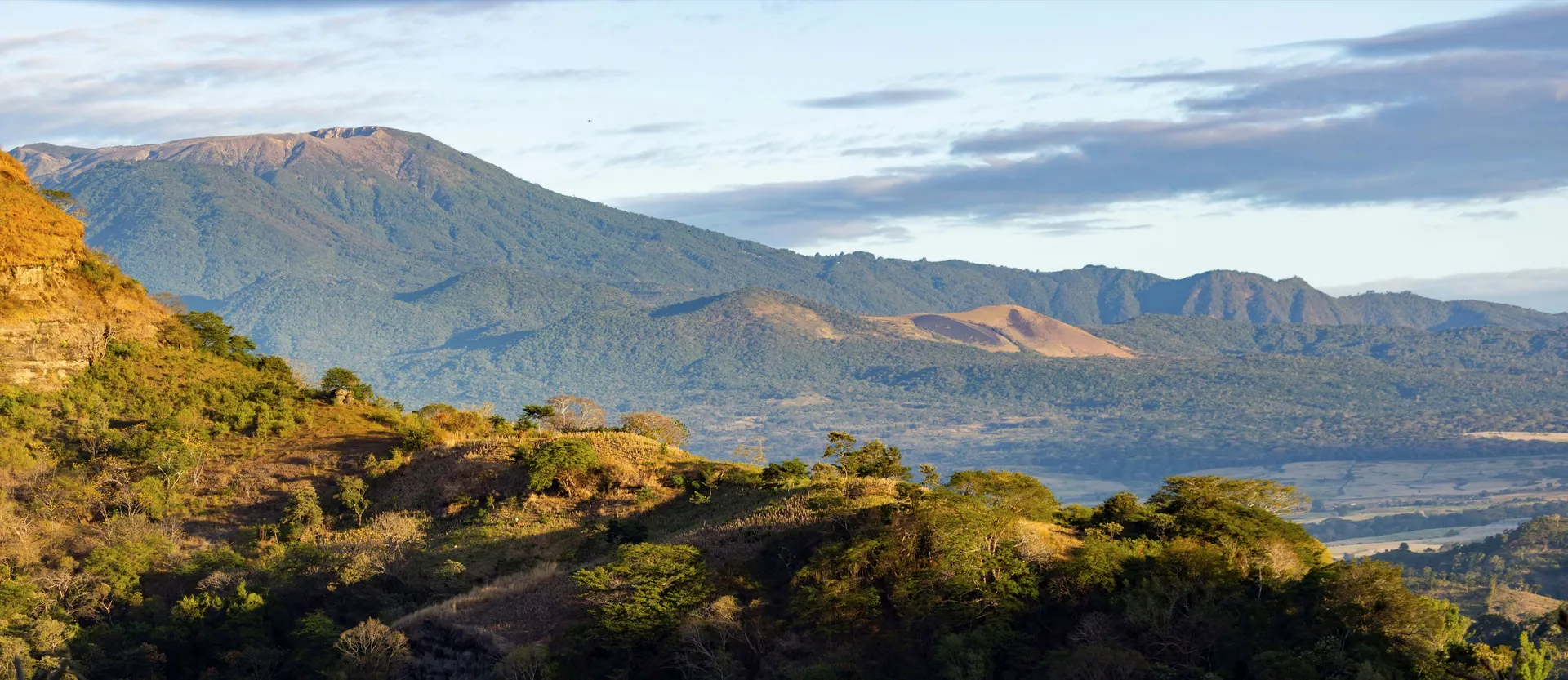
Acajutla is El Salvador's principal Pacific port — a hardworking commercial harbour on the country's southwestern coast that serves as the gateway to one of Central America's most compact, culturally rich, and overlooked destinations. El Salvador, the smallest country in Central America at just 21,000 square kilometres, is roughly the size of Wales, and this compression means that volcanoes, colonial towns, archaeological sites, and Pacific surf breaks are all accessible within a day's excursion from the port. The country's turbulent history — a brutal civil war from 1979 to 1992 — kept it off tourist itineraries for decades, but peace has brought a cultural confidence and a warmth of welcome that experienced travellers find irresistible.
The most compelling excursion from Acajutla is the colonial town of Suchitoto, perched on a ridge above Lake Suchitlan — a reservoir created by the damming of the Lempa River whose surface now dotted with islands and surrounded by tropical forest. Suchitoto's cobblestone streets, whitewashed buildings with red-tile roofs, and the imposing Iglesia Santa Lucia create one of the most harmonious colonial townscapes in Central America, while the town's cultural renaissance — galleries, indigo workshops, and a weekend arts market — has made it the creative capital of El Salvador. The Ruta de las Flores, a circuit of highland villages along the volcanic chain, passes through coffee plantations, weekend food festivals, and the brightly muralled town of Ataco.
The food culture of El Salvador revolves around the pupusa — and it is no exaggeration to say that the pupusa is the most beloved dish in Central American cuisine. These thick corn tortillas, stuffed with cheese, beans, chicharron (pork), or loroco (a local edible flower bud), are grilled on a comal and served with curtido (pickled cabbage) and tomato salsa — a combination so satisfying in its simplicity that Salvadorans consume an estimated 90 million pupusas per year. Every town has its pupuserias, and the pupusa vendors at Acajutla's waterfront and along the coastal highways serve them freshly made, their edges crispy and their filling molten, for less than a dollar each.
The Joya de Ceren archaeological site, a UNESCO World Heritage Site 80 kilometres from Acajutla, is often called the "Pompeii of the Americas" — a Maya farming village buried by a volcanic eruption around 600 CE, preserving the daily-life details of pre-Columbian Central American civilisation with extraordinary completeness. Unlike the monumental ruins of Tikal or Copan, Joya de Ceren reveals how ordinary people lived: their sleeping mats, cooking pots, garden plots, and the maguey agave plants they cultivated are all preserved under layers of volcanic ash. The site provides a human-scale complement to the grandeur of Tazumal, a Maya ceremonial centre near the town of Chalchuapa, whose stepped pyramid is the largest pre-Columbian structure in El Salvador.
Acajutla is served by Crystal Cruises and Oceania Cruises on Pacific coast and Panama Canal itineraries, with ships docking at the commercial port. The dry season from November through April offers the most comfortable conditions, with warm temperatures and minimal rainfall. The Pacific surf season peaks from March through October, and the beach breaks along the coast near Acajutla — particularly at El Tunco and El Sunzal — draw an international surfing community.

