Clinging to the hillside above its sheltered harbour like a congregation of colourful wooden houses in quiet conversation, Tórshavn is the world's smallest capital city and quite possibly its most atmospheric. The capital of the Faroe Islands — an autonomous territory of Denmark scattered across eighteen volcanic islands in the North Atlantic — Tórshavn has served as the seat of the Løgting, one of the world's oldest parliamentary assemblies, since Viking settlers established their gathering place here around 900 AD. With a population of barely fourteen thousand, the city manages to combine genuine cosmopolitanism with a village intimacy that makes visitors feel simultaneously at the edge of the world and at its secret center.
Tinganes, the rocky promontory that divides the harbour, is where the Viking parliament first convened and where the Faroese government still sits today — in a cluster of red-painted timber buildings with turf roofs that look more like a prosperous medieval farm than a seat of power. The old town surrounding Tinganes presents one of the North Atlantic's most perfectly preserved historical quarters: narrow lanes wind between houses painted in the deep reds, ochres, and blacks that have defined Faroese architecture for centuries, each roof crowned with a thick carpet of grass that insulates against the relentless wind. The Havnar Kirkja, a whitewashed church dating from 1788, provides a calm anchor amid the winding streets.
The cultural scene in Tórshavn punches impossibly above its weight. The Nordic House, designed by Norwegian architect Ola Steen with a turf roof that merges seamlessly with the surrounding hillside, hosts concerts, exhibitions, and literary events that attract artists from across Scandinavia. The National Museum traces Faroese history from the first Norse settlers through the medieval period to the modern fishing economy, while the National Gallery showcases a surprisingly rich tradition of visual art shaped by the islands' dramatic light and landscape. The food revolution that has swept the Faroes finds its fullest expression in Tórshavn, where KOKS — the two-Michelin-starred restaurant relocated to a hotel overlooking the harbour — reinterprets traditional Faroese ingredients with avant-garde techniques.
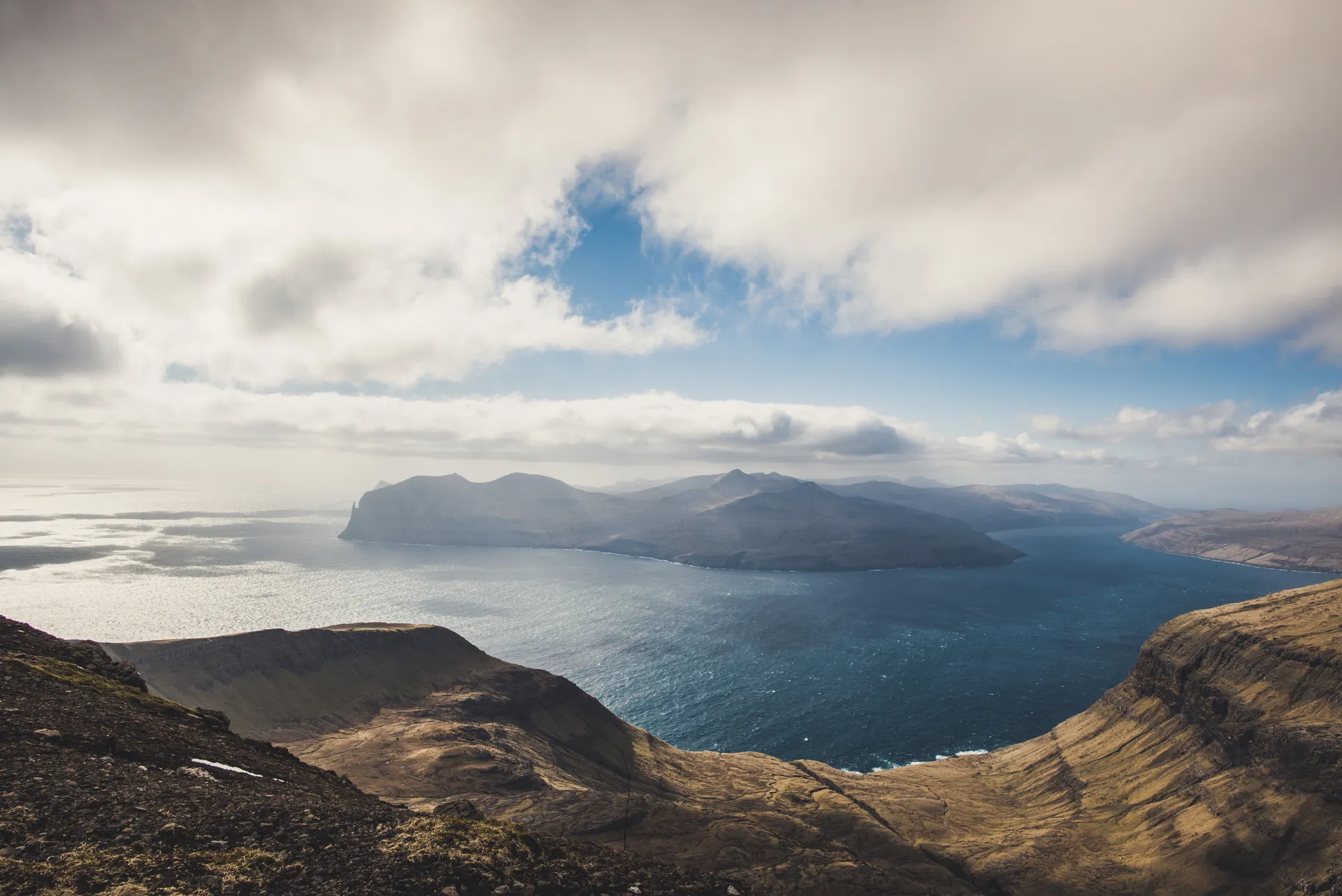
The landscape accessible from Tórshavn captures the Faroe Islands' essential character in concentrated form. Streymoy, the island on which the capital sits, offers hiking that ranges from gentle coastal walks to demanding mountain traverses, with the trail to the abandoned village of Saksun — set in a amphitheatre of mountains around a tidal lagoon — ranking among the North Atlantic's most beautiful walks. The neighbouring island of Vágar, connected by an undersea tunnel, provides access to the iconic Múlafossur waterfall, which plunges directly from a cliff top into the ocean, and to Lake Sørvágsvatn, which appears to float impossibly above the sea.
Seabourn and Viking include Tórshavn in their North Atlantic and Arctic itineraries, recognizing these islands as one of the most distinctive destinations in all of European cruising. The harbour can accommodate mid-sized vessels alongside the quay, and the compact city center is entirely walkable. The visiting season runs from May through September, with June and July offering the midnight twilight that bathes the islands in an ethereal golden glow for weeks on end. Nearby Elduvík and the island of Suðuroy offer further exploration into Faroese village life, where turf-roofed houses, grazing sheep, and dramatic coastal scenery create landscapes that seem to exist outside of time.

