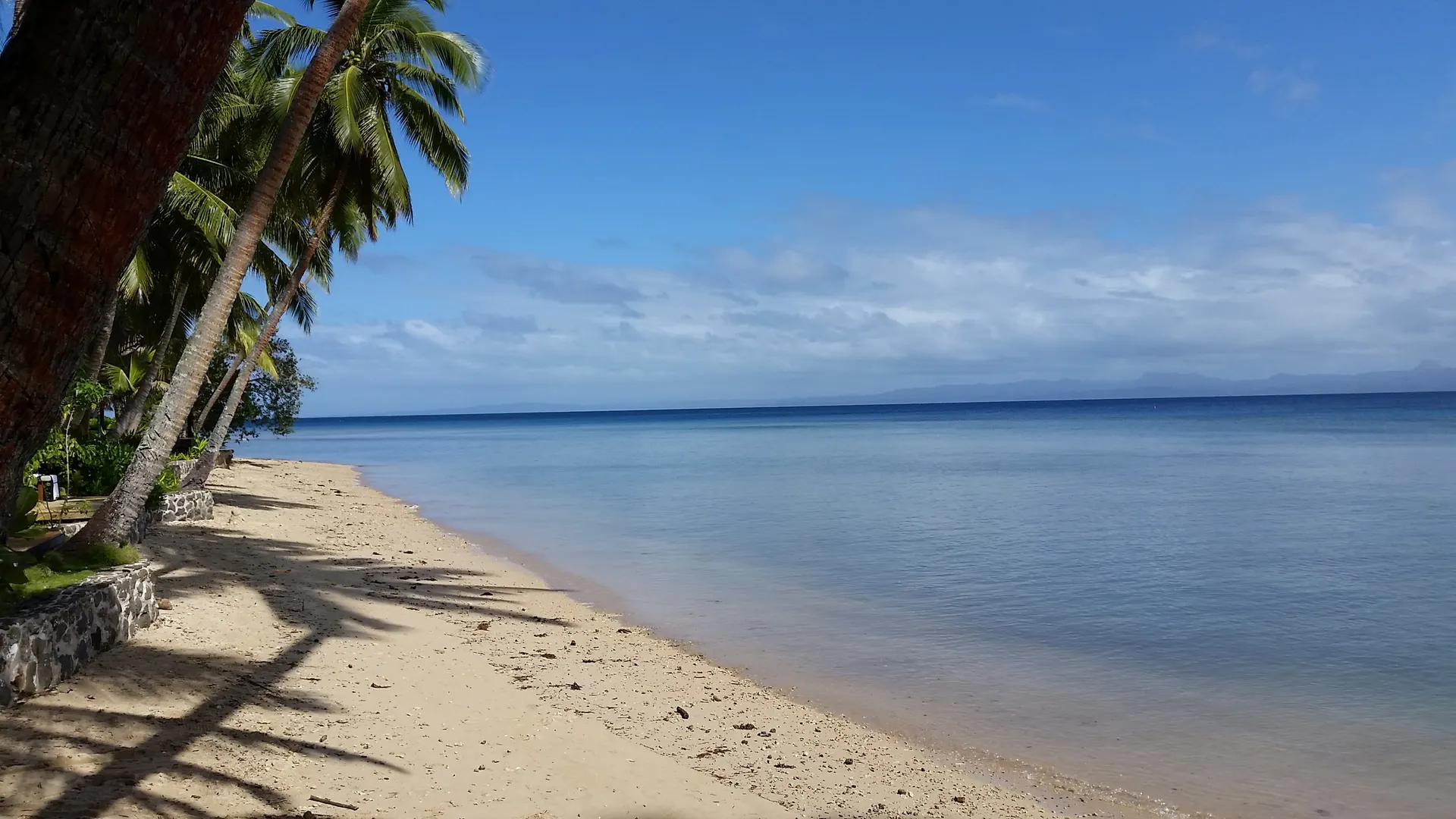
Long before Western cartographers charted the scattered jewels of Fiji's Lau archipelago, the people of Fulanga were already master navigators, reading the stars and currents to traverse the vast Pacific. This crescent-shaped raised limestone island, nestled in the remote Southern Lau Group, has remained one of the South Pacific's best-kept secrets — a place where time moves to the rhythm of the tides and ancient Polynesian traditions endure in three small villages of roughly four hundred souls.
Fulanga's defining feature is its extraordinary central lagoon, a vast turquoise basin sheltered by the island's limestone embrace and dotted with mushroom-shaped islets sculpted over millennia by wind and wave. The only passage to the open ocean — a fifty-meter channel on the northeastern side — creates a sense of entering a hidden world. These otherworldly rock formations, topped with miniature forests of pandanus and coconut palms, are among the most photographed natural wonders in the Pacific, yet few outsiders ever witness them firsthand.
Life in the villages of Muana-i-rai, Muana-i-cake, and Naividamu revolves around communal traditions that have barely changed in centuries. Women weave exquisite pandanus mats prized throughout Fiji, while men carve ceremonial kava bowls from local hardwoods — crafts so revered that they travel on monthly supply vessels to eager buyers in Suva. Visitors fortunate enough to arrive by expedition vessel are greeted with a sevusevu ceremony, the traditional offering of kava root that opens the door to genuine cultural exchange. The warmth of Fijian hospitality here is unfiltered by tourism's polish.
The lagoon itself is a paradise for snorkelers and kayakers. Crystal-clear waters reveal gardens of soft coral, clownfish darting among anemones, and the occasional reef shark gliding beneath the hull. The sandy beaches that fringe the interior islets are pristine and utterly deserted — places where you might be the only footprints for miles. Birdwatchers will find colonies of brown boobies, frigatebirds, and the rare Fiji petrel in the surrounding skies.
Fulanga is accessible only by expedition cruise ship or private yacht, and there is no wharf — tender boats ferry passengers ashore through the lagoon passage. The best season to visit is May through October, when the dry southeast trade winds keep humidity low and seas calm. There are no shops, restaurants, or hotels; this is a destination for travelers who seek authenticity over amenity. Pack reef-safe sunscreen, water shoes, and an open heart — Fulanga rewards those who come prepared to be humbled by nature's artistry.

