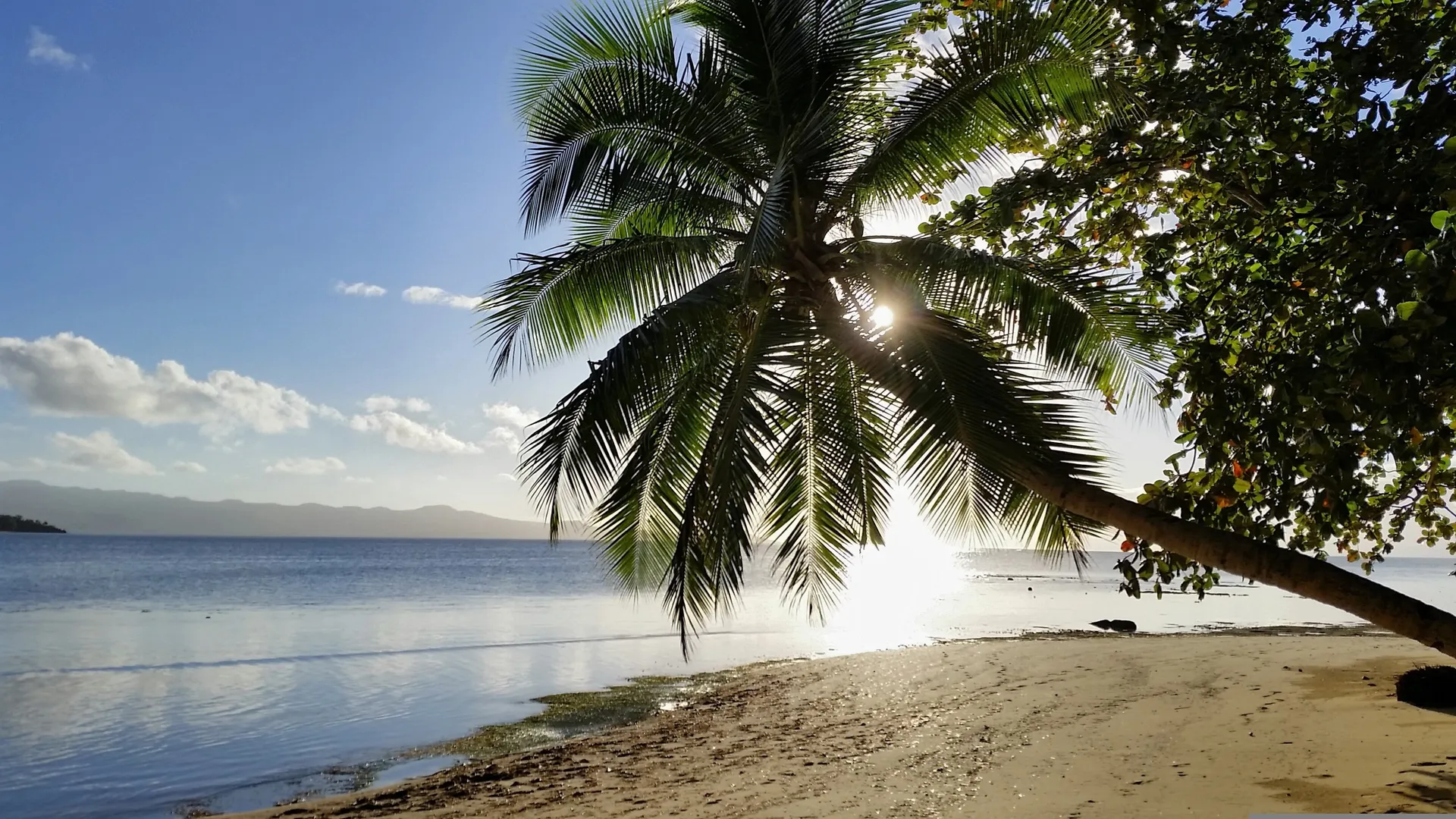
Savusavu calls itself "the hidden paradise of Fiji," and for once, a marketing slogan is more understatement than hyperbole. This small town on Vanua Levu, Fiji's second-largest island, wraps around a deep, sheltered harbor backed by volcanic hills whose thermal springs send wisps of steam curling through the tropical foliage. The harbor, one of the finest in the South Pacific, has attracted sailors, pearl farmers, and escapists for over a century—and the community they've created, together with the indigenous Fijian villages that dot the surrounding coast, produces a atmosphere of multicultural ease that is quintessentially Fijian.
The town itself is a single main street of modest shops, a produce market, and a handful of restaurants—its charm lies not in architecture but in atmosphere. The hot springs that bubble up in the town center (one is located in the parking lot of a local hotel) are reminders of the volcanic forces that created the island. The surrounding hills are covered in coconut palms, tropical hardwoods, and the vanilla and kava plantations that contribute to the local economy. The pace of life operates on "Fiji time"—a concept that, like its Tongan and Caribbean equivalents, prioritizes relationship and presence over schedule and efficiency.
The cuisine of Savusavu reflects Fiji's Pacific-Indian-Chinese culinary heritage. Kokoda, the Fijian version of ceviche—raw fish marinated in lime juice and coconut cream—is the essential starter, served in a coconut shell half with a complexity of flavor that belies its simplicity. Lovo, a traditional underground oven feast of taro, cassava, fish, chicken, and pork wrapped in banana leaves and cooked over hot stones, is the centerpiece of Fijian communal dining. The Indian community, brought to Fiji as indentured laborers in the nineteenth century, contributes curries, rotis, and biryanis that have become integral to the national cuisine. Fresh tropical fruits—mango, papaya, soursop, breadfruit—are abundant, and the local kava ceremonies provide a social ritual that is both mildly narcotic and deeply communal.
The waters surrounding Savusavu offer some of Fiji's finest diving and snorkeling. The Namena Marine Reserve, accessible by boat, protects a barrier reef of extraordinary biodiversity—over a thousand species of fish and four hundred species of coral have been recorded. The soft coral formations are among the most spectacular in the world, their purple, pink, and orange fans and whips creating underwater gardens of hallucinatory beauty. Jean-Michel Cousteau's resort, located on a peninsula near Savusavu, has helped establish the area as a center for marine conservation and sustainable tourism.
Savusavu is accessible by air from Nadi and Suva (forty-five-minute flights) and serves as a port of call for South Pacific expedition cruises. The best time to visit is May through October, Fiji's dry season, when rainfall is lower, humidity is comfortable, and the underwater visibility is at its best. November through April brings warmer temperatures, more rain, and the possibility of tropical cyclones—but also fewer visitors and lower prices. The water is warm year-round (26–30°C), and diving conditions are good in all seasons.

